On this page
Q.What Do NMC and MCI Guidelines Actually Allow Doctors to Do?
The National Medical Commission (NMC) and its predecessor, the Medical Council of India (MCI), permit doctors to share educational content, list qualifications, and maintain an online presence — they do not ban marketing outright. The confusion stems from outdated interpretations of the Indian Medical Council (Professional Conduct, Etiquette and Ethics) Regulations, 2002, which were drafted before social media existed.
After working with 200+ doctors across India, we have seen that the ones who grow fastest are not breaking rules — they are understanding the rules better than their competitors.
Q.What Exactly Does the MCI Code of Ethics Say About Advertising?
The MCI Regulations (Section 6.1) prohibit doctors from "soliciting patients directly or indirectly by a physician, by a group of physicians, or by institutions or organisations." However, "soliciting" has a specific legal meaning — it refers to direct, aggressive advertising that makes exaggerated claims.
Here is what is explicitly prohibited:
- Guaranteeing cure or specific outcomes
- Using patient testimonials to attract business
- Offering discounts or free consultations as promotional bait
- Claiming superiority over other doctors or hospitals
- Using sensational or misleading headlines
Here is what is explicitly permitted:
- Displaying name, qualifications, and specialisation on signboards
- Publishing academic achievements and research
- Being listed in online directories and Google Business Profile
- Sharing educational health content on social media
- Maintaining a professional website with service information
- Speaking at public health awareness events
Q.How Did the 2023 NMC Ethics Regulations Change Things?
The NMC's Registered Medical Practitioner (Professional Conduct) Regulations, 2023, brought significant modernisation. The updated guidelines acknowledge digital media and take a more practical stance.
Key changes include:
- Doctors can now maintain social media profiles and share health information
- Educational content creation is explicitly encouraged
- Online consultations are formally recognised
- Doctors may appear in media interviews on health topics
- Digital health awareness campaigns are permitted
The 2023 regulations shifted the focus from "prohibition of visibility" to "prohibition of misleading claims." This is a critical distinction that most doctors miss.
Need help with this?
Our team specializes in healthcare branding. Get personalized advice in a free 15-minute call.
Book a free 15-minute callQ.What Are the Grey Areas Doctors Can Ethically Leverage?
The regulations are silent on several modern marketing practices, creating grey areas that ethical doctors can navigate:
Can Doctors Post Before-and-After Photos?
Before-and-after photos are not explicitly addressed in NMC guidelines. The key principle: do not use them as testimonials or guarantees. Sharing them as educational case studies — with patient consent and appropriate disclaimers — falls within the spirit of the guidelines.
Can Doctors Run Instagram or Facebook Ads?
Paid advertisements that share educational content or inform patients about available services are not the same as "soliciting." A Facebook ad promoting a health awareness post is fundamentally different from an ad saying "Best Cardiologist in Delhi — Book Now at 50% Off."
Can Doctors Share Patient Stories?
Patient stories shared with written consent, anonymised where appropriate, and presented as educational narratives rather than endorsements sit in a defensible grey area. We recommend always framing these as case studies rather than testimonials.
Q.What Are the Penalties for Violating Medical Ethics Guidelines?
| Violation Type | Potential Penalty | Enforcement Reality |
|---|---|---|
| Misleading claims | Warning, then suspension | Actively enforced |
| Guaranteed outcomes | License suspension | Actively enforced |
| Patient testimonials for promotion | Warning letter | Moderately enforced |
| Educational content with disclaimers | No penalty | Not enforced |
| Professional website with services listed | No penalty | Not enforced |
| Social media health content | No penalty | Not enforced |
The reality is that enforcement is complaint-driven. Most actions are taken only when a fellow practitioner or patient files a formal complaint. This does not mean you should push boundaries — it means you should focus on genuinely educational content that no reasonable person would complain about.
Q.How Should Doctors Structure Their Marketing to Stay Compliant?
We recommend a three-tier framework:
- 1Green Zone (fully permitted): Educational posts, health awareness content, qualification displays, Google Business Profile, professional website, media interviews on health topics
- 2Yellow Zone (proceed with caution): Before-and-after case studies with consent, paid ads for educational content, patient journey narratives with anonymisation, clinic tour videos
- 3Red Zone (avoid completely): Cure guarantees, comparative claims against other doctors, discount-driven promotions, unsolicited patient outreach, fabricated statistics
What Content Format Works Best Within These Guidelines?
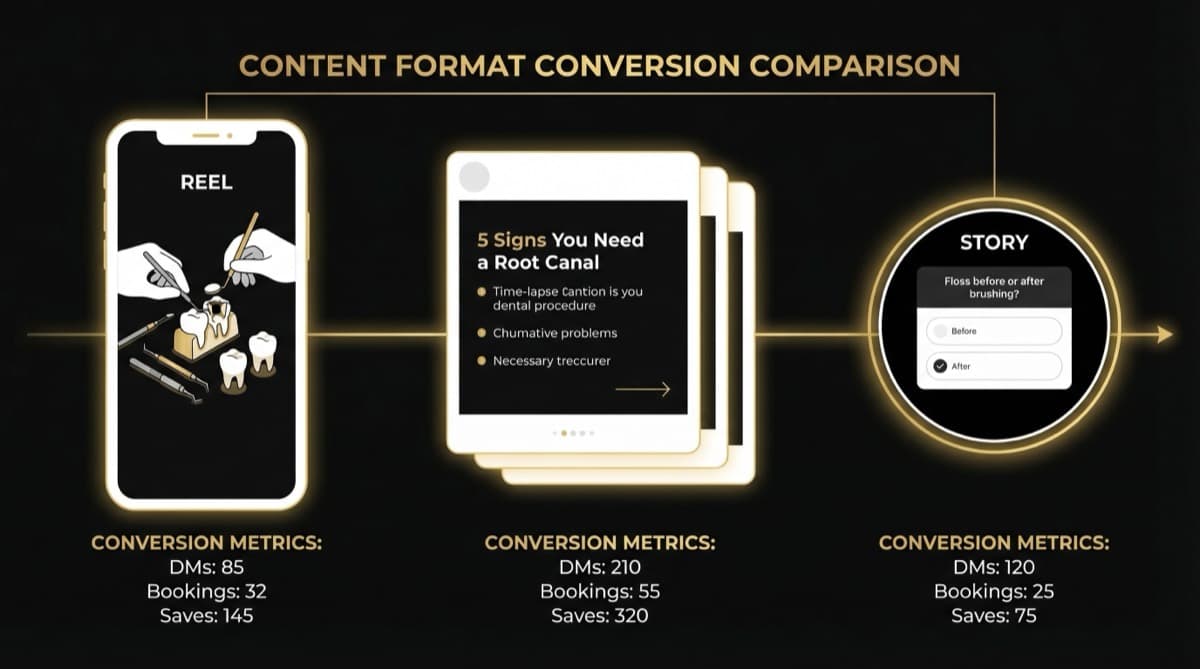
Carousel posts explaining conditions perform exceptionally well — they educate without selling. Reel formats where doctors explain "3 signs you should see a specialist" generate high engagement while staying firmly in the green zone. Infographics about prevention and wellness are shared widely and position you as a thought leader.
Q.What Should Doctors Do If They Receive a Complaint?
If a state medical council contacts you about a marketing complaint:
- Respond promptly and professionally
- Document that your content was educational in nature
- Show patient consent forms for any case studies
- Demonstrate disclaimers used in your content
- Consult a healthcare lawyer if the complaint escalates
In our experience, doctors who maintain a clear educational intent in their content have never faced sustained action. The doctors who get into trouble are the ones making claims they cannot substantiate.
FAQ
Q:Is it legal for doctors to have a website in India?
A:Yes, absolutely. The NMC permits doctors to maintain professional websites listing their qualifications, services offered, clinic timings, and location. What you cannot do is make unsubstantiated claims about cure rates or outcomes. A well-designed, informative website is not just legal — it is expected by modern patients.
Q:Can a doctor hire a marketing agency in India?
A:Yes. There is no regulation preventing doctors from hiring marketing professionals. The doctor remains responsible for ensuring all content complies with NMC guidelines. At Futurise Studio, we build compliance review into every content piece we create for medical professionals.
Q:Are Google Ads allowed for doctors in India?
A:Google Ads for doctors occupy a grey area. Ads that promote educational content, announce new services, or help patients find your clinic are generally acceptable. Ads that make cure claims, offer discounts as bait, or use superlatives like "best doctor" are problematic. We recommend running informational ads rather than promotional ones.
Q:What is the difference between NMC and MCI guidelines?
A:The MCI (Medical Council of India) was replaced by the NMC (National Medical Commission) in 2020. The NMC inherited MCI's ethics framework but updated it in 2023 with more modern provisions. The 2023 NMC regulations are more permissive regarding digital presence and educational content sharing than the older MCI rules.