On this page
Q.How Can Doctors Market Themselves Without Feeling Salesy?
The answer is simple: stop selling and start educating. When you share knowledge that genuinely helps patients make better health decisions, you are not selling — you are fulfilling an extension of your medical oath. The doctors who grow fastest on social media are not the ones pitching consultations. They are the ones whose content makes patients think, "This doctor actually cares about me understanding my condition."
We have helped 200+ doctors build their practices, and not a single successful strategy involved hard selling.
Q.Why Do Doctors Feel Uncomfortable With Marketing?
Medical training spends years teaching you that the work should speak for itself. You were taught that self-promotion is unseemly, that good doctors do not need to advertise. This belief made sense in a world where patients chose doctors based on neighbourhood proximity and family referrals.
That world no longer exists.
Today, 77% of patients research doctors online before booking. If you are not visible where patients are looking, you are invisible — regardless of how skilled you are. The discomfort you feel is not about marketing being wrong. It is about your mental model of marketing being outdated.
What Is the Difference Between Marketing and Selling?
| Marketing | Selling |
|---|---|
| Educates patients about conditions | Pushes patients to book now |
| Builds trust over time | Creates urgency artificially |
| Positions you as an expert | Positions you as a vendor |
| Lets patients come to you | Goes after patients |
| Feels natural | Feels forced |
Marketing is about being findable and trustworthy. Selling is about pushing transactions. You need the first. You never need the second.
Q.What Is the Value-First Marketing Framework for Doctors?
The Value-First Framework has three layers. Each layer builds on the previous one, and none of them require you to "sell" anything.
Layer 1: Educate (70% of your content)
Share what you know. The knowledge in your head is extraordinarily valuable to patients who are confused, scared, or misinformed. Every time you explain a condition clearly, debunk a myth, or help someone understand when they need to see a specialist, you are providing genuine value.
Content ideas for the education layer:
- "3 signs your headache might not be just a headache"
- "What actually happens during a root canal (it is not what you think)"
- "Why your knee pain gets worse in winter — and what to do about it"
- "The truth about vitamin D supplements — a doctor's honest take"
Layer 2: Show (20% of your content)
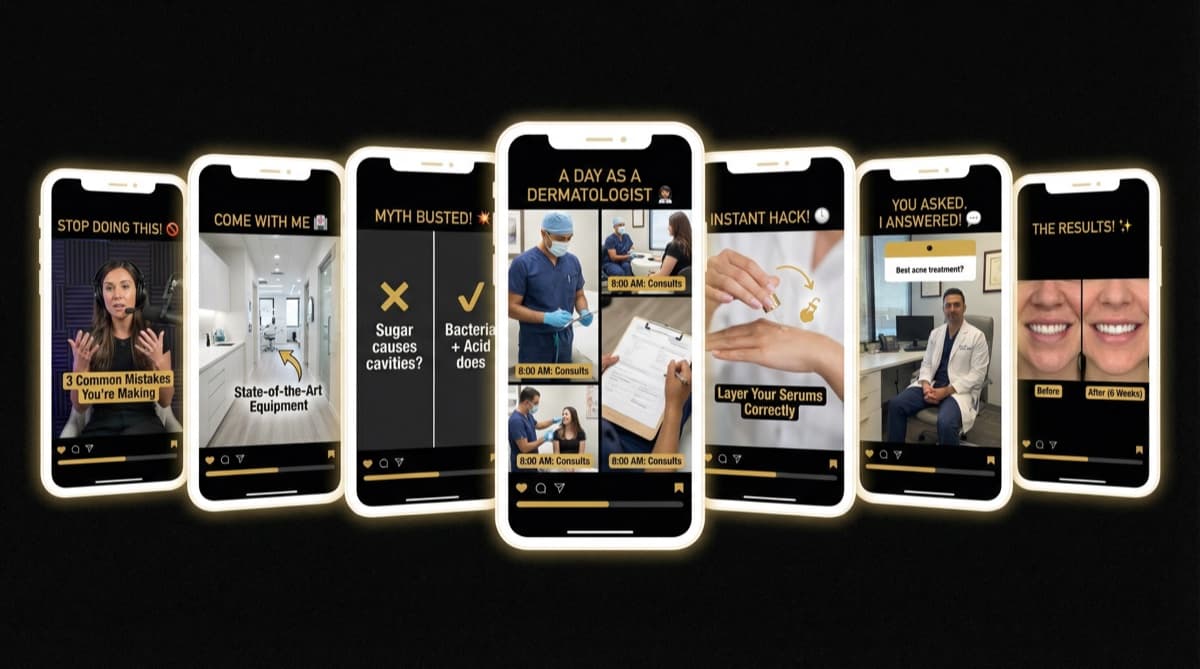
Let patients see your world. Show them your clinic, introduce your team, take them behind the scenes of your day. This builds familiarity and trust without requiring any sales messaging.
Content ideas for the show layer:
- A day in your clinic (time-lapse or story format)
- Your team preparing for a procedure
- New equipment unboxing and explanation
- Conference attendance and learnings
- Your morning routine as a doctor
Layer 3: Invite (10% of your content)
Only after establishing value and trust, gently let patients know how to reach you. Not "book now" — just "if you have been experiencing these symptoms, my clinic is here to help." The invitation should always follow value, never lead it.
Need help with this?
Our team specializes in healthcare branding. Get personalized advice in a free 15-minute call.
Book a free 15-minute callQ.What Psychological Principles Make This Work?
Three well-documented psychological principles support the value-first approach:
- 1Reciprocity: When you give valuable information freely, patients feel a natural desire to reciprocate — often by choosing you as their doctor when they need care
- 2Authority: Consistently sharing accurate medical knowledge positions you as an authority figure, which is the strongest driver of patient trust
- 3Familiarity: Regular, non-threatening content creates a sense of knowing you before ever meeting you, dramatically reducing the friction of booking a first appointment
Research from the Journal of Medical Internet Research shows that patients who consume a doctor's educational content before their first visit report 40% higher trust levels and 60% higher treatment compliance.
Q.What Does a Non-Salesy Content Calendar Look Like?
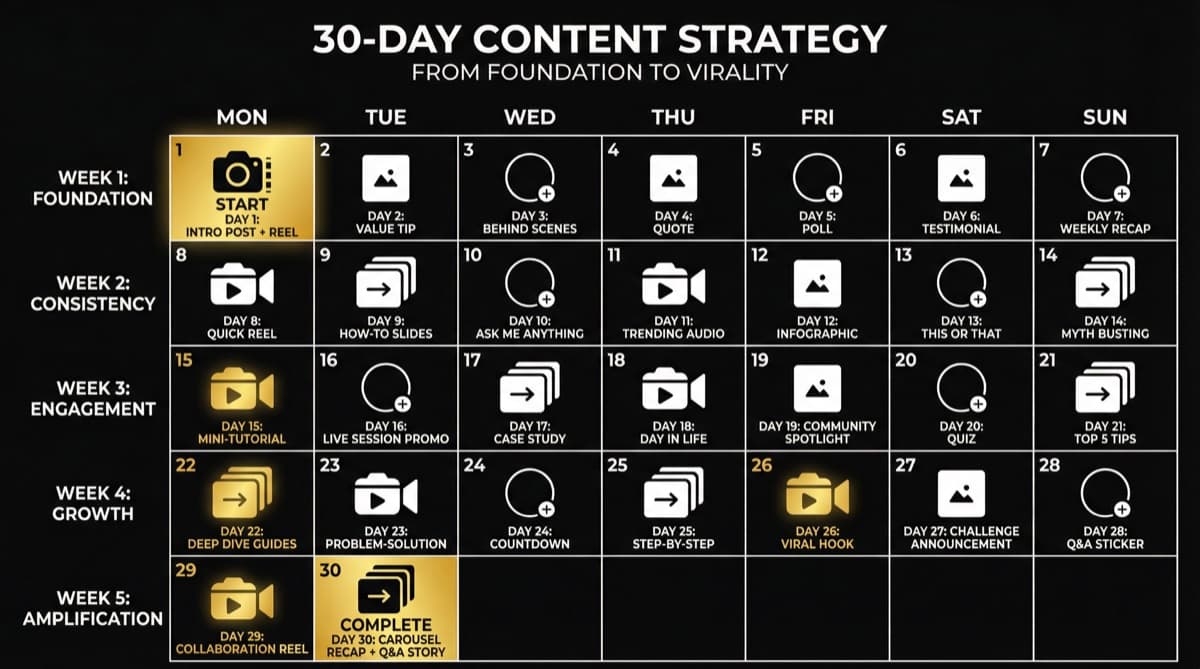
Here is a sample weekly plan that feels educational, not promotional:
- Monday: Educational carousel about a common condition
- Tuesday: Quick myth-busting reel (60 seconds)
- Wednesday: Behind-the-scenes story from your clinic
- Thursday: Patient FAQ answered in a post
- Friday: Weekly health tip infographic
- Saturday: Personal post — book you are reading, wellness routine, or professional milestone
Notice that none of these say "book a consultation." Yet doctors following this framework consistently report 30-50% increases in appointment requests within 90 days.
Q.How Do You Handle the "But My Colleagues Will Judge Me" Fear?
This is the second biggest barrier after the salesy feeling. Here is the reality: your colleagues are already watching doctors who market themselves grow. Many of them want to do the same but share your fear. The doctors who start first build an insurmountable advantage.
Practical ways to manage this:
- Start with purely educational content that no colleague could criticise
- Focus on patient education rather than self-promotion
- Share evidence-based information rather than opinions
- Let your content quality speak for itself
Within 3-6 months, the colleagues who judged you will be asking you for advice on how to do the same thing.
Q.How Do You Measure Success Without Feeling Like You Are Tracking Sales?
Instead of tracking "leads" or "conversions" — language that feels commercial — track:
- Patients helped: How many people asked questions or thanked you for a post
- Knowledge shared: How many educational pieces you published this month
- Community growth: How many new followers discovered your expertise
- Reputation built: How many times other professionals shared your content
These metrics feel aligned with your medical identity while still driving practice growth.
FAQ
Q:How much time does value-first marketing take per week?
A:Most doctors in our programme spend 2-3 hours per week on content creation. This includes one batch session of 90 minutes to create the week's content and 15-20 minutes daily to respond to comments and DMs. With practice and templates, some doctors reduce this to under 90 minutes total per week.
Q:What if I am not comfortable on camera?
A:You do not need to be on camera. Carousel posts, infographics, and text-based content perform just as well as video for many specialties. Some of our most successful doctor clients have never posted a single video. Start with the format that feels most natural and expand from there.
Q:Will value-first marketing work for surgeons?
A:Absolutely. Surgeons who share educational content about when surgery is and is not necessary build enormous trust. Content like "5 reasons I would NOT recommend this surgery" performs exceptionally well because it demonstrates integrity. Patients trust surgeons who show they do not push unnecessary procedures.
Q:How long before I see results from this approach?
A:Most doctors see measurable increases in appointment requests within 60-90 days of consistent posting. The first 30 days are about building a content library and finding your voice. Between days 30-60, engagement starts building. After day 60, the compound effect kicks in and patient enquiries increase noticeably.