On this page
78% of UK patients visit a clinic or practice website before booking an appointment. Yet most medical websites in the UK were built 5–8 years ago and fail to meet modern patient expectations. The result is lost patients — people who visit your site, find it confusing or outdated, and book with a competitor instead.
This guide explains exactly what UK patients expect from a medical website in 2026, backed by real behaviour data and conversion analysis.
Q.What Do UK Patients Look for on a Medical Website?
When a patient lands on your website, they are trying to answer five questions in under 30 seconds:
- 1Do you offer the service I need? — Clear service listings
- 2Are you qualified and trustworthy? — Practitioner credentials and reviews
- 3How much will it cost? — Pricing or at least indicative fees
- 4Where are you located? — Address and how to get there
- 5How do I book? — Obvious booking mechanism
If your website does not answer all five within 30 seconds, you lose the patient. This is not an opinion — it is consistent across every heatmap analysis and user testing session we have conducted for UK healthcare practices.
Q.What Design Elements Build Trust on Medical Websites?
Trust is the single most important factor in medical website design. Patients are making a healthcare decision — they need to feel confident before committing. These design elements build trust:
Above-the-Fold Essentials
The top section of your homepage (what visitors see without scrolling) should include:
- Your practice name and logo
- A clear headline stating what you do and who you serve
- A professional photograph (your clinic or lead practitioner, not stock photos)
- A primary call-to-action (Book Now, Request Consultation)
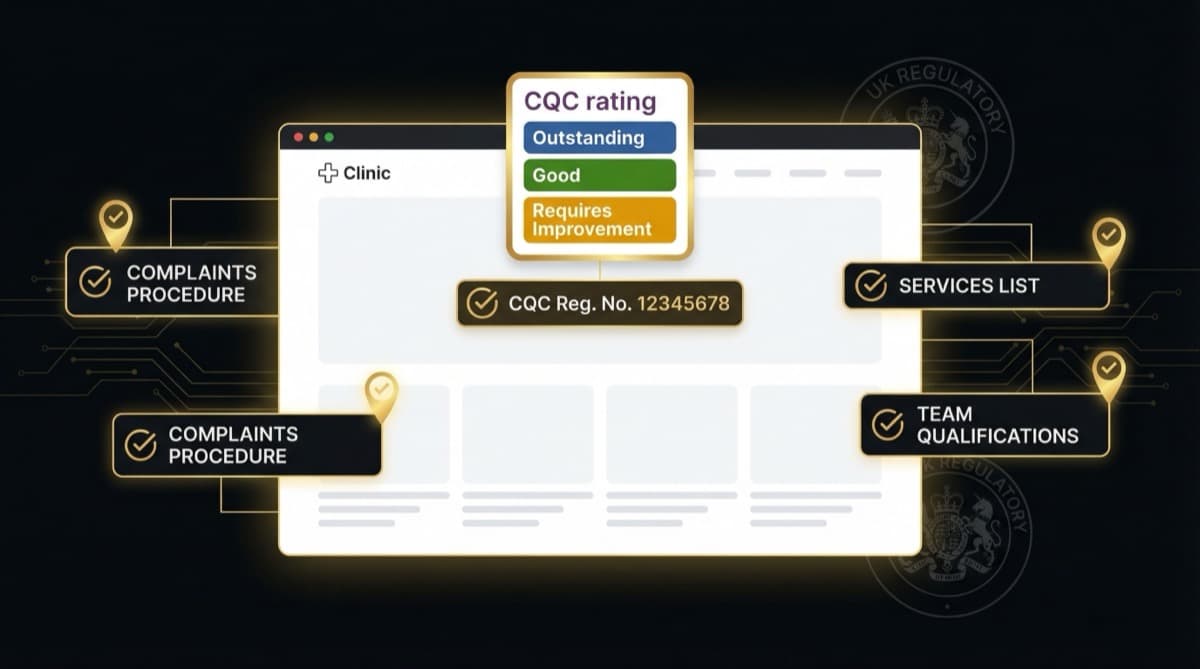
- Trust signals — CQC rating, GMC/GDC numbers, review ratings
Practitioner Profiles
Patients choose practitioners, not practices. Every doctor, dentist, or therapist should have a detailed profile page including:
- Professional headshot (high quality, consistent style)
- Qualifications and registration numbers
- Areas of specialisation
- Brief personal biography
- Years of experience
- Professional memberships
Social Proof
- Google review rating and count prominently displayed
- Selected patient testimonials (with permission)
- Awards, accreditations, and media mentions
- Logos of insurance providers you work with
Q.Should UK Medical Websites Show Pricing?
Yes. Pricing transparency is one of the strongest trust signals for private practice websites. 67% of patients say they will not book a consultation if they cannot find any pricing information online.
You do not need to list every fee — but providing "consultations from £X" or a downloadable fee guide gives patients the confidence to take the next step.
How to Display Pricing Effectively
- Create a dedicated Fees page
- List consultation fees for each practitioner or service
- Use "from" pricing for treatments with variable costs
- Mention what is included in the fee (e.g., "includes follow-up appointment")
- Note payment options — finance, insurance, card payments
- Update pricing at least annually
Need help with this?
Our team specializes in healthcare branding. Get personalized advice in a free 15-minute call.
Book a free 15-minute callQ.What Technical Standards Must UK Medical Websites Meet?
Beyond design and content, your website must meet technical standards that affect both user experience and search rankings:
- Page speed — load in under 3 seconds on mobile (Google's Core Web Vitals)
- Mobile responsive — 62% of UK healthcare searches happen on mobile
- SSL certificate — HTTPS is mandatory for patient trust and SEO
- GDPR compliance — cookie consent, privacy policy, data handling transparency
- Accessibility — WCAG 2.1 Level AA compliance for inclusive access
- Structured data — schema markup for medical practices to improve Google visibility
Mobile Design Priority
More than half your visitors will view your site on a phone. Prioritise:
- Tap-to-call phone number
- Thumb-friendly navigation
- Readable text without zooming
- Fast-loading images (WebP format, lazy loading)
- Simple forms with large input fields
Q.How Much Does a Medical Website Cost in the UK?
| Website Type | Price Range | Best For |
|---|---|---|
| Template-based | £1,500–£3,000 | Solo practitioners, budget-conscious |
| Custom professional | £4,000–£10,000 | Most private practices |
| Premium bespoke | £10,000–£20,000+ | Multi-practitioner clinics, specialist centres |
Ongoing costs include hosting (£20–£100/month), domain renewal (£10–£30/year), and maintenance/updates (£50–£300/month).
FAQ
Q:How often should a medical website be redesigned?
A:Redesign your website every 3–5 years to keep pace with design standards and patient expectations. In between full redesigns, make incremental updates — fresh content, updated photography, new service pages — to keep the site current.
Q:Do I need online booking on my medical website?
A:Yes. 42% of UK patients prefer booking appointments online, and this preference is increasing. If you do not offer online booking, you are losing patients to practices that do. Platforms like Doctify, Cliniko, and Pabau integrate booking directly into your website.
Q:Should I use stock photos or real photos on my medical website?
A:Always use real photos where possible. Patients can identify stock photography instantly, and it undermines trust. Invest in a professional photoshoot of your clinic, team, and facilities. Budget £500–£1,500 for a comprehensive healthcare photography session.