On this page
More NHS professionals are making the move to private practice than ever before. Whether driven by burnout, income ceilings, or the desire for clinical autonomy, the transition from NHS to private practice requires a fundamental shift in how you present yourself to patients.
In the NHS, patients come to you through referral pathways. In private practice, patients choose you — and that choice is heavily influenced by your brand. This guide covers how to build a brand that attracts private patients from day one.
Q.Why Do NHS Professionals Need Branding for Private Practice?
In the NHS, your reputation is institutional. Patients trust you because you work within a trusted system. When you step into private practice, that institutional trust disappears. You need to build personal and practice-level trust from scratch.
Branding fills this gap. A professional brand signals:
- Credibility — you are a serious, established practitioner
- Competence — your qualifications and experience are clearly communicated
- Accessibility — patients know how to find and book with you
- Value — your pricing is justified by the perceived quality of your practice
Without branding, you are competing on price alone — a race to the bottom that undermines the very reason you left the NHS.
Q.How Should NHS Doctors Position Themselves for Private Practice?
Your positioning should leverage your NHS experience as a strength, not something you left behind. NHS training is rigorous and respected — use it as a foundation for your private brand.
Positioning Framework
- Lead with your NHS training: "Trained in the NHS, dedicated to private excellence"
- Highlight your specialisation: Focus on the specific conditions or procedures you are expert in
- Define your ideal patient: Who are you serving? Self-pay patients? Corporate health? International patients?
- Set your price positioning: Are you offering accessible private care or premium, consultant-led services?
- Clarify your differentiator: What do you offer that NHS and other private practices do not?
Q.What Are the First Steps to Building a Private Practice Brand?
Step 1: Define Your Brand Foundation (Week 1)
Before designing anything, answer these questions:
- What is your clinical speciality and sub-speciality?
- What geographic area will you serve?
- What patient problems do you solve better than anyone?
- What price point will you operate at?
- What is your practice name?
Step 2: Create Your Visual Identity (Week 2)
Invest in a professional brand identity that includes:
- Logo and logo variations
- Colour palette and typography
- Brand guidelines document
- Business card and stationery design
- Social media profile assets
Step 3: Build Your Website (Weeks 2-3)
Your website is your digital shopfront. It should include:
- Clear description of your services and specialisation
- Your qualifications, GMC/GDC registration, and experience
- Transparent pricing or "fees from" information
- Online booking or consultation request form
- Patient testimonials and case studies
- CQC registration details (if applicable)
Step 4: Establish Your Online Presence (Week 3-4)
- Set up and optimise your Google Business Profile
- Create professional LinkedIn and Instagram accounts
- Register on Doctify, Top Doctors, and relevant review platforms
- Submit your practice to private healthcare directories
Step 5: Launch and Market (Month 2 onwards)
- Begin posting educational content on social media
- Ask early patients for Google reviews
- Consider Google Ads targeting "[specialty] private [your city]"
- Build referral relationships with GPs and other specialists
Need help with this?
Our team specializes in healthcare branding. Get personalized advice in a free 15-minute call.
Book a free 15-minute callQ.How Long Does the Transition Take?
Most NHS professionals take 3–6 months to build a viable private practice brand and patient base. The timeline depends on your specialty, location, and marketing investment. Surgeons and specialists in London can build faster due to higher demand; GPs in smaller cities may take longer.
Realistic Timeline
| Phase | Duration | Key Activities |
|---|---|---|
| Planning | 2-4 weeks | Business plan, brand strategy, positioning |
| Brand Creation | 1-2 weeks | Visual identity, website, digital profiles |
| Soft Launch | 4-8 weeks | Initial patients, refining processes, collecting reviews |
| Growth Phase | 3-6 months | Marketing, SEO, referral network, scaling |
Q.How Much Should You Invest in Your Private Practice Brand?
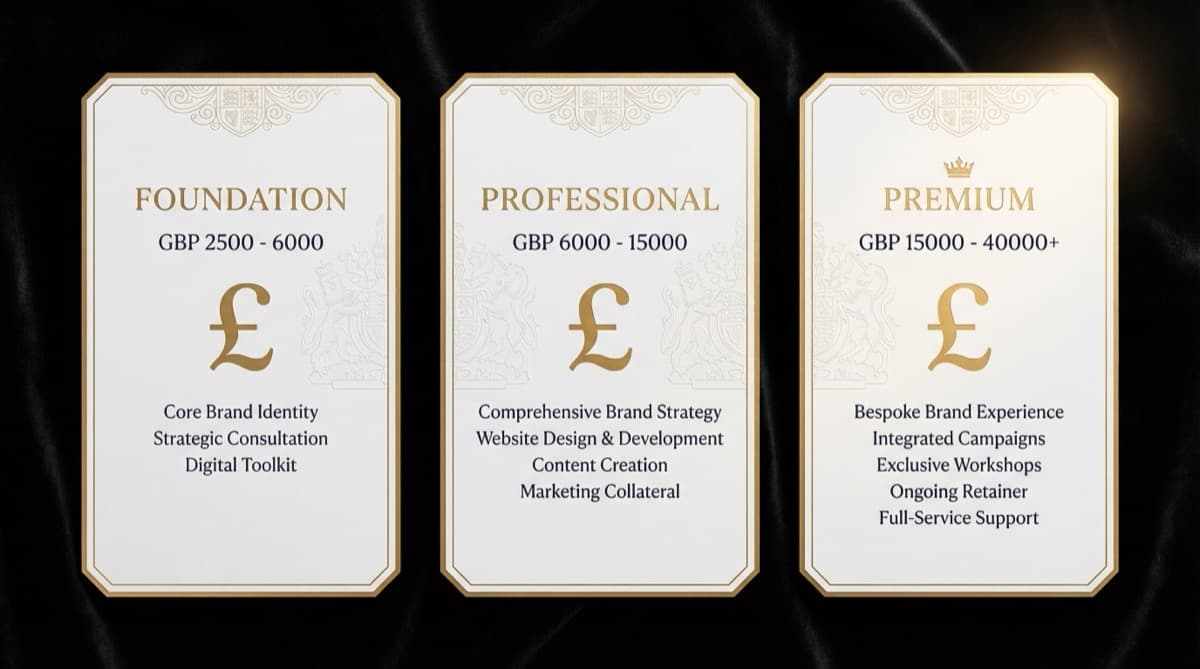
Budget between £5,000 and £20,000 for your complete brand launch, covering identity, website, and initial marketing. This is a business investment — most private practitioners recoup this within 2–3 months of operation.
FAQ
Q:Can I start building my brand while still working in the NHS?
A:Yes, and you should. Begin by building your online presence — LinkedIn profile, professional website, Google Business Profile — while still in your NHS role. Just ensure you comply with your NHS contract regarding private work and external activities. Many consultants maintain dual roles during the transition period.
Q:Should I use my personal name or create a practice name?
A:Both work, but personal name brands tend to build trust faster in private healthcare. "Dr Sarah Mitchell — Consultant Dermatologist" is more trustworthy than "Skin Solutions London" to most patients. You can always create a practice name later as you grow.
Q:Do I need CQC registration for my private practice?
A:If you are providing regulated activities (such as treatment of disease, disorder or injury, or surgical procedures), yes — you must register with the CQC before treating patients. This applies whether you are operating from your own premises, a rented clinic room, or providing services from a hospital. Factor CQC registration into your launch timeline.