On this page
Pediatricians have the most shareable niche in medicine. Parents are constantly searching for health information about their children — and they share it with other parents. This creates a viral loop that no other medical specialty naturally has. The paediatricians in our network who leverage this properly generate 15-25 new patient inquiries per week from Instagram alone.
Here's the exact strategy, based on data from 25+ paediatric accounts we've managed.
Q.Why Does Instagram Work So Well for Pediatricians?
Three structural advantages:
- 1Parent-driven sharing: When a parent sees a helpful post about infant fever management, they share it with their parenting WhatsApp group. One post can reach 200-500 parents through organic sharing alone
- 2Seasonal content cycles: Childhood health follows predictable seasonal patterns — monsoon infections, winter respiratory issues, summer dehydration, back-to-school check-ups. You never run out of timely content
- 3Emotional engagement: Content about children triggers stronger emotional responses than any other medical content. This drives saves, shares, and follows — Instagram's key engagement metrics
The Numbers
Paediatric content on Instagram generates 2.5x higher save rates and 3x higher share rates compared to adult medicine content. These are the metrics that Instagram's algorithm rewards with organic reach.
Q.What Content Categories Drive the Most Engagement?
Based on performance data across 25+ paediatric accounts:
| Content Category | Avg. Engagement Rate | Best Format | Posting Frequency |
|---|---|---|---|
| Myth-busting | 8-12% | Carousel | 2x per week |
| Seasonal health tips | 5-8% | Reels | 1-2x per week |
| Emergency "red flags" | 6-10% | Single image + caption | 1x per week |
| Milestone guides | 4-7% | Carousel | 1x per week |
| Day-in-the-life | 5-9% | Reels | 1x per week |
| Vaccination education | 6-11% | Carousel | 1-2x per month |
Category 1: Myth-Busting (Highest Performer)
Parents have more health misconceptions about children than any other area. Content that corrects myths performs exceptionally:
- "No, honey is NOT safe for babies under 1 year"
- "Teething does NOT cause high fever — here's when to worry"
- "5 things your grandmother told you about baby care that are medically wrong"
- "Why you should NOT give ORS to a baby under 6 months without medical advice"
Format: Carousels with bold text overlays. Slide 1: the myth in large text. Slides 2-5: the facts with your expert explanation. Final slide: your call to action.
Category 2: Seasonal Health Content
Map your content calendar to health seasons:
- January-February: Cold and flu prevention, winter skin care for babies
- March-April: Allergy season preparation, outdoor safety as weather warms
- May-June: Summer dehydration, heat rash, sunscreen for children
- July-September: Monsoon infections (in India), waterborne disease prevention, dengue awareness
- October-November: Festival safety, Diwali burn prevention, back-to-school health checks
- December: Winter respiratory infections, RSV awareness, holiday food safety
Category 3: Emergency Red Flags
Parents live in constant low-grade anxiety about their children's health. Content that helps them distinguish "normal" from "go to the ER" is extremely valuable:
- "5 signs your baby's fever needs emergency attention"
- "When a child's cough becomes dangerous — the sounds to listen for"
- "Head injury in children: when to rush vs when to watch"
This content gets saved and shared more than any other type because parents want it accessible for emergencies.
Q.What's the Optimal Posting Schedule for Pediatricians?
Based on engagement data:
- Posting frequency: 5-6 posts per week (mix of Reels, carousels, and static posts)
- Best posting times: 8-9 PM (after kids' bedtime — parents are scrolling) and 7-8 AM (morning routine)
- Reels: 3-4 per week, 15-30 seconds, trending audio
- Carousels: 2-3 per week, 5-8 slides, educational
- Stories: Daily — behind-the-scenes, polls about parenting questions, Q&A sessions
The Content Production System
You don't need to create content from scratch daily. Here's the batching system:
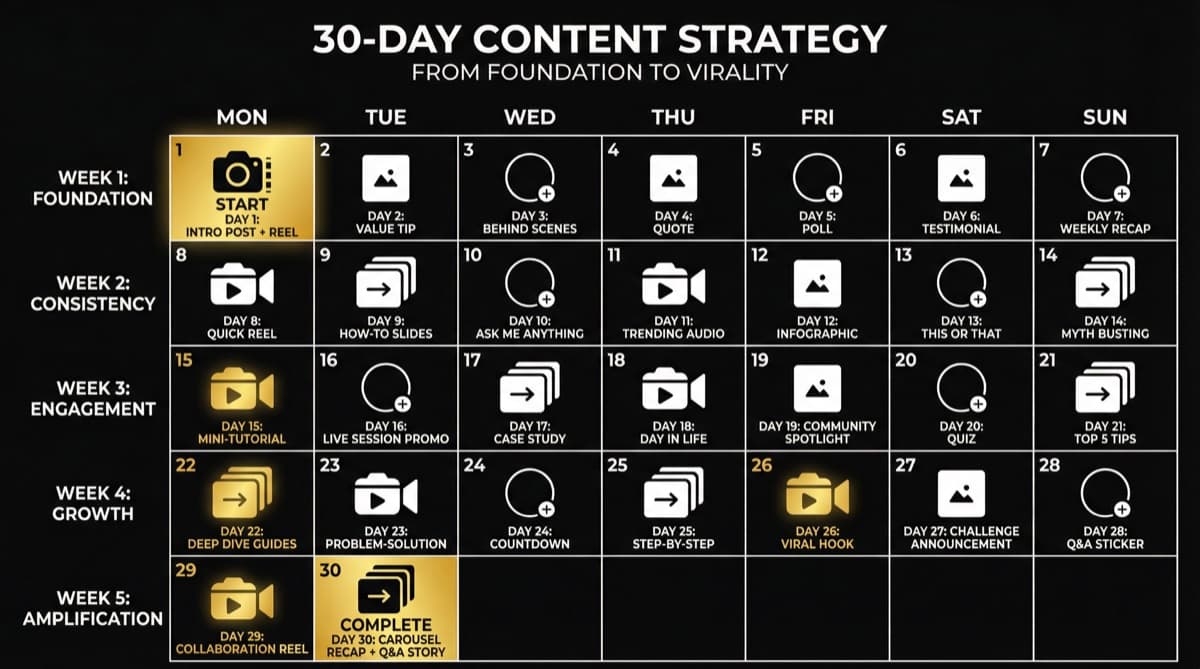
- 1Monthly planning: Map 4 weeks of content themes (one myth-busting, one seasonal, one milestone, one clinical)
- 2Weekly filming: Spend 1 hour per week filming 3-4 Reels
- 3Carousel templates: Design 4-5 carousel templates. Your designer fills in new content each week
- 4Repurpose: Every long YouTube video becomes 3-4 Reels. Every carousel becomes 3-4 Stories
Need help with this?
Our team specializes in healthcare branding. Get personalized advice in a free 15-minute call.
Book a free 15-minute callQ.How Do You Convert Followers Into Patients?
Followers are vanity metrics. Appointments are revenue. Here's the conversion funnel:
- 1Content attracts followers: Educational posts about common paediatric concerns
- 2Stories build relationship: Daily stories that show your personality, your clinic, your approach
- 3Highlights answer objections: Create Highlight folders for — Location & Timing, Services & Pricing, Parent Reviews, Vaccination Schedule, FAQs
- 4Bio drives action: Your bio should include a clear call to action — "Book an appointment" link to WhatsApp or booking page
- 5DM automation: Set up automated replies for common questions. When a parent DMs "vaccination," they get your vaccination schedule and booking link automatically
The Conversion Metrics to Track
- DM inquiries per week: Target 20-30 per week from 10K+ followers
- DM-to-appointment rate: Should be 30-40%
- Cost per follower: If running ads, target Rs 2-5 per follower (India) or $0.20-0.50 (US/UK)
- Patient acquisition cost from Instagram: Target Rs 200-500 (India) or $20-50 (US/UK)
Q.What Mistakes Should Pediatricians Avoid on Instagram?
- 1Medical jargon: Your audience is parents, not peers. Write at a 6th-grade reading level. "Your baby has acute otitis media" means nothing. "Your baby has an ear infection — here's what to do" means everything
- 2Fear-based content: Don't scare parents. Inform and empower. "Your child could die from this" gets engagement but destroys trust. "Here's how to spot this early and what to do" builds trust
- 3Ignoring comments and DMs: Parents who comment on your posts are pre-qualified leads. Respond to every comment within 24 hours. Every unanswered DM is a lost patient
- 4Inconsistent posting: The algorithm penalises inconsistency. Posting 10 times one week and disappearing the next kills your reach. 5 posts every week is better than 15 one week and 0 the next
- 5Neglecting Reels: As of 2026, Reels get 3-5x the organic reach of static posts. If you're not creating Reels, you're invisible to 70% of potential new followers
Q.How Do You Handle Sensitive Topics on a Pediatric Account?
Some paediatric topics require careful handling:
- Vaccination debates: State the evidence clearly and confidently. Don't engage with anti-vax comments beyond a factual correction. Pin a comment with a link to WHO/CDC guidelines
- Child abuse indicators: Educate parents about signs without causing panic. Link to professional resources
- Mental health in children: Growing topic. Share with empathy, link to professional help, avoid diagnosing through content
- Breastfeeding: Extremely emotional topic. Present evidence without shaming formula-feeding parents
FAQ
Q:How many followers do I need before Instagram generates patients?
A:You don't need massive follower counts. We've seen paediatricians with 3,000-5,000 highly engaged local followers generate 10-15 new patients per month. The key is local engagement — 5,000 followers in your city are more valuable than 50,000 followers nationally. Focus on local hashtags and location tags.
Q:Should I show my own children on my paediatric account?
A:This is personal, but the data suggests it helps. Paediatricians who occasionally share (appropriate, boundaried) content with their own children see 40% higher trust indicators from parent followers. It signals "I'm a parent too, I understand." Set clear boundaries about what you will and won't share.
Q:How do I handle parents who try to get free medical advice through DMs?
A:Set clear boundaries with a saved reply: "I appreciate your question! For specific medical advice about your child, I'd need to do a proper consultation. You can book an appointment [link]. For general health tips, check out my Highlights section." This converts free-seekers into paying patients while remaining helpful.
Q:Is it worth running paid ads on Instagram for a paediatric practice?
A:Yes — but start with boosting your best-performing organic posts rather than creating separate ad campaigns. Boost posts that already have high engagement to a local audience (your city + surrounding areas, ages 25-40). Budget Rs 5,000-10,000/month (India) or $200-400/month (US/UK). Track DM inquiries from boosted posts to measure ROI directly.