On this page
Q.How Can Solo Doctors Compete With Corporate Hospital Chains?
By leveraging the three things corporate chains can never have: a personal brand, genuine patient relationships, and niche specialisation. Corporate hospitals win on scale, marketing budgets, and infrastructure. Solo practitioners win on trust, personal attention, and authenticity. The key is to stop competing on their terms and start competing on yours.
We have worked with solo practitioners who consistently outperform corporate chain clinics in patient loyalty, referral rates, and revenue per patient — despite spending 1/100th on marketing.
Q.What Advantages Do Solo Practitioners Have Over Chains?
| Factor | Solo Practitioner | Corporate Chain |
|---|---|---|
| Patient relationship | Deep, personal | Transactional, rotating staff |
| Brand identity | Unique personality | Generic corporate |
| Decision speed | Instant | Bureaucratic |
| Content authenticity | High | Low (scripted, approved) |
| Niche expertise | Can go deep | Must stay broad |
| Price flexibility | Full control | Corporate pricing rules |
| Patient loyalty | To the doctor | To the brand/location |
| Community trust | Personal reputation | Corporate reputation |
The corporate chain's biggest weakness is that patients build relationships with doctors, not buildings. When a doctor at a corporate hospital leaves, 30-60% of their patients follow them. That tells you everything about where real loyalty lies.
Q.How Should Solo Practitioners Position Against Chains?
Strategy 1: Own a Niche
Corporate hospitals must serve everyone. You do not. The most effective competitive strategy is to become the undisputed specialist in a specific niche.
Examples of effective niche positioning:
- Instead of "Dermatologist" → "The Acne Specialist for Working Professionals"
- Instead of "Orthopaedic Surgeon" → "The Sports Injury Expert for Weekend Athletes"
- Instead of "Paediatrician" → "The Developmental Milestones Doctor for New Parents"
- Instead of "Gynaecologist" → "The PCOS and Fertility Specialist"
When you own a niche, you are not competing with corporate chains — you are competing in a category they cannot efficiently serve.
Strategy 2: Build a Personal Brand That Chains Cannot Copy
Your face, your story, your opinions, your patient interactions — these are assets no chain can replicate. Personal brands generate 7x more engagement than corporate brands on social media.
Your personal brand should communicate:
- Your "why": Why did you become a doctor? Why this specialty?
- Your perspective: What do you believe that most doctors do not?
- Your personality: Are you warm and reassuring? Direct and no-nonsense? Humorous and approachable?
- Your results: What outcomes have your patients achieved?
Strategy 3: Win the Google Battle Locally
Corporate chains rank well for broad terms ("hospital near me"), but solo practitioners can dominate specific long-tail searches. A solo cardiologist who optimises for "heart specialist in Koramangala" will rank above a corporate chain for that specific, high-intent search.
Local SEO actions:
- Claim and fully optimise your Google Business Profile
- Collect 50+ Google reviews with specific keywords mentioned
- Create location-specific website pages
- List on all relevant medical directories (Practo, Lybrate, etc.)
- Post weekly Google Business updates
Need help with this?
Our team specializes in healthcare branding. Get personalized advice in a free 15-minute call.
Book a free 15-minute callQ.What Content Strategy Works for Solo Practitioners Against Chains?
The content strategy should emphasise everything a chain cannot:
Weekly content plan:
- Monday: Educational post in your niche (shows expertise)
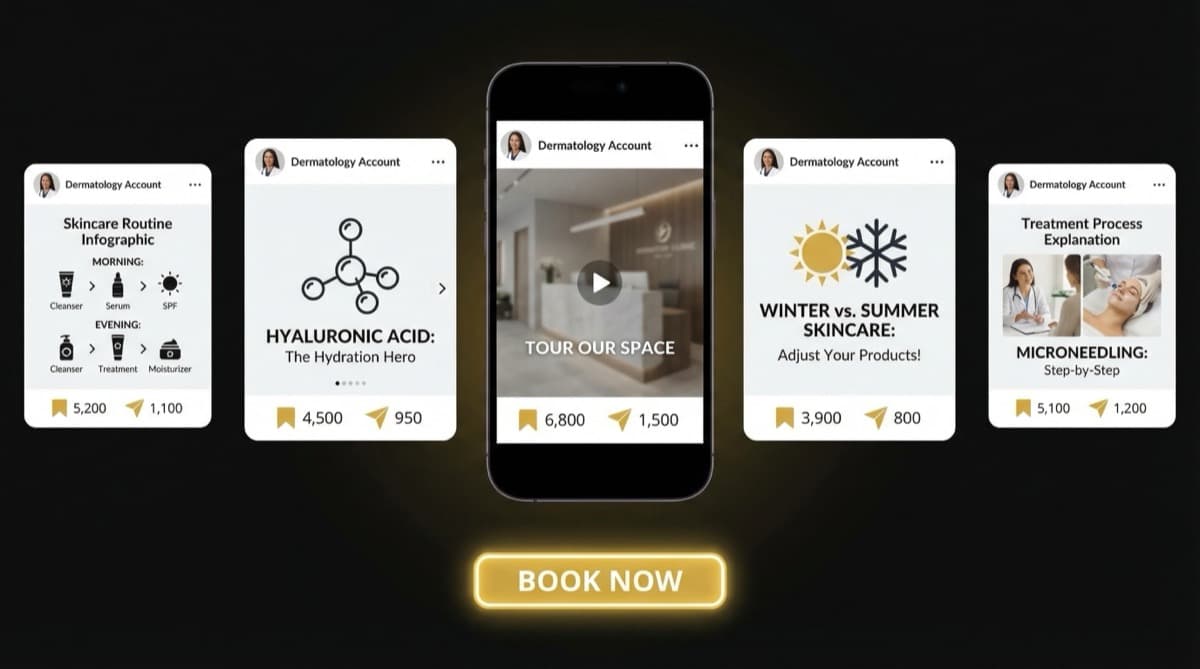
- Tuesday: Behind-the-scenes of your personal practice (shows authenticity)
- Wednesday: Patient FAQ in your own voice (shows personality)
- Thursday: Your professional opinion on a trending health topic (shows thought leadership)
- Friday: Personal story — why you chose medicine, what drives you, a patient interaction that moved you (shows humanity)
Why Does Authentic Content Beat Polished Corporate Content?
Corporate hospital content goes through layers of approval. It is reviewed by marketing teams, legal departments, and brand managers. By the time it is published, it is polished but sterile. It says nothing. It connects with no one.
Your content can be raw, real, and immediate. A 60-second reel filmed in your clinic between patients, sharing a genuine insight, will outperform a $5,000 corporate video every time. Patients are tired of corporate speak. They want real doctors sharing real knowledge.
Q.How Do Solo Practitioners Handle the "But They Have Better Infrastructure" Objection?
Patients do not choose hospitals for the lobby. They choose hospitals for outcomes and the doctor. However, perception matters. Here is how to address infrastructure concerns:
- 1Showcase your equipment: Even a small clinic has specific equipment. Show it, explain what it does, why it matters
- 2Highlight focused attention: "In a corporate hospital, you get 7 minutes with a doctor. Here, you get 30." This is a genuine advantage
- 3Network strategically: Partner with diagnostic centres and surgical centres for referrals and shared facilities
- 4Emphasise continuity of care: The same doctor, every visit. No rotating residents, no "the doctor who saw you last time is on leave"
Q.What Pricing Strategy Works Against Corporate Chains?
Do not compete on price. Competing on price against an entity with deeper pockets is a losing game. Instead, compete on value.
The value equation for solo practitioners:
- More time per consultation (20-30 min vs 7-10 min at chains)
- Direct access to the specialist (no gatekeeping by junior staff)
- Personalised treatment plans (not algorithm-driven protocols)
- Continuity of care (same doctor, every visit)
- Faster decision-making (no waiting for department approvals)
Communicate this value clearly, and patients will pay equal or premium fees compared to corporate chains. Our clients who articulate these advantages charge 20-40% more than the nearest corporate hospital and have higher patient satisfaction scores.
Q.How Can Solo Practitioners Build Referral Networks That Compete With Chain Ecosystems?
Corporate chains have built-in referral networks — a patient who sees a GP at the chain gets referred to a specialist at the same chain. Solo practitioners can build equivalent networks:
- Form informal alliances with complementary solo practitioners
- Create a shared referral directory of trusted specialists
- Host joint educational events or health camps
- Cross-refer patients with clear communication protocols
- Build relationships with GPs and family doctors in your area
A well-maintained referral network of 10-15 allied practitioners can generate 20-30% of a solo practitioner's patient flow.
FAQ
Q:Should I join a corporate chain instead of competing against one?
A:That depends on your goals. Corporate chains offer stability, infrastructure, and patient volume. But you trade autonomy, earning potential, and personal brand. Doctors at corporate chains typically earn 40-60% of what they could earn independently with the same patient volume. If you value freedom and long-term wealth building, independent practice with smart branding beats corporate employment.
Q:Can I match a corporate chain's online presence with a small budget?
A:You do not need to match it — you need to outperform it in your niche. A corporate chain's Instagram might have 100,000 followers, but their engagement rate is typically 0.5-1%. A solo practitioner with 5,000 followers and a 6-8% engagement rate has more meaningful patient interactions. Quality of audience matters infinitely more than quantity.
Q:What if a corporate chain opens right next to my clinic?
A:This is an opportunity, not a threat. When a chain opens nearby, it brings more patients to the area. Some of those patients will prefer a personal touch over a corporate experience. Double down on your differentiators — personal attention, continuity of care, community presence. Several of our clients have seen patient growth after a chain opened nearby because increased competition created more health-aware patients in the area.
Q:How long does it take to build a competitive personal brand?
A:Expect 6-12 months to build a brand that meaningfully competes with corporate chains in your local market. The first 3 months are about establishing presence and consistency. Months 3-6 are about building authority through valuable content. Months 6-12 are about converting that authority into sustainable patient flow. By month 12, if you have been consistent, you will have an unfair advantage that no chain can buy.