On this page
Cross-pathy — the practice of AYUSH doctors prescribing allopathic medicines or performing modern medical procedures — remains India's most contested healthcare regulation issue. As of March 2026, the legal position varies dramatically by state, creating confusion for over 7.5 lakh AYUSH practitioners across the country.
Here's a clear, fact-based breakdown of where things stand — and what every BAMS, BHMS, and BUMS doctor needs to know.
Q.What Is Cross-Pathy and Why Is It Controversial?
Cross-pathy refers to practitioners of one medical system prescribing treatments from another system. In practice, this usually means AYUSH doctors (Ayurveda, Yoga, Unani, Siddha, Homeopathy) prescribing allopathic drugs like antibiotics, painkillers, or steroids.
The controversy exists because of two competing realities:
- Ground reality: An estimated 60-70% of BAMS doctors in rural India routinely prescribe allopathic medicines. In many areas, they are the only available healthcare providers
- Regulatory position: The National Medical Commission (NMC) and Indian Medical Association (IMA) argue that prescribing outside your training system puts patients at risk
This isn't a theoretical debate. It affects licensing, insurance coverage, legal liability, and — critically — your ability to practice without legal risk.
Q.What Does the Law Actually Say About Cross-Pathy?
There is no single national law that clearly permits or prohibits cross-pathy. The legal framework is a patchwork:
Central Government Position
- The Indian Medicine Central Council Act, 1970 and Homoeopathy Central Council Act, 1973 establish the scope of AYUSH practice but don't explicitly address cross-pathy
- The National Commission for Indian System of Medicine (NCISM) replaced the CCIM in 2020 and has periodically expanded the drugs list that BAMS doctors can prescribe
- In November 2020, the CCIM amended regulations to allow PG Ayurveda doctors to perform 58 surgical procedures. This was challenged in court and partially stayed
Key Court Rulings
| Case | Year | Ruling |
|---|---|---|
| Poonam Verma vs Ashwin Patel | 1996 | Supreme Court held that a homeopath practicing allopathy amounts to negligence |
| Dr. Mukhtiar Chand vs State of Punjab | 1998 | SC ruled that BAMS doctors cannot practice modern medicine unless specifically trained |
| Various High Court cases | 2018-2025 | Mixed rulings — some HCs have allowed cross-pathy where state law permits, others have restricted it |
The Critical Distinction
Courts have consistently distinguished between:
- Prescribing allopathic drugs (generally restricted unless state law permits)
- Using modern diagnostic tools (generally permitted — blood tests, imaging, etc.)
- Emergency treatment (permitted under Section 92 of IPC — any registered medical practitioner can provide emergency care)
Q.How Do State-by-State Rules Differ?
This is where it gets complex. Several states have passed their own regulations:
| State | BAMS Cross-Pathy Status | Key Details |
|---|---|---|
| Maharashtra | Conditionally permitted | BAMS doctors with pharmacology training can prescribe select allopathic drugs |
| Uttar Pradesh | Widely practiced, grey area | No explicit state law permitting, but enforcement is minimal |
| Rajasthan | Permitted with training | State government allows integrated practice with additional certification |
| Karnataka | Restricted | Karnataka Medical Registration Act limits cross-pathy more strictly |
| Tamil Nadu | Partially permitted | Siddha practitioners have broader prescribing rights |
| Kerala | Restricted | Strong traditional Ayurveda lobby opposes cross-pathy |
| Bihar | Widely practiced | Limited enforcement — BAMS doctors are primary healthcare providers in rural areas |
| Gujarat | Conditionally permitted | Integrated medicine programs exist at state level |
The Rural Reality
In 18 Indian states, BAMS and BHMS doctors serve as the primary (and often only) healthcare providers in rural areas. The government's own data shows that 57% of rural healthcare is delivered by AYUSH practitioners. Strictly enforcing cross-pathy bans would collapse rural healthcare delivery.
Need help with this?
Our team specializes in healthcare branding. Get personalized advice in a free 15-minute call.
Book a free 15-minute callQ.What Are the NMC's Current Guidelines?
The National Medical Commission's position has evolved but remains restrictive:
- MBBS-qualified doctors can practice any system of medicine (there is no reverse cross-pathy restriction on allopathic doctors)
- AYUSH practitioners should practice within their trained system
- The NMC has opposed NCISM's attempts to expand AYUSH surgical rights
- Bridge courses (proposed since 2015) to give AYUSH doctors limited allopathic prescribing rights have been announced but not fully implemented
The Bridge Course Question
The Central Government has periodically proposed "bridge courses" that would allow AYUSH doctors to prescribe basic allopathic medicines after additional training. As of March 2026:
- The concept was first proposed in the 2017 National Health Policy
- Multiple drafts have been circulated but none fully implemented nationally
- The IMA has consistently opposed bridge courses
- Some states (Maharashtra, Rajasthan) have implemented their own versions
Q.What Should BAMS/BHMS Doctors Do Right Now?
Given the legal ambiguity, here's the practical framework we recommend:
- 1Know your state's specific rules: Don't assume what's permitted in one state applies in another. Get written clarification from your state AYUSH directorate
- 2Document everything: If you prescribe outside your system, maintain detailed records of clinical reasoning, especially in emergencies
- 3Get additional certifications: Where available, complete integrated practice or pharmacology training programs recognised by your state
- 4Carry professional indemnity insurance: Ensure your policy covers your actual scope of practice, not just your degree-defined scope
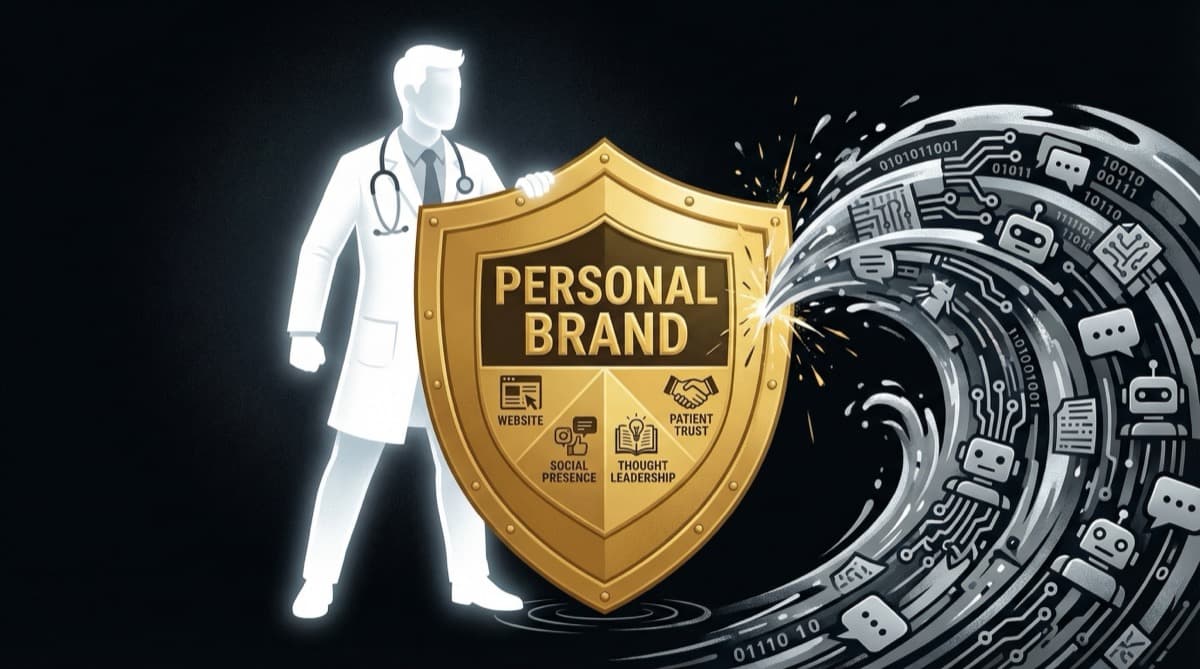
- 5Build your brand within your system: The strongest long-term strategy is developing expertise and reputation within Ayurveda/Homeopathy rather than competing with allopathic doctors on their territory
Q.What's the Future of Cross-Pathy Regulation?
Three trends are shaping the future:
- Integration over separation: The National Education Policy 2020 envisions integrated medical education. Future graduates may be trained across systems from the start
- Competency-based licensing: Rather than degree-based restrictions, future regulation may allow practice based on demonstrated competency — regardless of which degree you hold
- Digital health records: The Ayushman Bharat Digital Mission will create transparency around prescribing patterns, making informal cross-pathy harder to sustain
The most likely outcome within 3-5 years: a formalised system where AYUSH doctors can prescribe a defined list of allopathic medicines after completing standardised additional training — essentially a national bridge course framework.
FAQ
Q:Can a BAMS doctor prescribe antibiotics legally?
A:It depends entirely on your state. In Maharashtra and Rajasthan, BAMS doctors with additional pharmacology training can prescribe certain allopathic drugs. In Karnataka and Kerala, this is more restricted. In practice, BAMS doctors across India routinely prescribe antibiotics — but legal protection varies. Always check your state's specific regulations.
Q:What happens if a patient files a complaint about cross-pathy treatment?
A:If a patient suffers harm and files a complaint, the medical council will evaluate whether the treatment was within your legally permitted scope. The Poonam Verma vs Ashwin Patel Supreme Court ruling established that practicing outside your system can constitute medical negligence. Professional indemnity insurance is essential protection.
Q:Should I pursue a bridge course or additional allopathic training?
A:If cross-pathy is central to your practice, yes — formalise it. Additional training in pharmacology, emergency medicine, or diagnostics provides both clinical competence and legal protection. Several universities now offer certificate programs specifically designed for AYUSH practitioners.
Q:Is it better to brand myself as an "integrative medicine" practitioner?
A:"Integrative medicine" is a positioning choice, not a legal category. It works well for patient communication — patients increasingly want practitioners who understand multiple systems. But your legal scope of practice is still determined by your primary degree and state regulations, not by how you brand yourself.