On this page
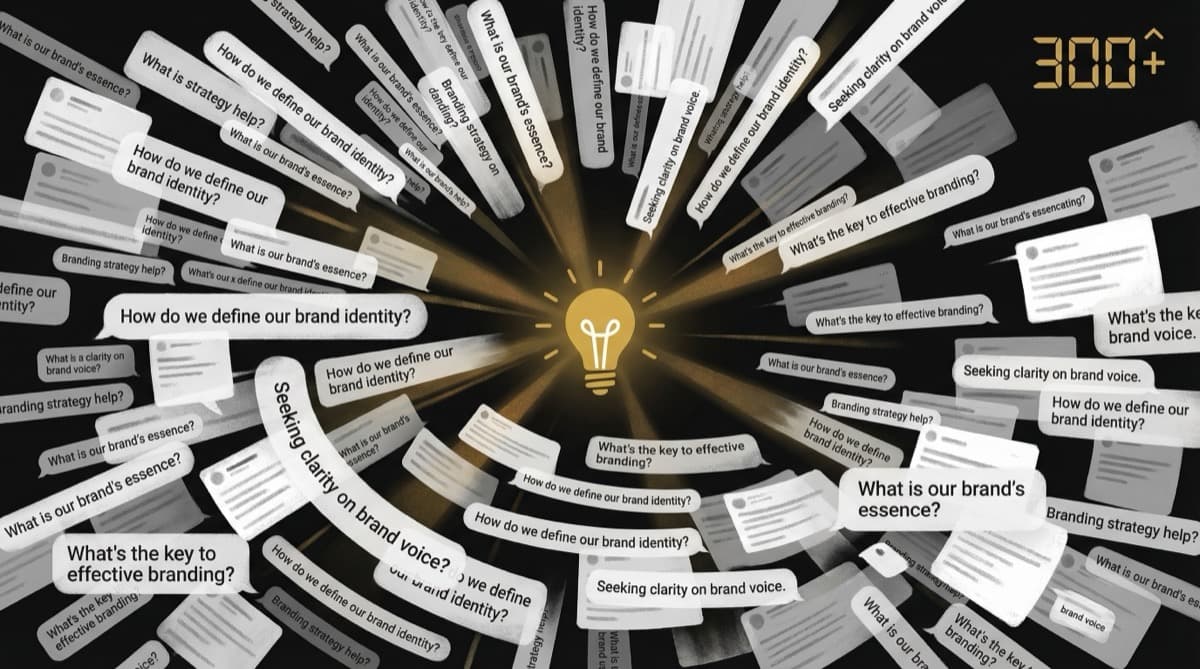
After receiving 300+ DMs from doctors across 14 countries asking variations of the same question, we stopped seeing individual inquiries and started seeing patterns. What doctors say they want and what they actually need are often two different things — and understanding this gap is what makes our branding work effective.
This is a meta-analysis of what we've learned from real conversations with real doctors. No hypotheticals, no theory — just patterns from 300+ Instagram DMs, WhatsApp messages, and consultation calls over 18 months.
Q.What's the One Question Every Doctor Asks?
The surface question varies, but the core question is always the same: "Will this actually work for me?"
Here are the most common variations we received:
- "I've been thinking about branding for months but I'm not sure if it's worth the investment"
- "I don't have time for social media — can you just handle everything?"
- "My colleague hired an agency and got no results. How are you different?"
- "I'm not comfortable being on camera. Is there another way?"
- "How long until I see patients from this?"
Strip away the surface differences, and every doctor is asking: "Can I trust you with my professional reputation, and will I see a return?"
This isn't a branding question. It's a trust question. And recognising that changed how we approach every client relationship.
Q.What Are the Most Common DM Patterns?
We categorised 300+ conversations into five distinct patterns:
Pattern 1: The Researcher (35% of DMs)
These doctors have already spent weeks or months researching branding. They've followed 10-15 competitor accounts, studied other doctors' content, and have specific questions about strategy.
What they say: "I've been watching your work. Can you break down your process?"
What they need: Validation that their instinct to invest in branding is correct, plus a clear execution plan they don't have to figure out themselves.
Key insight: Researchers convert at the highest rate (60%) but take the longest to decide (average 3-4 weeks from first DM to signing).
Pattern 2: The Crisis Case (25% of DMs)
Something triggered urgency — a competitor launched a great website, a negative review went viral, patient volume dropped suddenly, or a hospital contract ended.
What they say: "I need a website/brand/social media immediately. How fast can you start?"
What they need: Speed, yes — but also reassurance that their situation is fixable. Most crisis cases have deeper brand problems than the triggering event.
Key insight: Crisis cases convert fastest (often within 48 hours) but are most likely to have unrealistic timelines. Setting expectations early is critical.
Pattern 3: The Skeptic (20% of DMs)
These doctors have been burned before — by a marketing agency that promised results and delivered generic templates, or by spending money on ads with no return.
What they say: "I spent Rs 2 lakhs on a website that looks terrible. Why should I trust another agency?"
What they need: Proof, not promises. Case studies, specific examples, and transparent pricing. They need to see the work before they believe the pitch.
Key insight: Skeptics who convert become the most loyal clients — they've done their due diligence and they stay because results validate their decision. Conversion rate is lower (30%) but retention is 95%+.
Pattern 4: The Peer-Influenced (15% of DMs)
A colleague got branded and the results are visible — new website, polished social media, growing patient volume. Now this doctor wants the same.
What they say: "I saw what you did for Dr. [Name]. I want something similar."
What they need: Their own brand — not a copy. The biggest risk with peer-influenced clients is creating derivative brands that look similar to their colleague's (who is often a competitor in the same city).
Key insight: These are the easiest initial conversations but require careful management to ensure differentiation.
Pattern 5: The Future Planner (5% of DMs)
These doctors aren't ready now but are planning 6-12 months ahead — new clinic opening, fellowship ending, or planning a market expansion.
What they say: "I'm starting my own practice next year. When should I start branding?"
What they need: A timeline-based plan with clear milestones. They're organised and deliberate.
Key insight: Future planners have the highest lifetime value because they plan properly and invest in comprehensive brand builds from the start.
Q.What Do Doctors Actually Need vs What They Think They Need?
| What Doctors Ask For | What They Actually Need |
|---|---|
| A logo | A complete visual identity system |
| A website | A patient conversion machine with SEO |
| Social media management | A content strategy tied to patient acquisition goals |
| "More patients" | Better patient quality and higher lifetime value |
| "To look professional" | A brand that differentiates them from 50 competitors |
| "Help with Instagram" | A multi-channel digital presence strategy |
| A one-time project | An ongoing brand relationship that evolves |
The gap between ask and need is where most agencies fail. They deliver exactly what the doctor asked for — a logo, a basic website — and the doctor is disappointed because the underlying problem wasn't solved.
Need help with this?
Our team specializes in healthcare branding. Get personalized advice in a free 15-minute call.
Book a free 15-minute callQ.What Have We Changed Based on These Patterns?
1. We Lead With Strategy, Not Design
Before designing anything, we now spend 2-3 hours understanding the doctor's market, competition, patient demographics, and growth goals. This strategy session is where 80% of the value is created — the design is the execution of a plan, not a standalone deliverable.
2. We Show Results Before Asking for Trust
Every initial conversation now includes 3-5 specific case studies relevant to the doctor's specialty and market. We don't say "trust us" — we say "here's what we did for a doctor in your exact situation."
3. We Set Honest Timelines
- Brand identity: 3-4 weeks
- Website: 4-6 weeks
- First patients from digital channels: 8-12 weeks
- Full ROI materialisation: 4-6 months
We'd rather under-promise than have a client question their investment at month 2.
4. We Built Specialty-Specific Playbooks
A dermatologist's branding strategy is fundamentally different from a psychiatrist's. An Indian market approach doesn't work in Australia. We now have documented playbooks for 15+ specialties across 5 markets.
5. We Created a Proof Library
200+ completed projects, documented with before/after metrics, client testimonials, and specific ROI data. When a new doctor DMs us, we can show them a relevant example within 2 minutes.
Q.What's the Biggest Lesson From 300+ Doctor Conversations?
Doctors are not typical clients. They're highly educated, analytically rigorous, time-poor, and risk-averse with their professional reputation. They don't respond to hype — they respond to evidence. They don't want to be sold — they want to be shown.
The branding agencies that fail with doctors are the ones that treat them like any other small business client. The ones that succeed understand that doctor branding is a specialised discipline that requires healthcare market knowledge, regulatory awareness, and genuine respect for clinical expertise.
Every DM we receive is a doctor trusting us enough to say "I need help with something I wasn't trained for." That trust is the foundation of everything we build.
FAQ
Q:What's the most common mistake doctors make before reaching out to a branding agency?
A:Trying to do it themselves — or worse, delegating it to a clinic receptionist or a friend who "knows design." We've rebranded over 40 practices where the doctor spent 6-12 months and Rs 50,000-2 lakhs on DIY or amateur branding before realising it wasn't working. The cost of doing it wrong first almost always exceeds the cost of doing it right from the start.
Q:How do you handle doctors who want results in 30 days?
A:Honestly. We explain that brand building is not a 30-day process — and anyone who promises otherwise is lying. We can deliver a brand identity in 3-4 weeks and a website in 4-6 weeks. But patient flow from digital channels takes 8-12 weeks minimum. If a doctor needs patients in 30 days, we recommend Google Ads as a bridge while the brand infrastructure is built.
Q:What percentage of doctors who DM you actually become clients?
A:About 25-30% of DM conversations convert to clients. The main reasons for non-conversion: budget constraints (40%), timing not right (30%), and choosing a competitor (15%). We follow up with non-converters quarterly — about 20% of them become clients within 12 months when their situation changes.
Q:What's different about working with a healthcare-specific branding agency?
A:Three things: regulatory knowledge (we know what you can and can't say in each market), clinical credibility (we understand medical hierarchies, referral networks, and patient psychology), and portfolio relevance (we can show you exactly what we've done for doctors in your specialty). Generic agencies deliver generic brands — and generic doesn't compete in healthcare.