On this page
The med spa industry in the United States is projected to exceed $28 billion by 2027, and the three most competitive markets — Miami, Los Angeles, and New York City — account for a disproportionate share of that growth. Branding a med spa in these cities requires a fundamentally different approach than branding a medical practice. You are competing with luxury retail, high-end hospitality, and a saturated landscape of competitors all fighting for the same affluent clientele.
Q.What Makes Med Spa Branding Different From Medical Practice Branding?
Med spas occupy a unique space between healthcare and luxury. Your brand needs to communicate clinical credibility and aesthetic sophistication simultaneously. Patients choosing a med spa are not just seeking treatment — they are buying an experience and a lifestyle association.
The three pillars of effective med spa branding:
- Clinical trust — Board-certified providers, safety protocols, real results
- Luxury positioning — Premium aesthetics, elevated language, aspirational imagery
- Lifestyle alignment — Your brand should feel like a natural extension of your target patient's identity
Q.How to Brand a Med Spa in Miami
Miami's med spa market is driven by body aesthetics, Latin American medical tourism, and a culture that celebrates visible results. Your branding should reflect:
Visual Identity:
- Warm, tropical-inspired color palettes — golds, soft corals, warm whites
- Clean sans-serif typography with occasional script accents for luxury feel
- Lifestyle photography featuring diverse skin tones and body types
- Interior design that photographs well for social media (your space is a marketing asset)
Positioning Strategy:
- Emphasize body contouring, injectables, and skin treatments — Miami's highest-demand services
- Bilingual branding (English and Spanish) is not optional, it is essential
- Leverage the medical tourism angle — position as a destination worth traveling to
- Instagram-first marketing strategy (Miami's med spa audience is heavily visual)
Pricing Signal: Miami patients expect premium pricing but respond to package deals and membership models. Your branding should never feel discount or deal-driven. Position value through exclusivity, not affordability.
Q.How to Brand a Med Spa in Los Angeles
LA's med spa market is defined by celebrity culture, natural-looking results, and a health-conscious lifestyle. The vibe is effortless luxury, not opulent display.
Visual Identity:
- Minimalist, California-clean aesthetics — muted earth tones, sage greens, warm taupes
- Modern sans-serif typography, airy layouts with generous white space
- Photography that emphasizes the "natural glow" look — dewy skin, subtle enhancements
- Wellness-oriented imagery (think: Erewhon meets clinical precision)
Positioning Strategy:
- Lead with "natural results" messaging — LA patients fear looking overdone more than any other market
- Wellness positioning — connect aesthetic treatments to overall health and longevity
- Celebrity and influencer associations (even subtle ones) carry outsized weight
- Content marketing around ingredient education, treatment science, and skincare routines
Competitive Differentiation: LA is the most saturated med spa market in the country. Your brand must have a sharp point of view. The generic "we offer Botox, fillers, and laser" positioning gets lost. Find your niche — whether it is regenerative aesthetics, skin health, or a specific demographic (men's aesthetics is underserved and growing fast).
Need help with this?
Our team specializes in healthcare branding. Get personalized advice in a free 15-minute call.
Book a free 15-minute callQ.How to Brand a Med Spa in New York City
NYC's med spa market rewards efficiency, expertise, and sophistication. The client base is time-pressed, highly educated, and brand-savvy.
Visual Identity:
- Sophisticated, editorial aesthetics — deep jewel tones, black and white with metallic accents
- Strong typographic identity — NYC clients respond to bold, fashion-forward type
- Photography that feels editorial, not clinical — think Vogue, not WebMD
- Compact, high-impact design (mirroring the city's aesthetic of doing more with less)
Positioning Strategy:
- Lead with expertise and credentials — NYC patients research extensively before booking
- Lunch-break positioning — treatments that fit into a busy professional schedule
- Neighborhood-specific branding (a SoHo med spa has a different vibe than an Upper East Side practice)
- Press and editorial mentions carry significant weight in NYC
Pricing: NYC supports the highest price points in the country. Your brand should reflect premium quality without being pretentious. Transparency about pricing (at least ranges) is valued by this market — New Yorkers do not like surprises.
Universal Med Spa Branding Rules
Regardless of market, every successful med spa brand follows these principles:
- 1Provider-forward branding — Patients want to know who is performing their treatments
- 2Before-and-after galleries — Real results are your most powerful marketing asset
- 3Consistent social media presence — Post 4-5 times per week minimum
- 4Review management — Actively collect and respond to reviews on Google, Yelp, and RealSelf
- 5Membership or loyalty program — Branded retention programs reduce patient churn by 30-40%
FAQ
Q:How much does it cost to brand a med spa in the US?
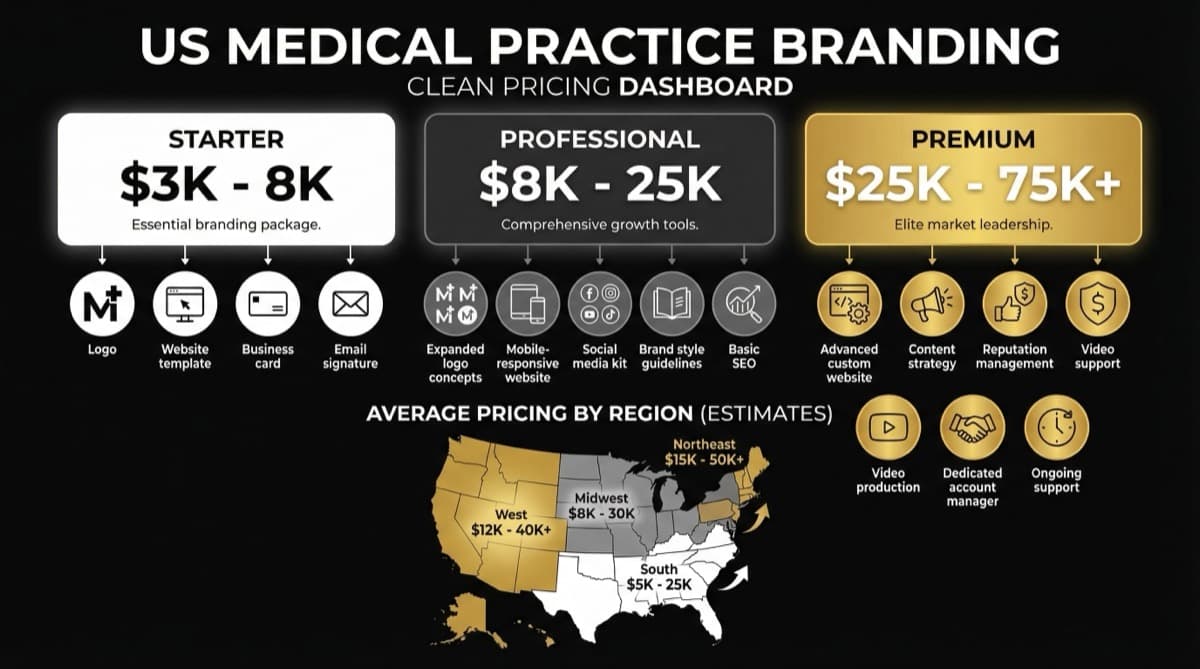
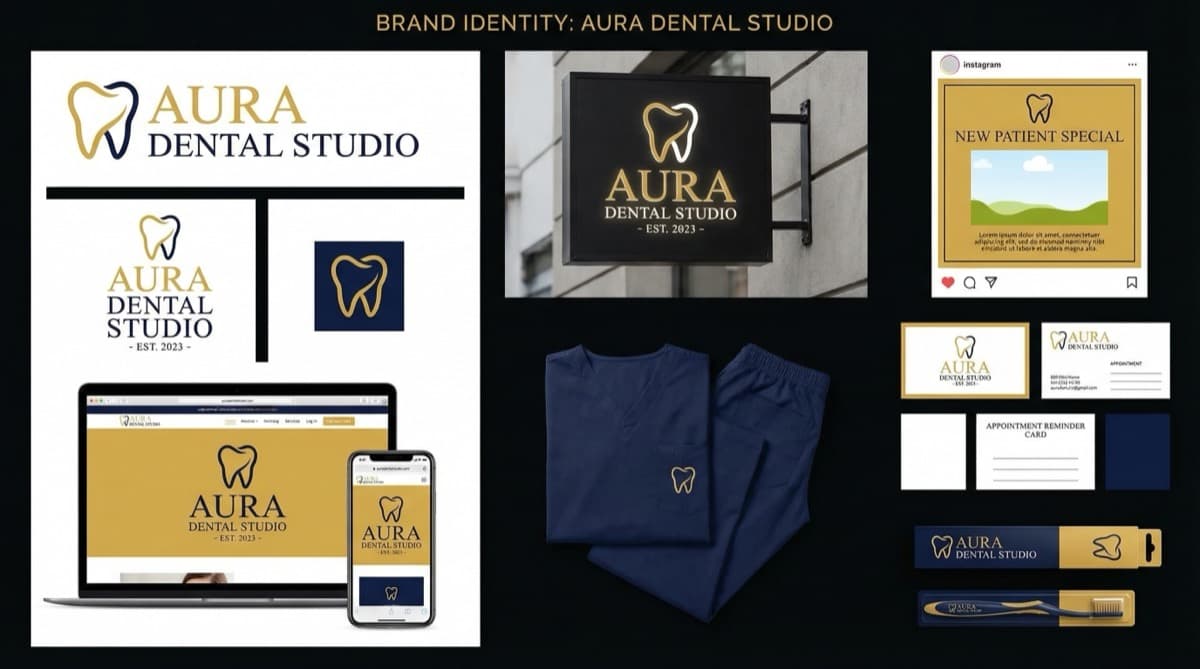
A:complete med spa brand identity (logo, colors, typography, social templates, signage, brand guidelines) costs $7,000-$20,000 from a healthcare-focused agency. Budget an additional $8,000-$15,000 for a custom website. Total brand launch investment: $15,000-$35,000.
Q:Should my med spa brand use my personal name or a creative name?
A:In most cases, use a creative brand name. Med spas benefit from brand equity that exists independently of any single provider. However, if you are a well-known provider in your market, leveraging your name can accelerate growth. Many successful med spas use a hybrid approach: "Glow Aesthetics by Dr. Smith."
Q:How long before med spa branding shows ROI?
A:Most med spas see measurable ROI from professional branding within 3-6 months through increased new patient inquiries, higher average treatment value, and improved patient retention. The brand compounds over time — practices with strong brands report 40-60% lower patient acquisition costs by year two.