On this page
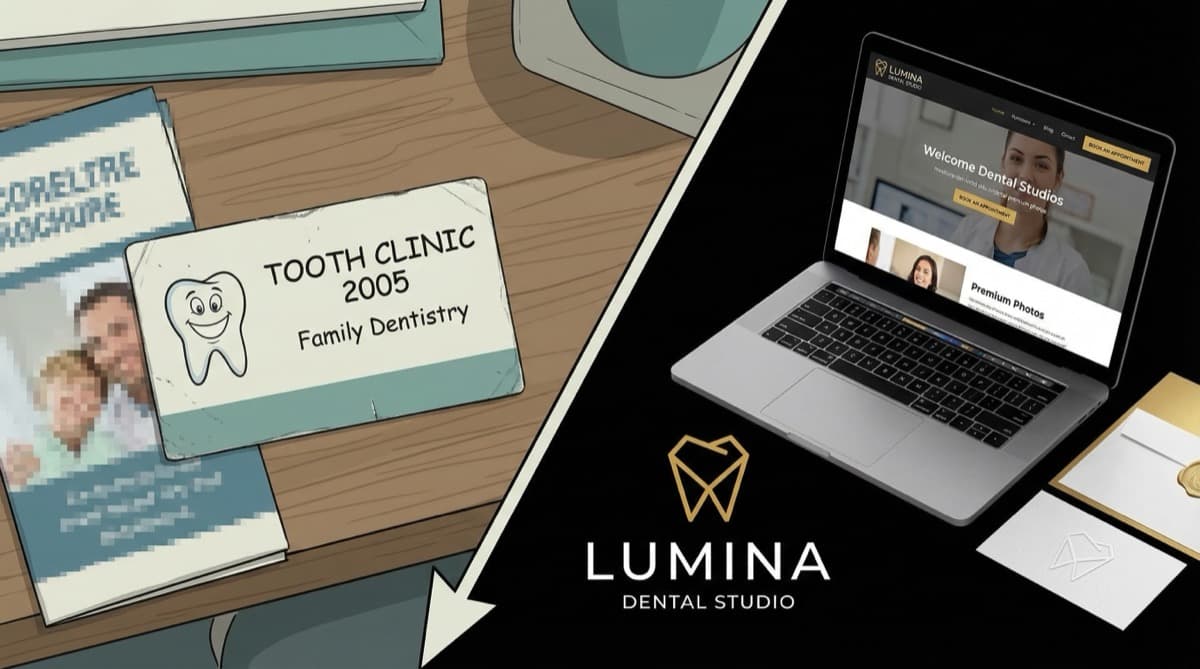
Your logo appears on everything — your building sign, website header, social media profiles, business cards, prescription pads, and patient forms. It is the single most visible element of your medical practice brand. A well-designed logo builds trust before a patient reads a single word about your practice. A poorly designed one does the opposite.
These 10 rules are based on designing logos for hundreds of medical practices and the patterns that consistently separate logos patients trust from logos that undermine credibility.
Rule 1: Simplicity Wins Every Time
The most effective medical logos are simple. They work at the size of a favicon (16x16 pixels) and on a building sign. If your logo has intricate details, gradients, or complex illustrations, it will lose clarity at small sizes — which is exactly where patients see it most often (Google search results, social media profiles, mobile browser tabs).
Test your logo: Shrink it to the size of a nickel. Can you still identify it? If not, simplify.
Rule 2: Avoid the Obvious Medical Clichés
Stethoscopes, caduceus symbols, heartbeat lines, and generic cross shapes are the most overused elements in medical logo design. When your logo looks like every other medical practice logo, you lose the one thing a logo is supposed to provide: recognition.
Instead, consider:
- Abstract marks that suggest your specialty without being literal
- Monogram designs using your practice initials
- Wordmarks with distinctive typography
- Geometric shapes that convey precision and trust
Rule 3: Choose Colors With Intention
Color is not decoration — it is communication. The colors in your logo tell patients what kind of practice you are before they read your name.
Color meanings in healthcare:
- Navy blue: Authority, trust, stability (best for: cardiology, internal medicine, surgery)
- Teal/cyan: Modern, innovative, approachable (best for: pediatrics, family medicine, telehealth)
- Deep green: Natural, health-focused, calming (best for: holistic medicine, wellness, naturopathy)
- Burgundy/wine: Sophisticated, premium, established (best for: plastic surgery, concierge medicine)
- Warm gray + gold: Luxury, exclusivity (best for: med spas, cosmetic dermatology)
- Bright colors: Energetic, fun, welcoming (best for: pediatrics, family dentistry)
Limit your logo to two colors maximum. One primary color and one accent or neutral.
Need help with this?
Our team specializes in healthcare branding. Get personalized advice in a free 15-minute call.
Book a free 15-minute callRule 4: Typography Is Half Your Logo
Many of the strongest medical practice logos are wordmarks — the practice name set in carefully chosen typography with subtle custom touches. The font you choose communicates as much as any icon.
Font guidelines for medical logos:
- Sans-serif fonts (like Montserrat, Avenir, or Proxima Nova) — Modern, clean, approachable
- Serif fonts (like Playfair Display, Libre Baskerville) — Traditional, authoritative, established
- Avoid: Script fonts (hard to read at small sizes), novelty fonts (undermine credibility), and overly thin weights (disappear on dark backgrounds)
Rule 5: Design for Every Application
Your logo will be used in places you have not thought of yet. Design it with versatility in mind:
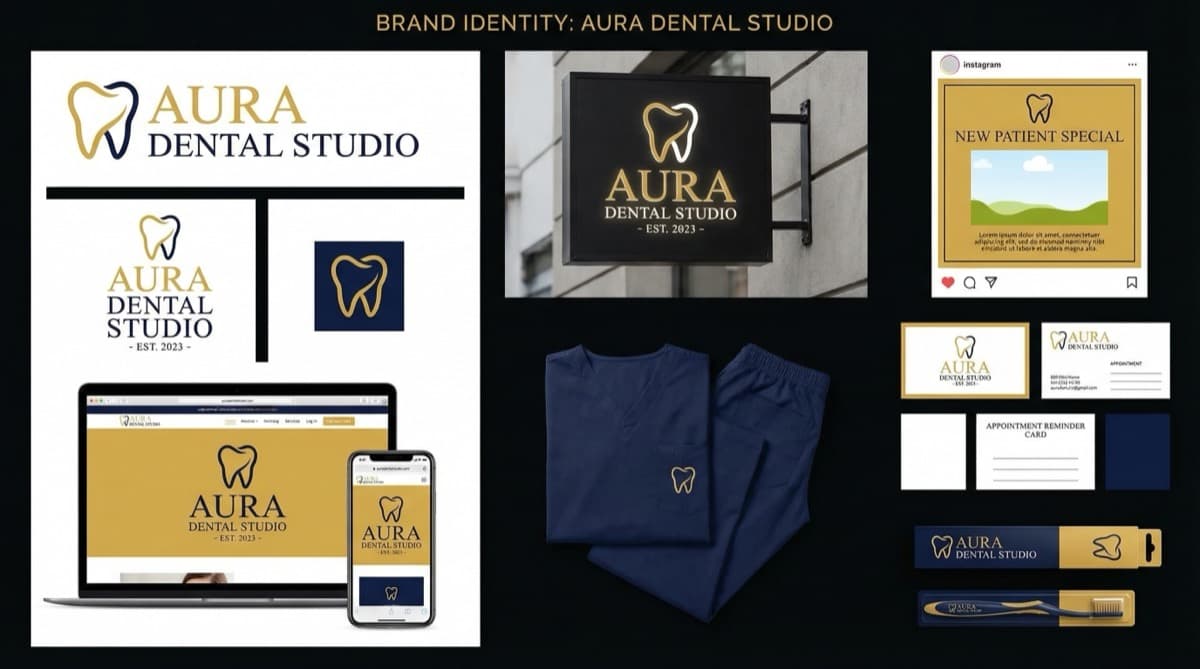
- Horizontal version for website headers and email signatures
- Stacked version for social media profiles and signage
- Icon/mark only for favicons, app icons, and watermarks
- Single-color version for embroidery, stamps, and faxes
- Reversed version (white on dark backgrounds) for use on dark surfaces
Rule 6: Make It Timeless, Not Trendy
Design trends change every 2-3 years. Your logo should last 7-10 years. The logos that age best are the ones that avoided the trends of their era.
Current trends to approach with caution:
- Ultra-thin line weights (may not age well)
- Gradient color effects (limit to digital applications)
- Overly geometric abstract shapes (can feel generic)
Timeless approaches that always work:
- Clean letterforms with subtle customization
- Strong, readable typography
- Simple geometric marks with meaning
- Balanced proportions and intentional spacing
Rule 7: Test With Real Patients
Before finalizing your logo, show it to 10-15 people who match your target patient demographic. Ask them three questions:
- 1What kind of business do you think this is?
- 2Does this look trustworthy?
- 3Would you feel comfortable visiting this practice?
If patients cannot identify it as a medical practice, or if it does not evoke trust, iterate before committing.
Rule 8: Invest in Professional Design
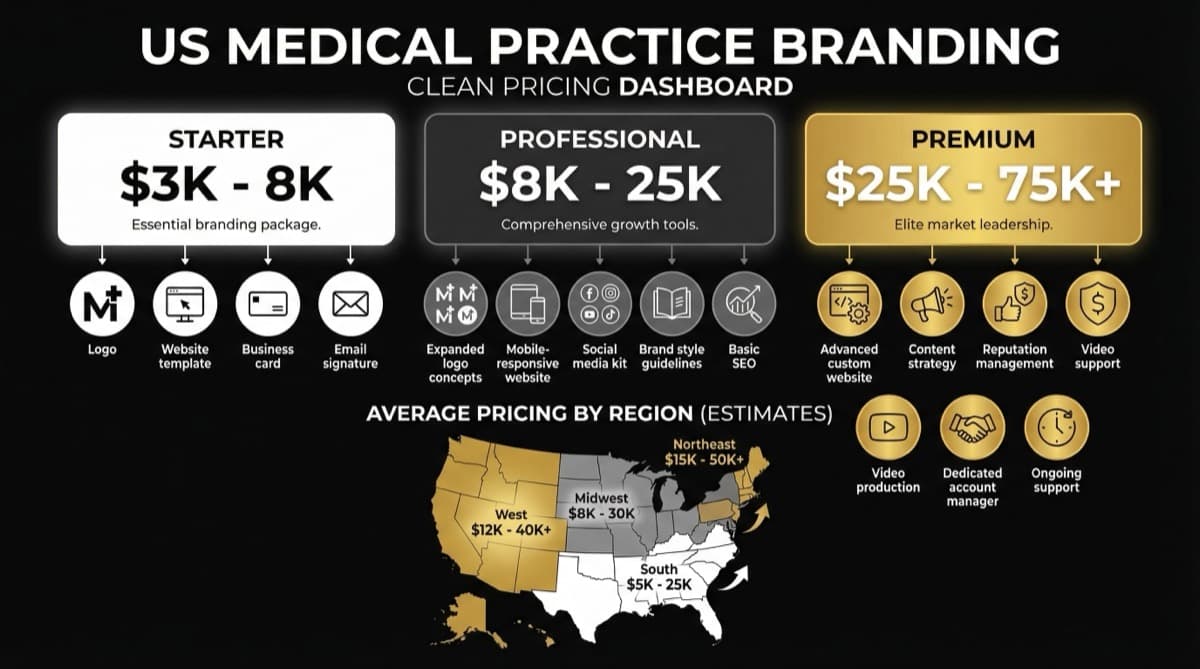
A professional logo design from a healthcare-focused designer costs $1,500-$5,000. This is not the place to economize. A $50 logo from a crowdsourcing platform will look like a $50 logo — and patients will notice.
Professional logo design includes:
- Discovery and strategy phase (understanding your practice, market, and patients)
- Multiple concept presentations (typically 3-5 directions)
- Refinement rounds (2-3 revision cycles)
- Final delivery with all file formats and variations
- Basic brand guidelines for consistent usage
Rule 9: Protect Your Logo
Once finalized, register your logo as a trademark. The process costs $250-$350 per class through the USPTO and protects you from competitors using a confusingly similar mark. This is especially important if you plan to expand to multiple locations.
Rule 10: Do Not Change It Without Good Reason
Frequent logo changes confuse patients and undermine the recognition you have built. Commit to your logo for a minimum of 5 years. Minor refinements are acceptable (adjusting spacing, updating colors slightly), but a complete redesign should only happen for significant business reasons.
FAQ
Q:Should my logo include "MD," "DDS," or my specialty?
A:Including your credentials in the logo is optional. If your practice name does not clearly indicate that you are a medical provider (e.g., "Pinnacle Health" vs. "Dr. Smith Orthopedics"), adding a tagline with your specialty is more effective than cramming credentials into the logo mark.
Q:How many logo concepts should I expect from a designer?
A:professional designer should present 3-5 initial concepts, each exploring a different direction. You then select one direction for refinement over 2-3 revision rounds. Be wary of designers who present only one option or more than 8 — the former suggests limited thinking, the latter suggests unfocused work.
Q:Can I design my own medical practice logo?
A:You can, but the results rarely build the trust premium that professional design provides. Your logo is seen by every patient, every day. The $2,000-$5,000 investment in professional design pays for itself in patient perception alone.