On this page
A medical practice website in Australia is no longer just an online brochure — it is the front door to your practice. Over 80% of Australian patients research a practice online before making an appointment. If your website is slow, outdated, or difficult to navigate, those patients are booking with your competitor.
Q.What Makes a Great Medical Practice Website in Australia?
The best medical practice websites in Australia share several characteristics that consistently convert visitors into patients:
Speed and Mobile Performance
- Page load time under 3 seconds (over 65% of Australians access healthcare websites on mobile)
- Responsive design that works flawlessly on phones, tablets, and desktops
- Optimised images that do not slow down page loading
- Core Web Vitals scores in the green zone across all metrics
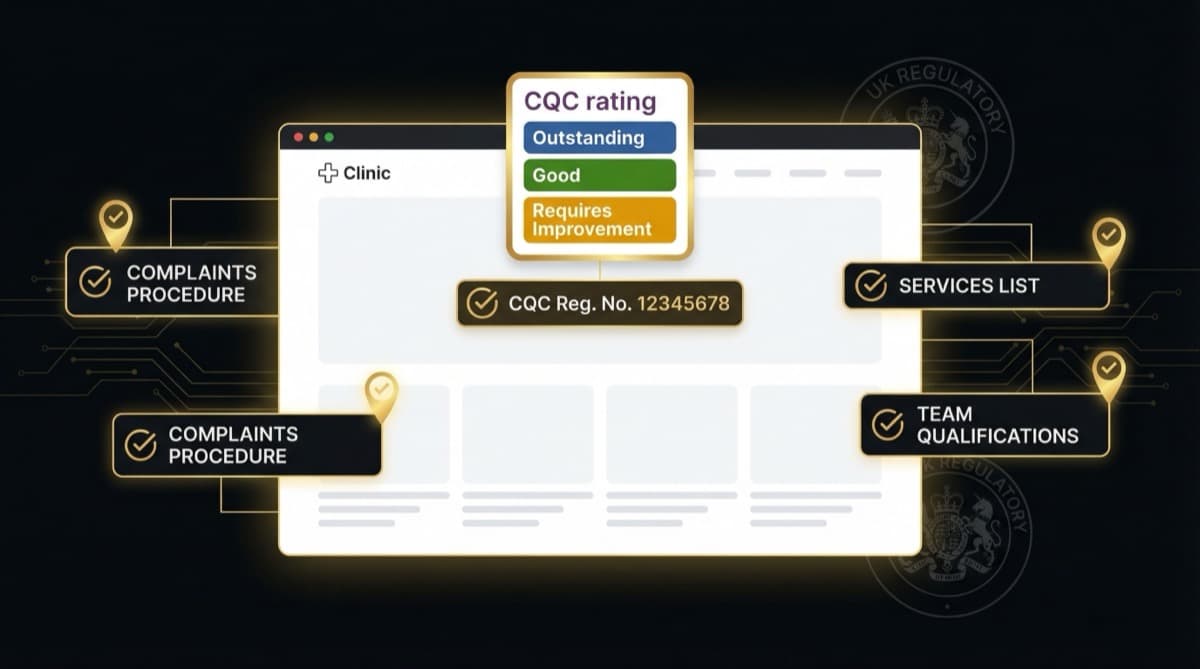
Trust and Credibility Signals
- Professional practitioner photos (not stock images)
- AHPRA registration numbers and qualifications clearly displayed
- Professional association memberships (AMA, RACGP, specialist colleges)
- Practice accreditation badges (AGPAL, QIP)
- Privacy policy and patient rights information
Patient-Centric Navigation
The best medical websites organise content around what patients need, not around internal practice structure:
- Clear calls to action — "Book Online" button visible on every page
- Services organised by patient need — "I need help with back pain" rather than "Physiotherapy Department"
- Doctor profiles accessible in two clicks — Patients want to know who they will see
- Fee transparency — At minimum, guidance on consultation fees, Medicare rebates, and gap payments
- Location and parking information — Especially important in metro areas like Sydney CBD, Melbourne CBD, or suburban centres with limited parking
Essential Pages for Australian Medical Practice Websites
Home Page
Your home page has approximately 5 seconds to communicate what you do, where you are, and why a patient should choose you. The best medical practice home pages include:
- A clear value proposition above the fold
- Practice location with suburb name (critical for local SEO)
- Key services listed prominently
- Online booking button
- Trust signals — accreditation badges, years of experience
Doctor and Practitioner Pages
These are among the most visited pages on any medical website. Each practitioner page should include:
- Professional headshot (consistent style across all practitioners)
- Qualifications and AHPRA registration
- Areas of special interest or expertise
- Languages spoken (increasingly important in multicultural areas)
- A personal statement that humanises the practitioner
Service Pages
Each major service should have its own page, optimised for relevant search terms. A GP practice might have separate pages for:
- General health checks
- Chronic disease management
- Women's health
- Men's health
- Children's health
- Mental health
- Skin checks
- Travel medicine
- Immunisations
Each page should explain the service, what patients can expect, fee guidance, and how to book.
Fees and Billing Page
Australian patients want to understand costs before visiting. Your fees page should explain:
- Whether you bulk bill, offer mixed billing, or are private only
- Standard consultation fees and Medicare rebate amounts
- Gap payment estimates for common services
- Health fund and DVA acceptance
- Payment methods accepted
SEO for Australian Medical Practice Websites
Local SEO Fundamentals
Local search is critical for medical practices. When someone searches "GP near me" or "dermatologist Melbourne," Google prioritises practices with strong local SEO. Essential steps:
- Google Business Profile — Claimed, verified, and regularly updated with accurate hours, services, and photos
- Local keywords on every page — Include your suburb, city, and nearby areas naturally throughout your website content
- NAP consistency — Your Name, Address, and Phone number must be identical across your website, Google Business Profile, and all directory listings
- Schema markup — Implement MedicalBusiness and Physician schema to help Google understand your practice
Content Strategy
The best medical practice websites publish regular, relevant content that answers patient questions:
- Health awareness articles relevant to your patient population
- Seasonal health guides (flu season, bushfire smoke health impacts, sun safety)
- Practice news and updates
- New service announcements
Need help with this?
Our team specializes in healthcare branding. Get personalized advice in a free 15-minute call.
Book a free 15-minute callCommon Website Mistakes Australian Practices Make
- Using stock photos of American hospitals — Australian patients notice. Use real photos of your practice and team
- No online booking — If a competitor offers online booking and you require a phone call, you lose the patient
- Missing fee information — Patients will call another practice rather than call to ask about fees
- Slow loading speed — Large, unoptimised images are the most common cause
- Not mobile-friendly — Surprisingly common among older practice websites
- No HTTPS security certificate — Google flags non-HTTPS websites as "not secure," destroying patient trust instantly
Q.How Much Does a Medical Practice Website Cost in Australia?
| Website Type | Price Range | Timeframe |
|---|---|---|
| Template-based basic site | A$3,000 - 6,000 | 2-4 weeks |
| Custom mid-range website | A$10,000 - 25,000 | 6-10 weeks |
| Premium custom website | A$30,000 - 80,000 | 10-16 weeks |
| Enterprise multi-location | A$50,000 - 150,000 | 12-20 weeks |
FAQ
Q:Should my medical practice website have a patient portal?
A:If your practice management software supports a patient portal, integrating it into your website can improve patient experience and reduce administrative phone calls. However, a well-designed website with online booking is more important than a patient portal as a first priority.
Q:How often should I update my medical practice website?
A:At minimum, review your website quarterly. Update practitioner information as needed, publish new content monthly, and conduct a full design refresh every 3-4 years to stay current with design trends and technology standards.
Q:Is WordPress good for medical practice websites in Australia?
A:WordPress can work well for medical practice websites, but it requires proper setup, security, and ongoing maintenance. Purpose-built healthcare website platforms may offer better compliance features and integrations with Australian practice management systems. Either way, the quality of design and content matters more than the platform.