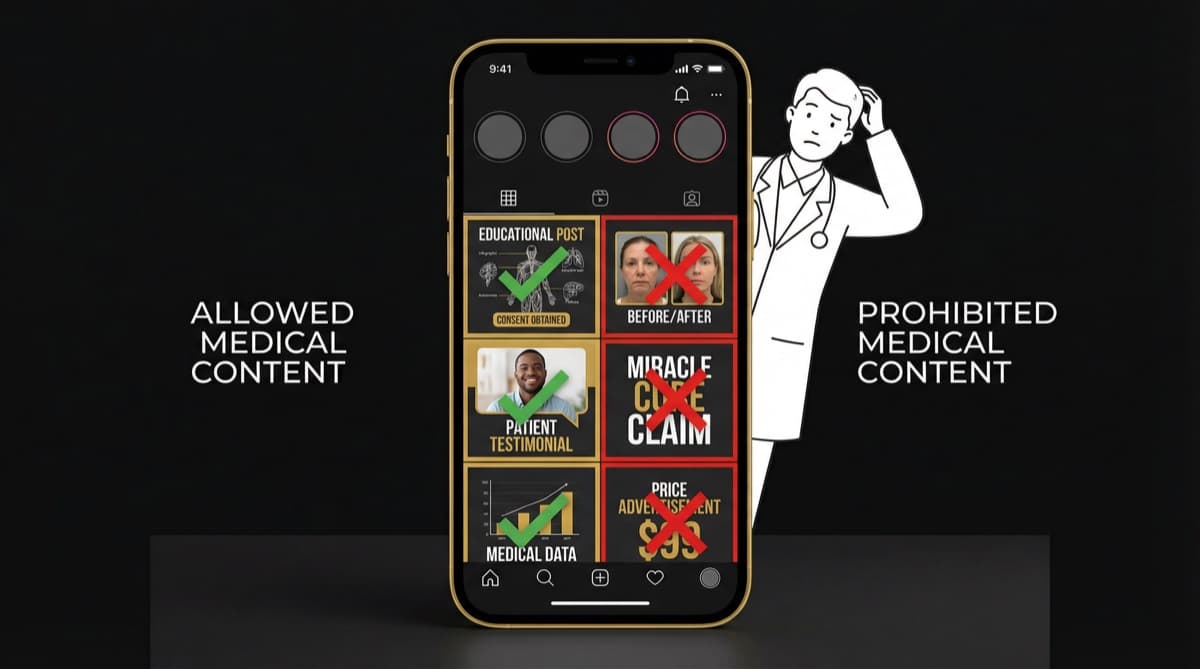
Yes — NMC can initiate disciplinary proceedings against doctors for social media posts that violate professional conduct rules, and the penalty can include suspension or permanent removal of registration. Documented cases include doctors receiving notices for patient testimonial videos on Instagram, before-after photo galleries, and superlative claims like "best surgeon." While license revocation for social media alone is currently rare, NMC is building digital monitoring capacity, and state medical councils have started dedicated social media monitoring cells. The risk is real and increasing.
Which Social Media Violations Can Trigger NMC Disciplinary Action?
Here are the specific violations ranked by enforcement risk. Patient testimonials (video/text) | High | Notices issued to multiple doctors Before-after photos (especially cosmetic) | High | Active enforcement in dermatology, cosmetic surgery Superlative claims ("best," "top," "#1") | High | Website and Google profile citations Outcome guarantees ("100% success") | Very High | Considered misleading advertising Patient confidentiality breach (case photos without consent) | Very High | Both ethical violation and legal offense Promotional content disguised as education | Medium | Increasing scrutiny Pharma-sponsored content without disclosure | Medium | Emerging area of enforcement Disparaging other doctors or treatments | Medium | Peer complaints trigger investigation
What Is the Legal Framework for Doctor Social Media in India?
Two sets of regulations define the boundaries. Under 2002 Ethics Regulations (Currently Active)
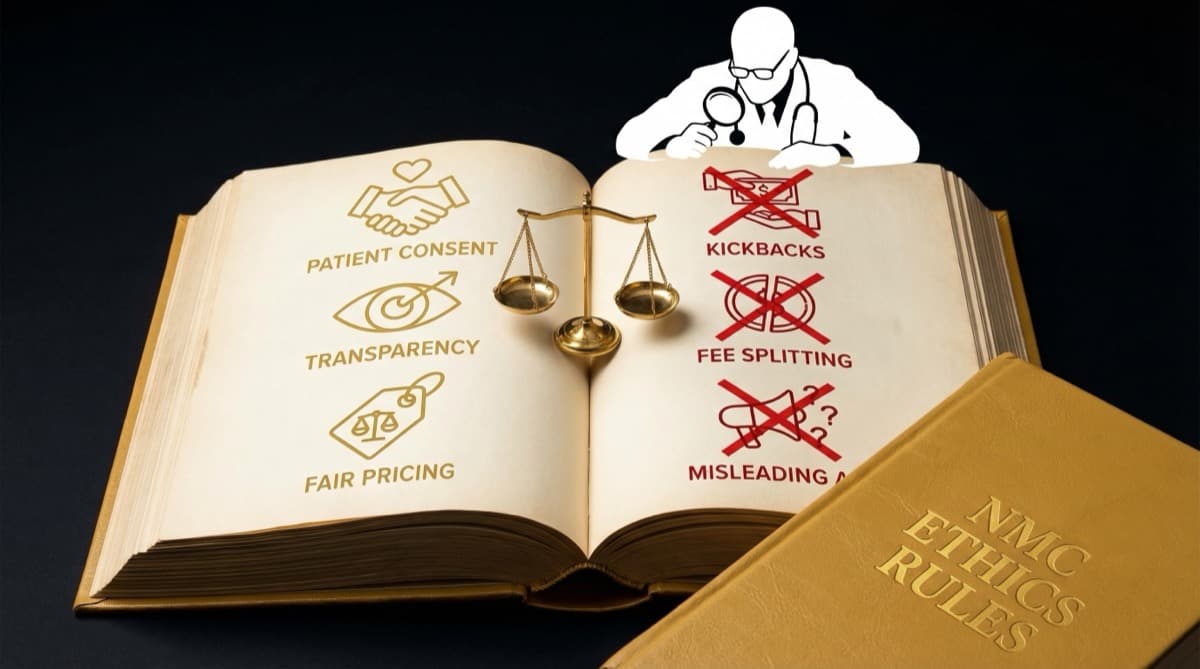
The Indian Medical Council (Professional Conduct, Etiquette and Ethics) Regulations, 2002 prohibit:
- Section 6.1: "A physician shall not aid or abet or commit any of the following acts which shall be construed as unethical — Advertising"
- Section 6.1.1: Soliciting patients directly or indirectly by advertising
- Section 7.14: Using testimonials of patients for advertising
These rules were written before social media existed, but NMC and state medical councils apply them to Instagram, YouTube, and other platforms. The principle is medium-neutral: if it's advertising or solicitation, it violates the rules regardless of the platform.
Under 2023 Regulations (On Hold but Directionally Relevant)
The 2023 regulations added 11 specific social media guidelines, including explicit prohibitions on:
- Patient testimonials and reviews on social media
- Before-after images
- Content that exploits patient fear or vulnerability
- Sensationalism and promotional storytelling disguised as education
While on hold, these guidelines signal what NMC considers violations and are likely to be re-enacted.
How Does the NMC Disciplinary Process Work for Social Media Violations?
The process follows six stages. Stage 1: Complaint Anyone can file a complaint — patients, other doctors, members of the public, or NMC can initiate suo motu action based on monitoring. Complaints can be filed with the State Medical Council or directly with NMC.
Stage 2: Preliminary Review The Ethics and Medical Registration Board reviews the complaint. If they find prima facie evidence of violation, they issue a show-cause notice.
Stage 3: Show-Cause Notice You receive a formal notice specifying the alleged violation and asking for your written response within a deadline (typically 15-30 days). This is the critical stage — your response determines whether the matter proceeds or is closed.
Stage 4: Hearing If the response is unsatisfactory, a formal hearing is conducted. You can present your case, bring witnesses, and be represented by a legal advisor.
Stage 5: Decision and Penalty
Acquittal | Matter closed, no penalty Warning | Formal warning on record, instruction to cease violation Temporary Suspension | Registration suspended for a specified period (1-12 months) — you cannot practice Permanent Removal | Name removed from medical register — you lose your license permanently
Stage 6: Appeal You can appeal to NMC (if the decision was by State Medical Council) or to a court of law.
What Actually Happens in Practice When Doctors Violate Social Media Rules?
Most common outcome: Warning letter with instruction to remove violating content. This happens when the violation is clear but relatively minor (a few testimonial posts, superlative claims on a website).
Less common: Temporary suspension. This is reserved for repeated violations after warnings, severe advertising cases, or cases combined with other ethical breaches.
Rare: Permanent removal for social media alone. This has not been widely documented and would likely require extreme or repeated behavior combined with other violations.
The real risk isn't license loss — it's the process itself. Even a warning involves formal proceedings, legal costs, reputational anxiety, and time away from practice. The disciplinary process, even when you're ultimately cleared, is disruptive and stressful.
Which Doctors Are Most at Risk of NMC Social Media Action?
Certain profiles face higher enforcement probability. Cosmetic Surgeons and Dermatologists Before-after photos are the foundation of cosmetic practice marketing. NMC considers them advertising. This specialty faces the most enforcement attention because the violation is visible and common.
Doctors with Large Social Media Followings A doctor with 100K Instagram followers posting testimonials is more visible to monitoring cells than one with 500 followers. High visibility attracts scrutiny.
Doctors Using Paid Social Media Advertising Running Instagram or Google ads for your medical practice is explicit advertising — the clearest possible violation. If your marketing agency is running paid campaigns, you're at risk.
Doctors in Competitive Metro Markets State medical councils in Maharashtra, Delhi, Karnataka, and Tamil Nadu are more active in social media monitoring than smaller states. Metro doctors in competitive specialties face higher enforcement probability.
How Can You Protect Yourself From NMC Social Media Action?
Take these proactive steps. Audit your current social media. Go through every post on your Instagram, Facebook, YouTube, and website. Remove or edit anything that contains testimonials, before-after photos, superlative claims, or outcome guarantees.
Audit your Google presence. Check your Google My Business profile, Practo listing, and any other third-party directory. Remove superlative claims and testimonials you didn't post but can control.
Brief your marketing team/agency. If someone else manages your social media, give them explicit written guidelines on what NMC permits. You are responsible for content posted on your behalf.
Switch to educational content. Every piece of content you create should pass the test: "Is the primary purpose of this to educate the public or to attract patients to my practice?" If it's the latter, don't post it.
Document everything. If you receive a notice, having a record of your content strategy, your guidelines to your team, and your compliance efforts strengthens your response.
Frequently Asked Questions
Has any doctor actually lost their license for social media? License revocation specifically and solely for social media posts has not been widely documented. However, doctors have received formal notices, warnings, and temporary suspensions for social media advertising violations. The enforcement trajectory is increasing.
Am I liable for what my hospital's marketing team posts about me? Yes — you are individually responsible for your professional conduct. If the hospital posts a testimonial video featuring you, and it violates NMC rules, you face the disciplinary action, not the hospital. Request written marketing guidelines from your hospital and review all content before it's published.
Can patients post testimonials about me without my knowledge? If a patient independently posts about you on their own social media, that's their speech, not your advertising. However, if testimonials appear on your professional pages (Google reviews, Facebook page you manage), you have a duty to not leverage them for promotion. Don't repost, highlight, or curate patient testimonials.
Are YouTube medical education videos safe? Yes — educational content is explicitly encouraged by NMC. A video explaining "What is angioplasty?" is educational. A video saying "Watch how I perform angioplasty at XYZ Hospital — book your consultation today" is advertising. The content determines the classification, not the platform.
What should I do if I receive an NMC social media notice? Do not ignore it. Respond within the deadline. Remove the flagged content immediately. Consult a medico-legal advisor before drafting your response. Document your compliance history and content strategy. Cooperate with the process — fighting or ignoring notices worsens outcomes.
Looking to build a professional healthcare brand? Explore our services at futurise.studio/services or book a free discovery call at futurise.studio/contact