The NMC Registered Medical Practitioner (Professional Conduct) Regulations, 2023 were notified in August 2023 but put on hold in August 2024 — meaning the older 2002 Ethics Regulations currently govern your conduct. However, the 2023 rules signal where regulation is heading, and many provisions overlap with existing rules. Most practicing doctors haven't read either version. Here's a plain-language breakdown of the rules that can get you a notice, categorized by what's actively enforceable today versus what's coming.
What Rules Are Currently Enforceable Under the 2002 Ethics Regulations?
These rules from the Indian Medical Council (Professional Conduct, Etiquette and Ethics) Regulations, 2002 are the operative framework:
Advertising Prohibition You cannot advertise your services. No newspaper ads, no hoardings, no social media solicitation. You can share: your name, qualifications, registration number, specialization, clinic address, consultation hours, and contact details. Anything beyond factual information about your practice crosses the line.
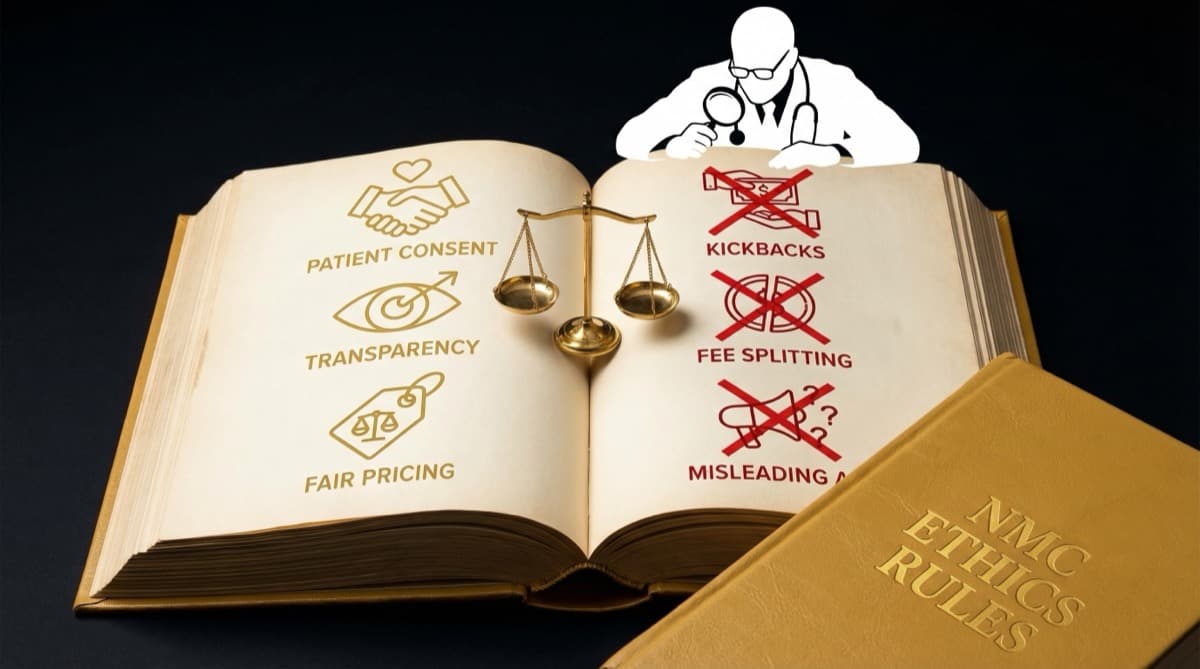
Fee Splitting and Referral Commissions You cannot give or receive commissions for patient referrals. Referring a patient to a diagnostic centre and receiving a percentage of the bill is a violation. This is among the most commonly violated — and most commonly ignored — rules in Indian medicine.
Patient Consent and Confidentiality Informed consent is mandatory before procedures. Patient information is confidential — you cannot share case details, images, or identifiable information without explicit written consent. Even with consent, using patient information for advertising is prohibited.
Professional Competence You must practice only within your area of competence and qualification. An MBBS doctor performing specialist procedures without appropriate training is a violation. A dermatologist performing surgical procedures outside their training scope is a violation.
Emergency Care Obligation You cannot refuse emergency treatment to a patient. Regardless of ability to pay, insurance status, or any other factor — emergency care must be provided. Refusal is a disciplinary violation.
Certificate and Report Integrity Medical certificates, death certificates, fitness certificates, and other official documents must be truthful. Issuing false certificates is both a professional conduct violation and a criminal offense.
What Was Proposed in the 2023 Rules — On Hold but Coming?
The 2023 regulations expanded significantly on the 2002 rules. While technically on hold, they represent NMC's regulatory direction:
Generic Prescriptions Proposed rule: Doctors must prescribe drugs by generic names only, not brand names.
Current status: On hold. Currently, you can prescribe by brand name. However, the direction is clear — expect generic prescription mandates in future regulations.
Impact: If enacted, this fundamentally changes the doctor-pharma relationship. Branded generic prescriptions drive the entire pharma marketing ecosystem (MR visits, conference sponsorships, branded promotions). Generic mandates would disrupt this system.
Pharma Interaction Restrictions Proposed rule: Doctors and their families cannot receive gifts, hospitality, cash, or grants from pharmaceutical companies. Conference sponsorship by pharma companies is prohibited.
Current status: On hold as part of the 2023 regulations. The 2002 rules also restrict unethical inducements but are less specific.
Impact: This would reshape medical conferences, CME programs, and the entire pharma-doctor engagement model. Currently, pharmaceutical companies spend thousands of crores on doctor engagement — from conference travel to sponsored workshops.
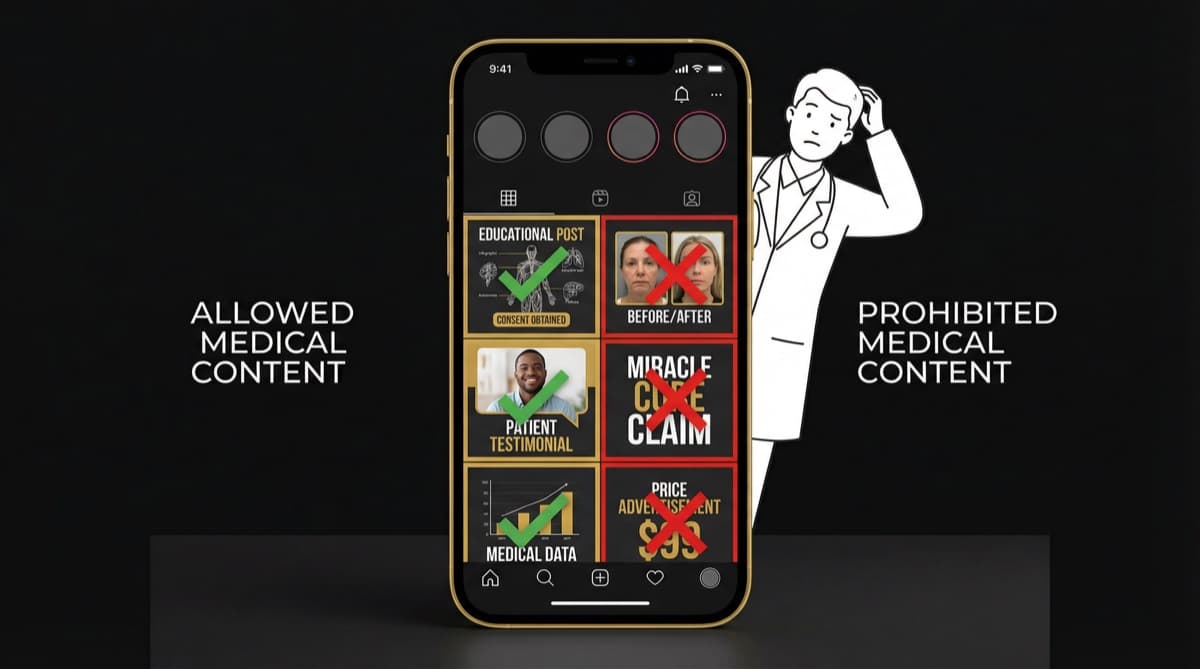
Social Media Regulations Proposed 11 rules for social media:
- 1Content must be factual, scientific, and verifiable
- 2Must stay within your area of expertise
- 3No patient testimonials or reviews
- 4No before-after images
- 5No misleading or exaggerated claims
- 6No exploitation of patient fear or vulnerability
- 7No discussion of specific patient treatment details
- 8No sharing of patient scans or images
- 9Maintain patient confidentiality
- 10No use of sensationalism
- 11No promotional storytelling disguised as education
Telemedicine Standards Proposed rule: Specific guidelines for teleconsultation including consent requirements, prescription limitations, and documentation standards.
Duty Hour Compliance Proposed rule: Institutions must comply with NMC's duty hour guidelines for residents. While not directly a doctor-conduct rule, institutions that violate duty hours face regulatory action.
Which Rules Are Most Doctors Breaking Without Knowing?
Several common practices violate existing regulations. 1. Commission on Diagnostic Referrals Every time you receive a percentage from a diagnostic centre for referrals, you're violating the 2002 rules. This is endemic in Indian medicine — lab chains, imaging centres, and pharmacies routinely offer 10-40% commissions. It's against the rules, and NMC periodically cracks down.
- 1Social Media Testimonials
Patient testimonials on your social media — even unsolicited ones that you don't remove — can be treated as advertising violations. You have a duty to not use testimonials for promotion, which extends to managing what appears on your professional pages.
- 1Superlative Claims in Digital Presence
Calling yourself "best," "top," "leading," or "number one" on your website, Google My Business profile, or Practo listing violates advertising restrictions. Even if you didn't write it (your SEO agency did), you're responsible.
- 1Cross-Pathy Practice
An MBBS doctor practicing Ayurveda, or a BAMS doctor prescribing allopathic drugs, faces ethical and legal issues. Cross-pathy practice is a complex, state-specific regulatory area, but it's technically a conduct violation.
- 1Fee Disclosure Violations
Several states require doctors to display fee schedules prominently. Not doing so is a minor but real compliance gap.
What Happens If You Violate NMC Ethics Rules?
The disciplinary process follows a structured path. The Process
- 1Complaint filed — by patient, colleague, or NMC's own monitoring
- 2Preliminary inquiry — State Medical Council or NMC Ethics Board reviews
- 3Show-cause notice — you receive notice and must respond within deadline
- 4Hearing — if the matter isn't resolved, a formal hearing is conducted
- 5Decision — acquittal, warning, suspension, or removal from register
Possible Penalties Minor (first-time social media violation) | Warning letter + instruction to remove content Moderate (commission taking, repeated advertising) | Temporary suspension of registration (1-12 months) Severe (negligence, false certificates, patient harm) | Permanent removal from medical register
Practical Reality NMC processes are slow. Most minor violations never reach formal proceedings. But the risk is real and increasing — NMC is building digital monitoring capacity, and state medical councils are becoming more active. The cost of a formal inquiry (time, reputation, legal fees) is significant even if you're ultimately cleared.
Frequently Asked Questions
Are the 2023 NMC rules currently in effect? No. The NMC Professional Conduct Regulations 2023 were put on hold in August 2024. The operative rules are the 2002 Indian Medical Council (Professional Conduct, Etiquette and Ethics) Regulations. The 2023 rules may be re-enacted with modifications.
Can NMC punish me for something I did before the rules changed? Generally, rules apply prospectively. You can't be penalized under the 2023 rules (which are on hold) for actions taken today. However, many 2023 provisions overlap with existing 2002 rules — advertising prohibition, commission prohibition, and patient confidentiality requirements are already enforceable.
Do the rules apply differently to different specialties? The rules apply equally to all registered medical practitioners regardless of specialty. However, enforcement attention varies — cosmetic surgeons and dermatologists face more scrutiny on advertising violations, while surgical specialties face more scrutiny on consent and competence issues.
What should I do if I receive an NMC notice? Respond within the specified deadline. Don't ignore it. Consult a medico-legal advisor. Prepare a documented response addressing each allegation specifically. Remove any content flagged as violative. Cooperate with the inquiry — non-cooperation worsens outcomes.
Is my hospital responsible for my compliance, or am I? You are individually responsible for your professional conduct, even if the violation was initiated by the hospital's marketing team, your social media manager, or your clinic's SEO agency. Hospital employment doesn't transfer your ethical obligations.
Looking to build a professional healthcare brand? Explore our services at futurise.studio/services or book a free discovery call at futurise.studio/contact