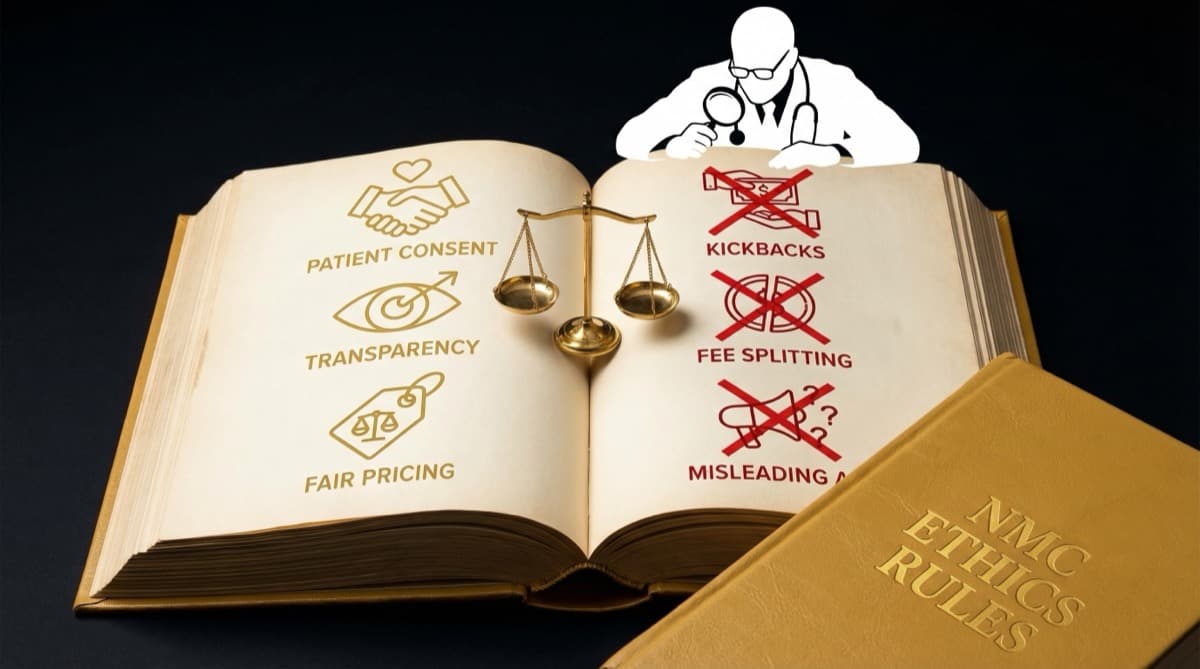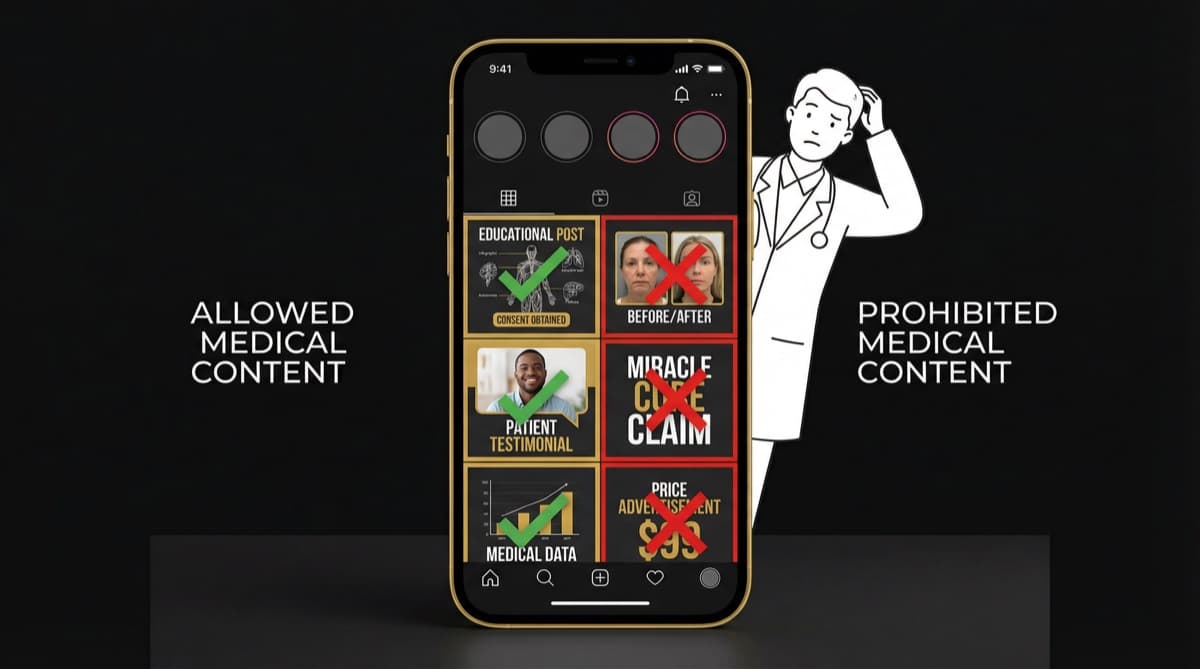
You can post educational medical content on Instagram without violating NMC guidelines — but you cannot post patient testimonials, before-after photos, superlative claims ("best surgeon in Mumbai"), or anything that constitutes patient solicitation. The NMC draws the line between education and advertising based on intent: if your content teaches the public about health, it's encouraged. If it's designed to attract patients to your practice, it crosses the line. NMC can issue notices and initiate disciplinary proceedings for violations, including suspension of registration. Here's exactly what's safe, what's risky, and what will get you a notice.
What Is the Current Regulatory Landscape for Doctor Social Media in March 2026?
Important context: The NMC introduced new Professional Conduct Regulations in August 2023, which included detailed social media guidelines. However, these regulations were put on hold in August 2024 following significant backlash from the medical community. As of March 2026, the operative guidelines are the older Indian Medical Council (Professional Conduct, Etiquette and Ethics) Regulations, 2002 — which are less specific about social media but still prohibit advertising and solicitation.
Additionally, the NMC released 11 specific social media guidelines for doctors in 2023 that, while technically in abeyance as part of the larger regulation, signal the direction of regulatory intent.
What this means for you: The 2002 rules prohibit advertising. The 2023 guidelines (though on hold) show what NMC considers violations. Play it safe by following both — the 2023 rules may be re-enacted with modifications.
What Can Doctors Safely Post on Instagram?
Several categories of content are clearly within NMC guidelines. Educational Content About Diseases and Prevention
- Explaining what diabetes is and how it's managed
- Discussing symptoms of common conditions (when to see a doctor for chest pain)
- Sharing public health information (vaccination schedules, screening guidelines)
- Explaining procedures in general terms (what happens during a knee replacement)
Rule: The content must be factual, scientific, verifiable, and within your area of expertise. You can discuss dermatology if you're a dermatologist — not if you're an orthopedician.
Your Professional Credentials
- Your qualifications (MBBS, MD, MCh — with registration number)
- Hospital or clinic affiliation
- Areas of specialization
- Consultation hours and location
- Contact information
Rule: Stating facts about your practice is information, not advertising. "Dr. X, MS Orthopedics, OPD: Mon-Sat 10-2, ABC Hospital" is fine. "Dr. X, India's top orthopedic surgeon" is not.
Health Awareness Content
- Awareness about health days and campaigns (World Heart Day, Breast Cancer Awareness Month)
- General fitness and wellness guidance
- Myth-busting about common health misconceptions
- Explaining medical news or research findings in lay terms
Academic and Professional Updates
- Conference presentations you've given
- Research papers you've published
- Awards from recognized medical bodies
- Professional milestones (without superlative framing)
What Are Doctors Prohibited From Posting on Instagram?
Several categories of content clearly violate NMC guidelines. Patient Testimonials and Reviews
Prohibited: Sharing, requesting, or displaying patient testimonials, recommendations, or reviews — even if the patient voluntarily offers them. A patient saying "Dr. X saved my life" on your page is a violation if you don't remove it or actively solicited it.
Why: NMC considers testimonials a form of advertising that exploits the patient-doctor trust relationship. Even genuine gratitude, when used as promotional material, crosses the line.
Before-After Photos
Prohibited: Posting before-and-after images of patients (even with consent) as they constitute implicit advertising of outcomes. This is especially enforced in dermatology, cosmetic surgery, and aesthetic procedures.
Why: Before-after images imply guaranteed results, which is inherently misleading. Every patient responds differently, and showcasing success stories without failures is selective advertising.
Superlative Claims
Prohibited: Calling yourself "best," "top," "number one," "leading," "most experienced," or any superlative that cannot be objectively verified. "Best cardiologist in Delhi" violates guidelines. "Cardiologist with 20 years of experience" does not.
Guaranteed Outcomes
Prohibited: Any claim or implication that a specific treatment will definitely work. "100% success rate" or "guaranteed results" or "painless procedure" (when pain is possible) are violations.
Promotional Content Disguised as Education
Grey zone: This is where most doctors get into trouble. A post that says "Understanding hair transplant procedures" is educational. A post that says "Understanding hair transplant at XYZ Clinic — our state-of-the-art technology ensures natural results" is promotional content disguised as education. NMC judges intent.
Solicitation of Patients
Prohibited: Direct calls to action like "Book your appointment now," "Limited slots available," "Special offer on health packages," or any language designed to convert social media viewers into patients.
What Content Falls in the Grey Zone Between Education and Advertising?
Some content types could be classified either way depending on framing. Procedure explanation | "How cataract surgery works" (general) | "How we do cataract surgery at XYZ Eye Centre" (promotional) Patient story | "A case study of rare cardiac condition" (educational, anonymized) | "Our patient Mr. X recovered fully after our treatment" (testimonial) Technology showcase | "How robotic surgery is changing orthopedics" (industry trend) | "Our hospital's new robotic system delivers superior results" (advertising) Outcome data | "Research shows 95% success rate for this procedure nationally" (citing literature) | "Our clinic has a 95% success rate" (outcome guarantee) Professional milestone | "Completed 1000th knee replacement" (fact) | "1000 happy patients and counting!" (testimonial-adjacent)
The test: Would a reasonable NMC inspector reading your post conclude that its primary purpose is to educate the public? Or to attract patients to your practice? If the answer is the latter, it's risky.
Which Real Cases Show How Doctors Got NMC Notices for Social Media?
Several documented cases illustrate where NMC draws the line:
- Doctors received notices for sharing patient video testimonials on Instagram
- Cosmetic surgeons received notices for before-after photo galleries on social media
- Doctors received notices for using phrases like "best treatment" and "guaranteed results" in social media posts
- Hospital-employed doctors received notices when the hospital's marketing team posted content on the doctor's behalf that violated guidelines
Key lesson: You are responsible for content on your professional social media pages — even if someone else posted it. Hospital marketing teams that post on your behalf don't protect you from individual NMC liability.
Can You Actually Lose Your Medical License for Social Media Posts?
Short answer: Yes, but it's rare for social media violations alone.
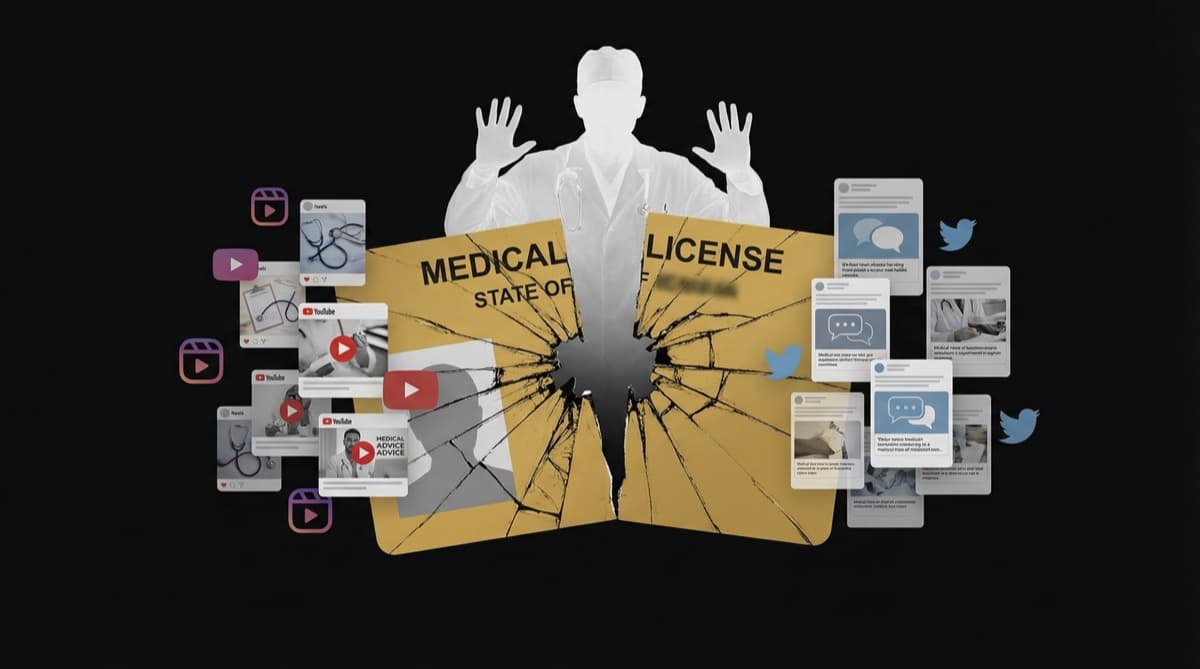
The process: NMC can initiate disciplinary proceedings through the Ethics and Medical Registration Board. Penalties range from warning letters to suspension of registration (effectively losing your license to practice, temporarily or permanently).
In practice: Most social media violations result in warnings or instructions to remove content. License suspension is reserved for severe or repeated violations. However, the risk increases as NMC becomes more active in monitoring social media — several state medical councils now have dedicated social media monitoring cells.
What Is the Structural Strategy to Build a Social Media Presence Without Violating NMC Rules?
The doctors who build the strongest Instagram presence within NMC guidelines follow a consistent pattern:
Focus on education, not promotion. Teach your audience about conditions, procedures, and health management. Position yourself as a knowledgeable expert, not as a service provider seeking customers.
Show your face, share your knowledge. NMC allows you to be visible and credible. A doctor explaining diabetes management on camera builds trust. The patient who watches 20 of your educational videos and then books an appointment has come to you through education, not solicitation.
Let patients find you, don't find patients. Your content should make you discoverable — not push patients toward booking. The distinction matters both ethically and legally.
Frequently Asked Questions
Can doctors advertise on social media in India? No — advertising (as defined by NMC) is prohibited. However, educational content, professional credential sharing, and health awareness posts are permitted and encouraged. The distinction is between teaching the public (allowed) and soliciting patients (prohibited).
Can I lose my medical license for Instagram posts? Yes, technically. NMC can suspend registration for violations of professional conduct rules, including social media advertising. In practice, most violations result in warnings first, but repeated or egregious violations (especially involving patient testimonials and outcome guarantees) can escalate to suspension proceedings.
Are the 2023 NMC social media rules in effect? No — the NMC Professional Conduct Regulations 2023 were put on hold in August 2024. The operative rules are the older 2002 Ethics Regulations. However, the 2023 guidelines indicate NMC's regulatory direction, and following them preemptively is the safest strategy.
Can hospitals advertise even if individual doctors can't? This is a contested area. An NMC panel has stated that advertisement norms for doctors and corporate hospitals should be uniform. Currently, hospitals advertise freely while doctors face restrictions — a structural inconsistency that the NMC panel is working to address.
What should I do if I receive an NMC notice about social media? Respond within the deadline specified. Remove the flagged content immediately. Provide a written explanation. Consult a medico-legal advisor before submitting your response. Do not ignore NMC notices — non-response can escalate the proceedings.
Looking to build a professional healthcare brand? Explore our services at futurise.studio/services or book a free discovery call at futurise.studio/contact