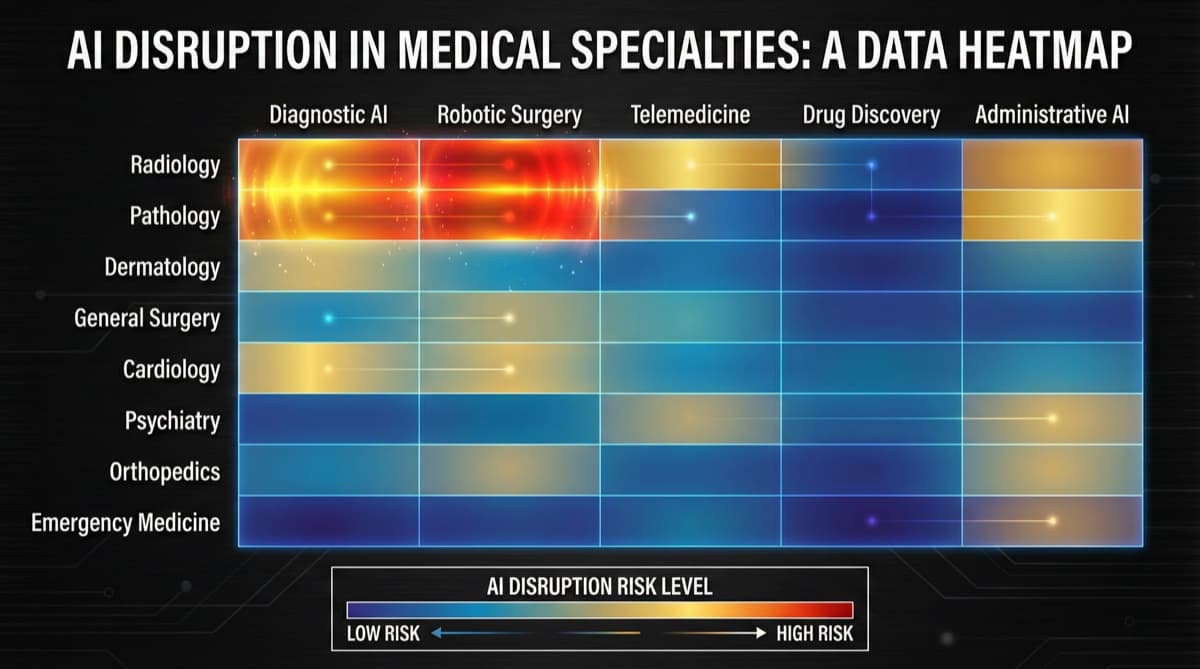
As of 2026, approximately 40% of Indian clinicians are using AI technologies in some capacity. India's AI diagnostics market is valued at $12.87 million and projected to triple to $44.87 million by 2030. But the gap between AI hype and AI reality in Indian hospitals is significant — most deployments are concentrated in diagnostics (radiology, pathology, ophthalmology screening), and adoption beyond top-tier urban hospitals remains limited. Here's a factual map of what AI tools are actually deployed, at which hospitals, for what clinical applications, and what accuracy data exists.
Which AI Tools Are Currently Deployed in Indian Hospitals?
Deployments span several clinical domains. Diagnostic Imaging (Radiology)
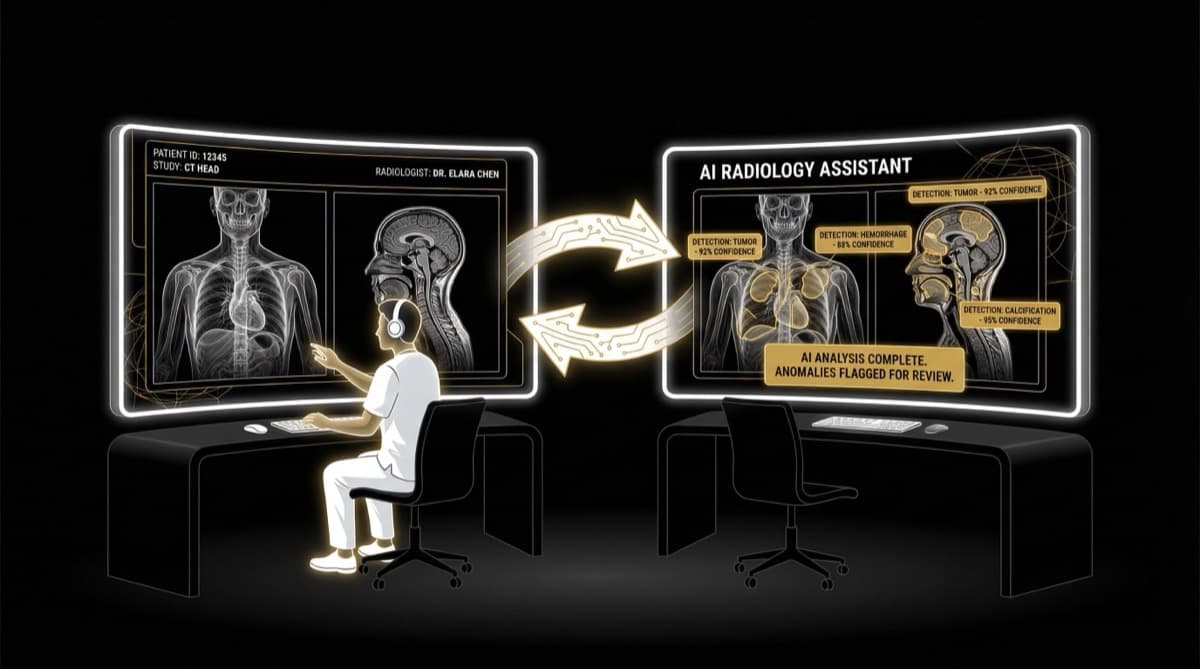
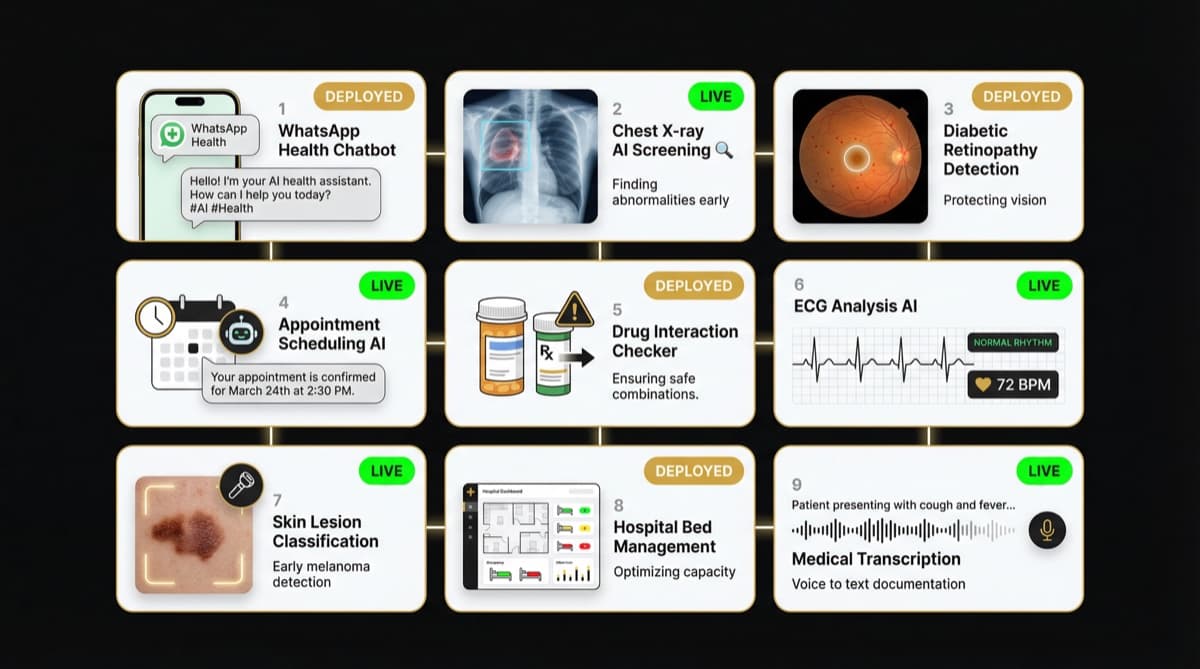
Qure.ai qXR | Chest X-ray screening (TB, pneumonia, lung nodules) | Sensitivity 95%+ for TB detection | 5,000+ sites across 90+ countries; active in Indian government TB programs Qure.ai qCT | Head CT analysis (stroke, hemorrhage) | Reduces time to detection by 50%+ | Major trauma centres and emergency departments Predible Health | Cardiac CT analysis, coronary calcium scoring | Validated in Indian cardiac hospitals | Top cardiac centres including AIIMS 5C Network | AI triage for radiology reads | Prioritizes urgent findings, reduces turnaround 40-60% | 1,000+ connected facilities across India GE Healthcare AIR Recon DL | AI-enhanced MRI reconstruction | Reduces MRI scan time by up to 50% | Major tertiary care hospitals Siemens AI-Rad Companion | Organ segmentation, measurement automation | Automates routine measurements in CT/MR | Apollo, Fortis, Max Healthcare Philips HealthSuite AI | Integrated diagnostic AI across modalities | Multi-organ analysis and workflow optimization | Select PE-backed hospital chains
Pathology and Lab Diagnostics
SigTuple Shonit | AI-powered blood cell counting and classification | Deployed in Indian diagnostic labs SigTuple Papsmear | Cervical cytology screening | Screening program deployment Aindra Systems | AI-powered cervical cancer screening | Deployed across screening programs in India
Ophthalmology
Google Health / Verily | Diabetic retinopathy screening from retinal photos | Deployed at Aravind Eye Hospital; validated Microsoft AI for Health | Retinal disease screening | Pilot programs in Indian hospitals Remidio / Medios | AI-enabled fundus camera with cloud analysis | Deployed across primary care and screening programs
Cancer Screening
Niramai Thermalytix | AI breast cancer screening using thermal imaging | Deployed in corporate health programs, screening camps Onward Assist | AI-assisted cancer pathology | Used in select oncology centres
Clinical Decision Support
mFine / Practo AI | Symptom assessment and triage chatbots | Consumer-facing; used for pre-consultation triage Wysa | AI mental health support chatbot | Used in corporate wellness programs Dozee | AI-powered contactless vital signs monitoring | Deployed in ICU and ward monitoring Tricog | AI-powered ECG interpretation and cardiac risk assessment | Connected to 2,000+ care points across India
Where Is AI NOT Yet Deployed in Indian Healthcare Despite the Hype?
For a realistic picture, it's equally important to map where AI is conspicuously absent:
- AI-assisted surgery: Robotic surgery exists in India (da Vinci systems at 70+ hospitals) but AI-autonomous surgery is not deployed anywhere
- AI drug discovery: Global pharma companies are using AI for drug discovery, but Indian clinical practice doesn't interact with this yet
- AI treatment planning: Oncology AI tools for treatment optimization exist globally but are in early pilot stages in India
- AI in primary care: Beyond triage chatbots, AI tools for primary care diagnosis and management are minimal in India
- Rural healthcare AI: Despite being the highest-need area, AI deployment in rural India is limited to a few screening programs (TB, diabetic retinopathy)
What Is the AI Adoption Reality — Urban vs Rural, Public vs Private?
Adoption varies dramatically by setting. Urban Private Hospitals (Apollo, Max, Fortis, Manipal)
- Adoption level: Moderate to high
- Tools deployed: AI radiology, AI pathology, clinical decision support, AI-enhanced imaging
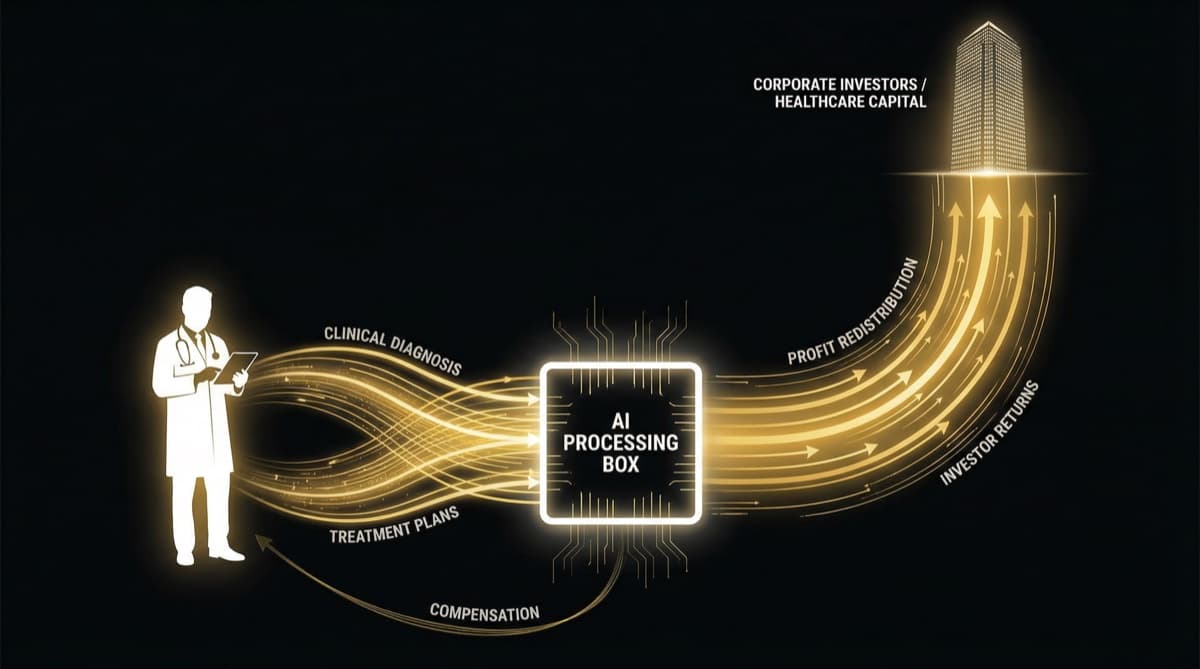
- Driver: PE/investor pressure for operational efficiency and ARPOB improvement
Urban Government Hospitals (AIIMS, state government hospitals)
- Adoption level: Selective
- Tools deployed: Primarily AI radiology screening (TB screening in government programs via Qure.ai)
- Driver: Government health programs (RNTCP, NHM) and research collaborations
Rural / Semi-Urban Facilities
- Adoption level: Minimal
- Tools deployed: Limited to mobile screening tools (retinal cameras, TB X-ray screening vans)
- Driver: Government screening programs and NGO initiatives
- Barrier: Infrastructure (internet connectivity, power supply), digital literacy, and cost
What Is the Regulatory Framework for AI in Indian Healthcare in 2026?
India is building its AI healthcare regulatory framework:
- SAHI (Strategy for AI in Healthcare in India): Launched by Ministry of Health in early 2026, focusing on ethical and evidence-based AI adoption
- CDSCO draft guidance (2025): Categorizes AI imaging tools as Class C medical devices requiring formal licenses and clinical validation
- No comprehensive AI in healthcare regulation yet: Unlike FDA's established 510(k) pathway for AI/ML devices (950+ authorized in the US), India's regulatory framework is still developing
This regulatory gap creates both opportunity (faster deployment) and risk (less validated tools reaching clinical practice).
Frequently Asked Questions
Which AI tools are Indian hospitals actually using? The most widely deployed tools are in diagnostic imaging: Qure.ai (5,000+ sites for chest X-rays/head CTs), 5C Network (1,000+ facilities for AI triage), SigTuple (pathology labs), Tricog (2,000+ care points for ECG), and tools from GE, Siemens, and Philips in major hospital chains. Consumer-facing AI triage (Practo, mFine) is also widespread.
Is AI in Indian healthcare regulated? Partially. CDSCO issued draft guidance in 2025 categorizing AI imaging tools as Class C medical devices requiring licenses and clinical validation. The SAHI strategy was launched in 2026. However, comprehensive regulation comparable to FDA's AI/ML framework doesn't exist yet — many tools are deployed based on CE marking or internal validation rather than Indian regulatory clearance.
How accurate is AI diagnosis compared to Indian doctors? In specific, validated applications (TB screening, diabetic retinopathy, chest X-ray abnormality detection), AI performs at or near specialist-level sensitivity (95%+). However, AI accuracy varies significantly by: the specific tool, the patient population, image quality, and the complexity of the clinical scenario. AI excels at pattern recognition in standardized imaging; it struggles with atypical presentations and complex multi-system cases.
Can I use AI tools in my clinic? Yes — several AI tools are available for individual clinics and small practices. AI-enabled retinal cameras (Remidio), AI ECG interpretation (Tricog), and AI-assisted radiology platforms (5C Network) offer subscription models accessible to individual practitioners. Costs range from Rs 5,000-50,000/month depending on the tool and volume.
What's the future of AI in Indian healthcare? The Ministry of Health's SAHI strategy signals a push toward broader AI adoption. Market projections show 23% annual growth. The likely trajectory: deeper adoption in diagnostics (2026-2028), expansion into clinical decision support (2028-2030), and early AI-assisted treatment planning (2030+). Rural deployment will lag unless specifically incentivized.
Need a website that converts patients? We build healthcare websites in 48-72 hours. Check our Web Launch package at futurise.studio/services