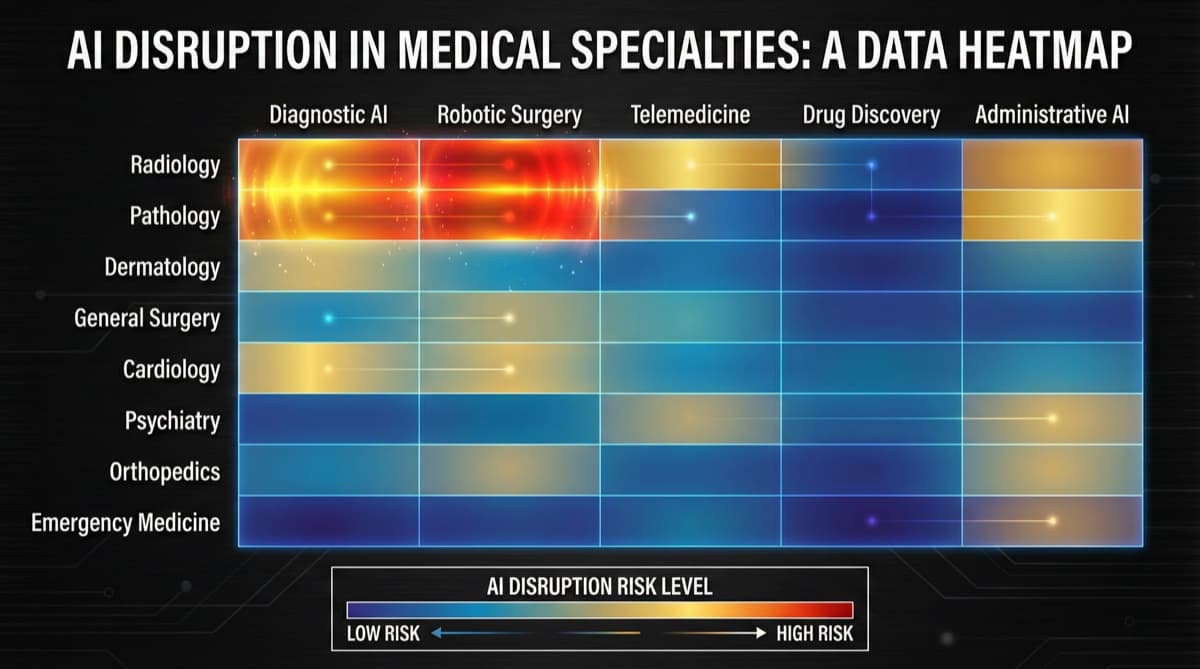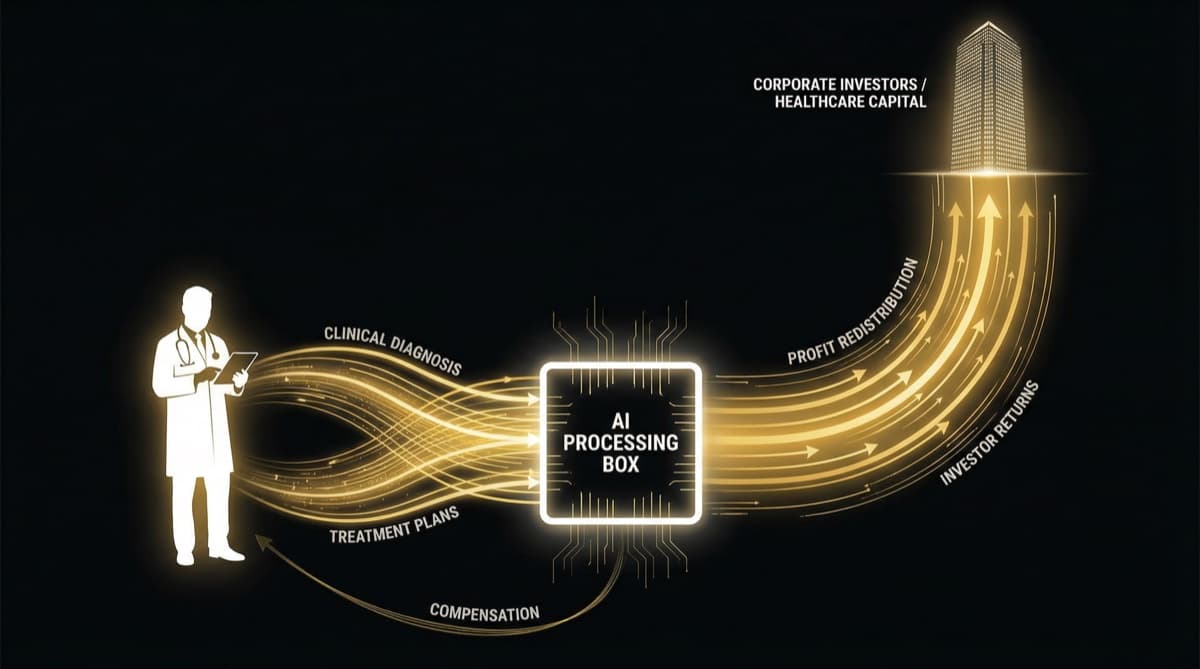
AI is making radiologists more productive — not unemployed. Indian hospitals using AI-assisted radiology report 40-70% increases in scan interpretation volume per radiologist and 50-60% faster report turnaround times. But here's the structural catch: more scans processed at the same salary means the hospital captures the productivity gain, not the radiologist. When Qure.ai can flag 95%+ of chest X-ray abnormalities and Predible Health can pre-screen cardiac CTs, the radiologist shifts from primary interpreter to AI validator — still essential, but with reduced scarcity premium.
What AI Tools Are Actually Deployed in Indian Hospitals for Radiology in 2026?
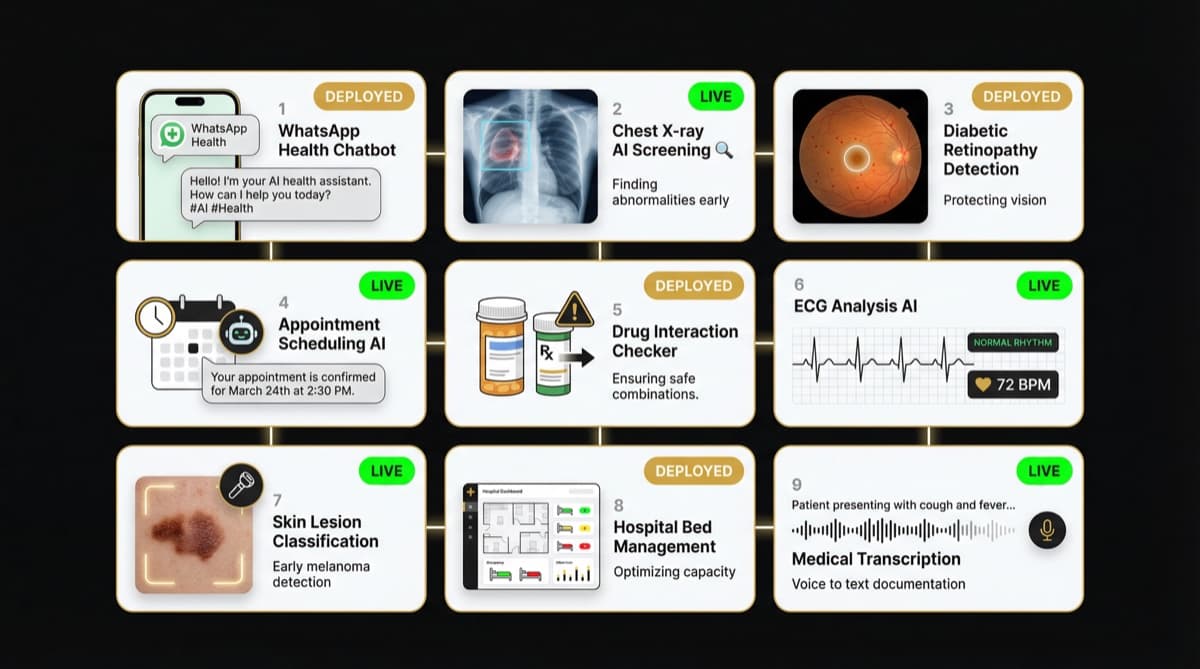
Multiple AI platforms are now in active clinical use. Qure.ai | qXR, qCT | Chest X-ray TB/pneumonia detection, head CT stroke detection | 5,000+ sites across 90+ countries Predible Health | Cardiac CT analysis | AI-assisted coronary artery calcium scoring and CT coronary angiography | Top cardiac hospitals in India SigTuple | Shonit, Papsmear | AI-powered blood cell analysis and cervical cytology screening | Pathology labs across India Niramai | Thermalytix | AI-based breast cancer screening using thermal imaging | Screening programs, corporate health 5C Network | Platform | AI triage for radiology reads with teleradiology | 1,000+ connected facilities Google Health | Retinal screening | Diabetic retinopathy detection from retinal photos | ARAVIND Eye Hospital and others GE Healthcare | AIR Recon DL | AI-enhanced MRI reconstruction, reducing scan time 50% | Major tertiary care hospitals Siemens Healthineers | AI-Rad Companion | AI-assisted organ segmentation and measurement | Apollo, Fortis, Max Philips | AI-powered HealthSuite | Integrated diagnostic AI across CT, MR, X-ray | Select PE-backed chains
Key stat: Approximately 40% of Indian clinicians now report using AI technologies in some form, and India's AI diagnostics market is projected to grow from $12.87 million (2024) to $44.87 million by 2030.
How Does AI Actually Change Radiology Work in Practice?
The workflow transformation is fundamental. The Pre-AI Radiology Workflow
- 1Patient gets scan → images go to PACS
- 2Radiologist pulls images from worklist
- 3Radiologist reads scan from scratch (5-15 minutes per study)
- 4Radiologist dictates/types report
- 5Report goes to referring doctor
- 6Daily volume: 80-120 studies per radiologist
The AI-Assisted Radiology Workflow
- 1Patient gets scan → images go to PACS → AI processes images simultaneously
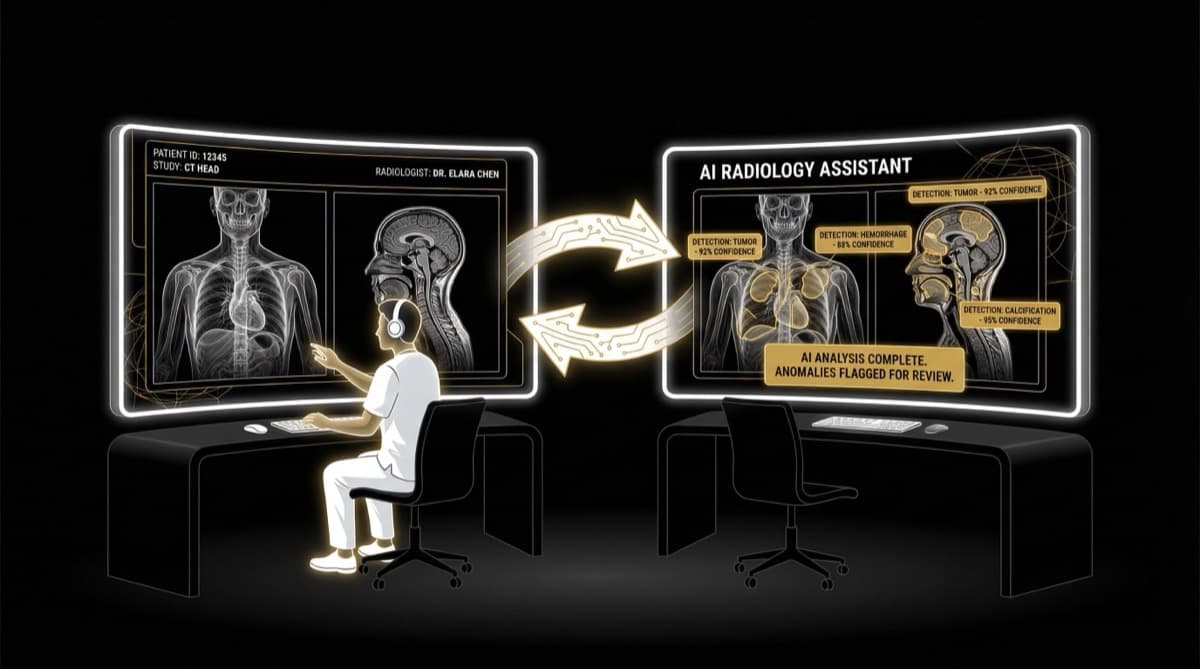
- 2AI flags abnormals, measures key structures, provides preliminary assessment
- 3Radiologist reviews AI output — confirms, modifies, or overrides (2-8 minutes per study)
- 4AI drafts preliminary report; radiologist edits and finalizes
- 5Report goes to referring doctor
- 6Daily volume: 150-200+ studies per radiologist
What Changed
The radiologist's role shifted from primary reader to AI validator and complex case manager. For routine normal studies, the AI confirmation takes 1-2 minutes instead of 5-10. For complex abnormals, the radiologist still applies full expertise — but AI has already flagged the region of interest and provided measurements.
The time savings are real: AI-assisted interpretation reduces per-study time by 30-50% for routine cases. This doesn't mean radiologists work fewer hours — it means they read more studies in the same hours.
What Is the Salary Impact of AI on Radiologists — More Work, Same Pay?
This is where the Futurise structural analysis matters. The question isn't "does AI help radiologists?" (yes). It's "who benefits from the help?"
The Hospital's Perspective
- AI subscription: Rs 5-15 lakhs/year per tool
- Radiologist salary: Rs 15-30 lakhs/year
- Pre-AI: 1 radiologist reads 100 studies/day = Rs 250-500 per study in doctor cost
- Post-AI: 1 radiologist reads 170 studies/day = Rs 150-300 per study in doctor cost
- Savings per radiologist: Rs 5-10 lakhs/year in effective cost reduction
The hospital invested Rs 10 lakhs in AI and got Rs 5-10 lakhs in productivity gain per radiologist. Across 10 radiologists, that's Rs 50 lakhs-1 crore in annual value — far exceeding the AI investment.
The Radiologist's Perspective
Your daily workload increased by 50-70%. Your salary: unchanged. Your per-study compensation effectively decreased. The hospital's response: "AI made your job easier, so the increased volume is reasonable."
This is the "quiet salary cap" — Phase 3 of the disruption pattern. AI-boosted productivity becomes the new baseline. Radiologists who can't maintain AI-assisted volumes become "underperforming." The scarcity that once drove radiology compensation erodes because each radiologist now covers more ground.
The Math Nobody Discusses
If AI enables hospitals to cover the same scan volume with 30% fewer radiologists, the market for radiology positions contracts by 30%. This doesn't cause mass unemployment — it causes slower job creation, flatter salary growth, and increased competition for existing positions.
What Does AI Mean for Radiology Career Decisions?
The implications differ by career stage. For Medical Students Considering Radiology
Radiology remains a viable specialty — AI doesn't eliminate the need for radiologists, and imaging volumes are growing rapidly. But the nature of the work changes from interpretive expertise to AI-augmented validation and complex case management. Students entering radiology should:
- Develop AI literacy as a core skill, not an optional add-on
- Build expertise in complex/interventional radiology where AI has limited impact
- Understand that the scarcity premium that made radiology a "lifestyle specialty with high pay" is eroding
For Practicing Radiologists
- Learn to work with AI tools — hospitals that adopt AI expect radiologists to match productivity benchmarks
- Develop interventional radiology skills — procedures can't be automated (yet)
- Build direct referral relationships — your value to referring doctors goes beyond what AI can provide
- Consider teleradiology platforms where AI handles routine reads and you're paid for complex interpretations
Frequently Asked Questions
Is radiology a good career in India with AI? Yes — but with changed economics. Radiology demand is growing because imaging volumes increase annually. AI doesn't replace radiologists; it changes their workflow from primary reading to AI-assisted validation. The risk isn't unemployment — it's salary compression as productivity gains flow to hospitals rather than to radiologist compensation.
Which AI tools are Indian hospitals using for radiology? Qure.ai (chest X-rays, head CTs), Predible Health (cardiac CTs), 5C Network (AI triage + teleradiology), plus international tools from GE, Siemens, and Philips. Approximately 40% of Indian clinicians report using AI technologies.
Will radiology jobs decrease because of AI? Total radiology positions may grow more slowly than imaging volume growth — meaning AI enables hospitals to meet growing demand without proportional radiologist hiring. Existing radiologists won't lose jobs, but the job market for new radiologists may become more competitive than in the pre-AI era.
How does AI affect radiology salaries? Not through direct cuts, but through the leverage shift: AI-boosted productivity becomes the new baseline expectation. When one radiologist can do the work of 1.5, hospitals don't pay 1.5x — they expect the higher volume at current compensation. The effect is gradual salary compression relative to what radiologists would have earned without AI.
Should radiologists fear AI? Fear: no. Adapt: yes. Radiologists who embrace AI tools, develop complex case expertise, and build interventional skills will thrive. Those who compete with AI on routine reads — trying to match AI speed on normal chest X-rays — will find themselves in a losing competition.
Need a website that converts patients? We build healthcare websites in 48-72 hours. Check our Web Launch package at futurise.studio/services