On this page
The Regulatory Gap That Determines Your Marketing Freedom (And Income)
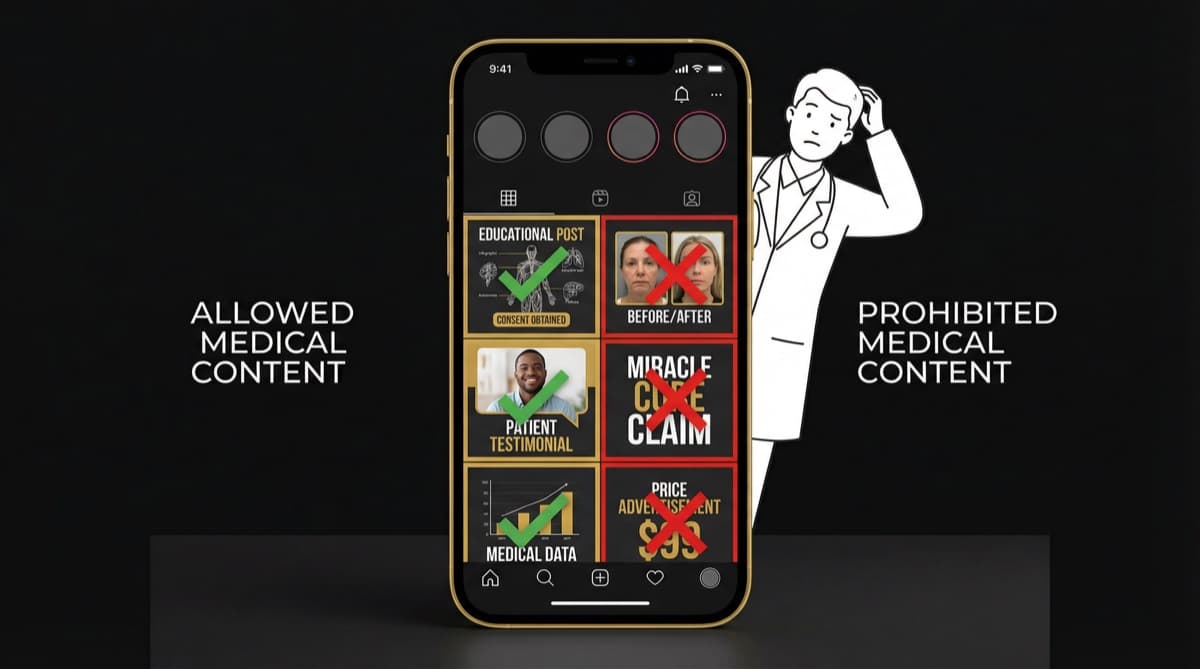
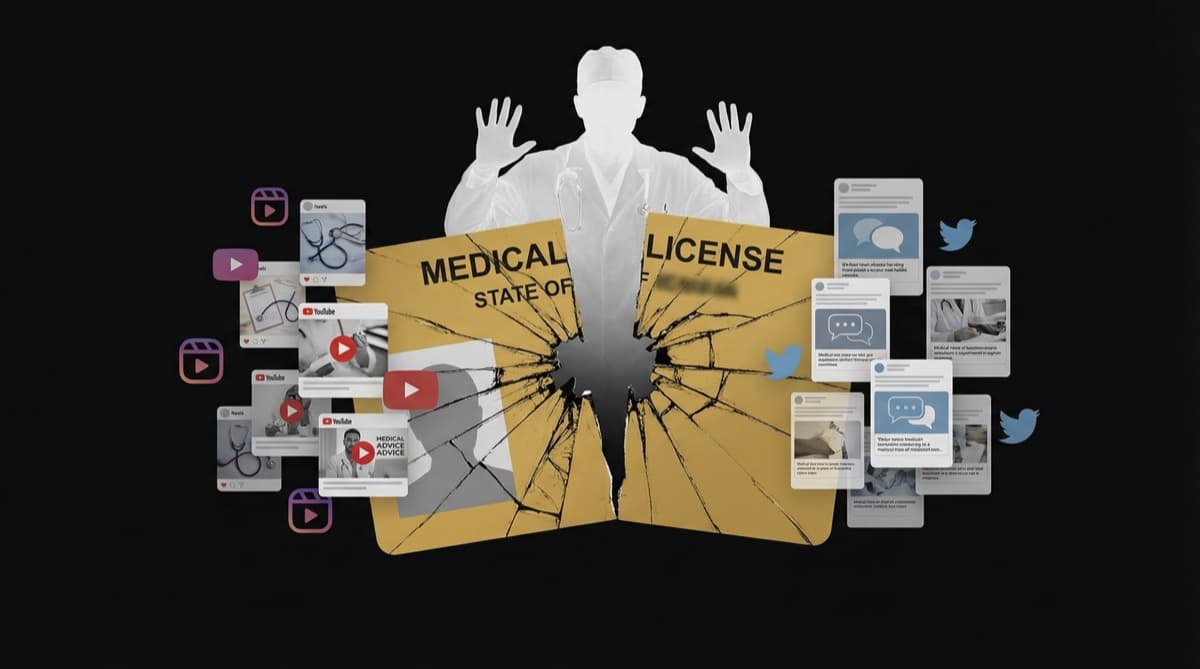
A US cardiologist posts patient testimonial ("This doctor saved my life") + before-after results + success rates on Instagram. Legal, expected, normalized. Same content by an Indian doctor = NMC violation, complaint investigation, potential license suspension. The gap isn't clinical ethics—both jurisdictions prohibit false claims. The gap is what counts as "ethical marketing" vs. "unethical advertising." US law: patient choice requires information, even if promotional. Indian law: information that promotes doctor is inherently unethical.
This regulatory gap directly compresses your income (you can't market like US doctors) and your practice growth (you can't build brand like US doctors).
Q.How Does Structural Mechanism 1: What US Doctors Can Do vs. What Indian Doctors Can't Work?
| Marketing Element | US Medical Board Allows | NMC India Allows | Consequence for Doctor |
|---|---|---|---|
| Patient Testimonials | Yes, with disclosure and consent ("This is a patient testimonial") | NO, explicitly prohibited (Code 1.2: "No testimonials, patient quotes") | US doctor: builds trust via real patient stories; Indian doctor: can't use testimonials = relies on generic education only |
| Before-After Photos (cosmetic, dermatology, surgery) | Yes, with consent ("Before/After photos with patient consent") | NO, explicitly prohibited (Code 1.2: "No before-after images"); exception: medical journal publication only | US derm doctor: builds portfolio of results; Indian derm doctor: can show work ONLY to new patients in consultation, not marketing |
| Success Rates ("98% of my patients experience...") | Yes, if substantiated and disclosed ("Based on 500+ procedures...") | NO, prohibited as "superiority claim" (Code 1.3) | US doctor: can publish outcomes data; Indian doctor: cannot state any outcome percentage (even if true) |
| Comparison to Competitors ("Better outcomes than national average") | Somewhat restricted; US law bans false comparisons but allows factual outcome claims | Completely prohibited (Code 1.3: "No comparison to other doctors") | US doctor: can cite research showing superior methods; Indian doctor: cannot compare to anyone |
| Educational Content with Brand Attribution (YouTube videos titled "Dr. X explains heart disease") | Fully allowed; doctor brand = educational authority | Allowed, but strict conditions: must be educational, not promotional (blurry line; NMC interprets "brand attribution as promotion" often) | US doctor: famous educator with branded content; Indian doctor: must keep personal brand separate from educational content (harder to monetize) |
| Google Ads / Paid Search ("Cardiologist near you - Dr. X") | Allowed (FTC oversight, but not prohibited outright) | Explicitly prohibited by NMC Code 1.1 (no paid advertising for clinic) | US doctor: can bid on "cardiologist near me" searches; Indian doctor: cannot use paid search ads for clinic |
| Social Media Clinic Promotion (Instagram, Facebook clinic posts with results) | Allowed if FTC-compliant (disclosure required) | Prohibited (any social media content promoting clinic = advertising) | US doctor: social media = marketing channel; Indian doctor: social media = education-only (can't post clinic updates, promotions) |
| Doctor Rating/Review Platforms (Healthgrades, Zocdoc—allows patients to rate) | Fully allowed; doctors can respond to reviews | Allowed to exist, but doctor cannot incentivize reviews or respond with promotional statements (NMC fears "incentivized testimonials") | US: reviews are expected, competitive; Indian: reviews exist but doctor can't engage with them strategically |
What this means: US doctors can build brand through marketing (testimonials, results, success rates, comparisons, reviews). Indian doctors can only build brand through educational content (no results, no testimonials, no comparisons, no promotions). A US dermatologist markets via before-after portfolio (builds patient trust in results). An Indian dermatologist markets via education only (teaches how to care for skin, can't show her own results). Income consequence: US derm doctor attracts patients seeking her specifically (premium pricing); Indian derm doctor attracts patients seeking dermatology (competitive pricing).
Q.What Is Structural Mechanism 2: The NMC Code in Detail (What Triggers Violation)?
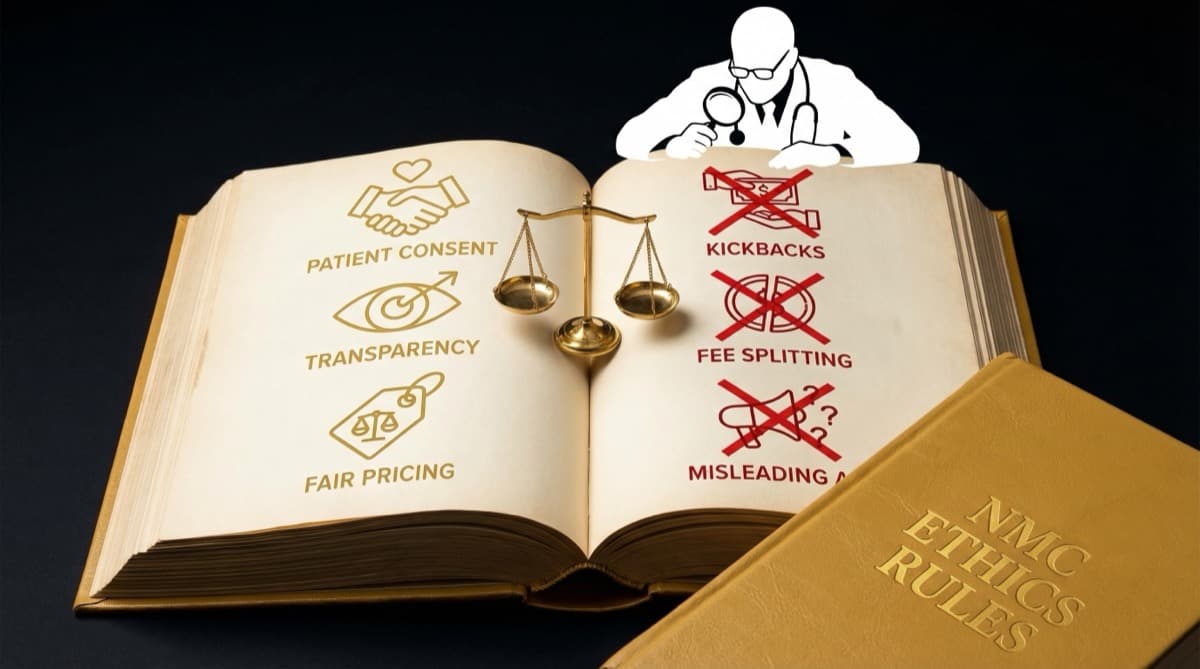
| NMC Clause | Specific Prohibition | How It's Interpreted | What Gets Indian Doctors Reported |
|---|---|---|---|
| Code 1.1: Prohibition on Advertising | "Advertising of practice by medical professionals is unethical" | Any paid promotion of clinic (Google Ads, Facebook ads, newspaper ads) = violation | Doctor runs Google Ads campaign; NMC receives complaint; investigation initiated |
| Code 1.2: Prohibition on Testimonials | "Doctors shall not use patient testimonials in any form" | Patient quotes, video testimonials, "success stories" = prohibited | Doctor posts Instagram video of patient saying "Dr. X cured my anxiety"; NMC violation |
| Code 1.2: Prohibition on Before-After Media | "Photographs of before-after conditions = promotional" | Medical photos in marketing material (clinic brochure, website, social media) = prohibited | Cosmetic surgeon posts before-after photos on Instagram; NMC investigation |
| Code 1.3: Superiority Claims | "Claims of superiority over other practitioners = unethical" | Any statement suggesting you're better (outcomes data, "only doctor in city doing X", "98% success") = prohibited | Doctor claims "I have 20-year track record with 95% patient satisfaction"; interpreted as superiority claim |
| Code 1.3: Comparison Claims | "Comparisons to other doctors = unethical" | Direct or indirect comparison to competitors = prohibited | Doctor compares treatment outcomes to "average cardiologist"; NMC violation |
| Code 1.4: Product/Service Endorsements | "Endorsements of pharmaceuticals, equipment, services for financial gain = prohibited" | Doctor promotes specific brand of medicine/device and receives kickback = violation | Orthopedic surgeon endorses specific implant brand; branded content + financial arrangement = violation |
Reading this table: NMC Code interprets any clinic-promoting content as "advertising" and prohibits it. The distinction: "Education is allowed" (teaching content about disease) but "Promotion is prohibited" (content that drives patients to your clinic). The gray area: if you teach about hypertension and sign it with your clinic name, is it education or promotion? NMC's interpretation varies (conservative interpretation = promotion, liberal interpretation = education). Most doctors self-censor to avoid complaint risk.
Structural Mechanism 3: Enforcement Gap (Why American Doctors Face Consequences, Indian Doctors Face Uncertainty)
| Jurisdiction | Reporting Mechanism | Investigation Timeline | Burden of Proof | Consequence for Violation | Enforcement Rate |
|---|---|---|---|---|---|
| USA (FTC + Medical Board) | FTC complaint OR Medical Board complaint | Investigation: 30-60 days; Decision: 30-90 days | Preponderance of evidence (more likely than not) | Fine (up to $40,000), license suspension (rare); mostly warning letters | 40-60% of reported violations result in action |
| USA (Court Precedent) | Competitor can sue for unfair competition; Patient can sue for false advertising | Litigation: 6-18 months | Clear and convincing evidence (stricter) | Fine + damages to plaintiff; potential license loss if egregious | 20-30% of litigation results in ruling against doctor |
| India (NMC) | Anonymous complaint to NMC; Hospital admin can report | Investigation: 3-6 months (slow); Decision timeline: 6-18 months | Balance of probabilities (lower threshold than US) | Warning letter, suspension (3-6 months), or license cancellation (rare); depends on severity | 15-25% of complaints result in action; many cases lapse due to bureaucracy |
| India (State Medical Council) | Complaint to state council (parallel to NMC) | Investigation: 3-12 months | Vague standards; interpretation inconsistent across states | Warning, suspension, or cancellation (enforcement varies by state) | <10% of complaints result in action (state councils underfunded, slow) |
| India (Patient Litigation) | Patient files complaint + civil suit; Expensive, slow | Litigation: 3-7 years (Indian courts backlog) | Balance of probabilities | Financial damages (usually Rs 5-25L); cannot result in license loss (criminal case required) | <5% of cases result in conviction; most settle or languish |
What this means: USA has faster, clearer enforcement (if you violate ad rules, you know within 3 months). India has unclear enforcement (you might face NMC investigation 6 months after complaint; outcome varies by investigator; state councils rarely act). The uncertainty makes Indian doctors over-comply (avoid any promotional content, even if legal). USA's clear rules allow doctors to push boundaries (everyone knows the line). India's unclear rules force doctors to retreat from marketing entirely (safer than test legal boundaries).
Q.How Does Structural Mechanism 4: Income Impact (US vs. Indian Doctor Marketing Capabilities) Work?
| Marketing Strategy | USA Doctor | Indian Doctor | Income Difference |
|---|---|---|---|
| Brand Building via Testimonials + Results | Can post patient success stories, before-afters, outcomes data → attracts patients seeking YOU specifically → premium pricing (Rs 2000-5000 per consultation) | Cannot use testimonials; must use generic education → attracts patients seeking doctor-type, not YOU specifically → competitive pricing (Rs 500-1500 per consultation) | USA doctor: 3-5x higher consultation fee; attracts 30-40% fewer patients but higher willingness-to-pay per patient |
| Social Media Marketing (Instagram, TikTok) | Can run branded clinic Instagram with patient results, clinic culture, doctor personality → followers become patient base → viral reach (1M+ followers possible, many becoming patients) | Cannot run promotional Instagram for clinic; educational content only; cannot link followers to clinic practice → audience doesn't convert to patient base | USA doctor: social media = patient acquisition channel (free, scalable); Indian doctor: social media = thought leadership only (no patient conversion) |
| Search Engine Optimization (SEO) | Can optimize website for local search ("cardiologist in NYC"), bid on Google Ads, build reputation system → top results for local search = steady patient stream | Cannot use paid search ads; SEO limited (cannot use "patient reviews" as SEO signal because testimonials prohibited); must rely on educational content ranking → harder to rank for local search, less patient discovery | USA doctor: search-driven patient acquisition; Indian doctor: referral-driven + word-of-mouth only (slower, less scalable) |
| Referral Network Marketing | Can provide referral doctors with clinic brochures containing patient testimonials, results data, outcome statistics → referrer doctor shares these with patients → brand amplified through referrer network | Cannot use testimonials or result data in referral materials; referral doctors receive generic clinic information only → less persuasive; referrer doctors less likely to refer → smaller referral base | USA doctor: referral amplified by credible patient success stories; Indian doctor: referral stagnant without outcomes data |
| Content Marketing (YouTube, Blog) | Can create educational content branded as "Dr. X explains cardiology" + include clinic information, testimonials, before-afters → brand = authority + patient pipeline | Can create educational content "Cardiology Explained" but cannot brand it as yours (NMC says "branded education = promotion") → audience knows content is good but doesn't know it's YOU → lower clinic attribution | USA: branded educational content = authority + conversion; Indian: unbranded content = authority but no conversion |
| Patient Reviews / Reputation Management | Can encourage reviews on Healthgrades, ZocDoc, Google; respond to reviews with promotional statements; manage reputation actively → positive reviews build trust, drive new patient acquisition → reviews become marketing asset | Cannot encourage reviews or respond to reviews with promotional statements (NMC fears "incentivized testimonials") → reviews exist but doctor cannot amplify them; patient reviews become liability if they're too glowing (looks like fabricated testimonials) | USA doctor: reviews are competitive advantage; Indian doctor: reviews are liability if managed actively |
What this means: US doctor's marketing toolkit includes testimonials, results, reviews, comparisons, paid ads. Indian doctor's toolkit is education + word-of-mouth + referrals only. The income impact: US doctor reaches more patients (via marketing), attracts higher-willingness-to-pay patients (via credible testimonials), scales brand (via social media + reviews). Indian doctor stays small, relies on referral network, competes on price. Two doctors with identical skill: US doctor earns 3-5x more due to marketing freedom alone.
Need help with this?
Our team specializes in healthcare branding. Get personalized advice in a free 15-minute call.
Book a free 15-minute callFrequently Asked Questions
Q: Can I post my education/credentials on Instagram legally?
A: Yes. "Dr. X, MBBS from XYZ Medical College, 10 years cardiology experience" = educational credential statement. "Join my clinic for cardiac care" attached to that post = promotional. The line: credentials + educational info = legal. Credentials + call-to-action (book appointment, visit clinic) = illegal. Most doctors blur this line; technically illegal but rarely enforced.
Q: Can I run Google Ads in India as a doctor?
A: Technically no (NMC Code 1.1 forbids paid advertising). Practically, Google allows it (Google's ad policy doesn't enforce NMC rules; they only enforce Google policy). Risk: (1) Patient files complaint to NMC; (2) NMC investigates; (3) If they find you ran paid ads, it's violation. Likelihood: 5-10% of paid-ad doctors get reported; 20-30% of reported cases result in action. So 1-3% of doctors running Google Ads face actual NMC action. But risk exists.
Q: Should I hire a social media manager to run clinic Instagram?
A: Only if your Instagram is educational-only (disease education, tips, no clinic promotion). If you want to promote your clinic, hiring a manager doesn't change the fact that promotional content = violation (delegation doesn't protect you from NMC action). Your account, your responsibility.
Q: Is the NMC Code going to change to allow marketing?
A: Unlikely in next 5 years. NMC's position is that medical profession should be ethics-driven (not market-driven); marketing implies commoditization of healthcare (which NMC opposes philosophically). Reform would require NMC to adopt US-style "informed choice requires information" philosophy. No signs of this shift in 2024-2025.
Looking to build a professional healthcare brand? Explore our services at futurise.studio/services or book a free discovery call at futurise.studio/contact