On this page
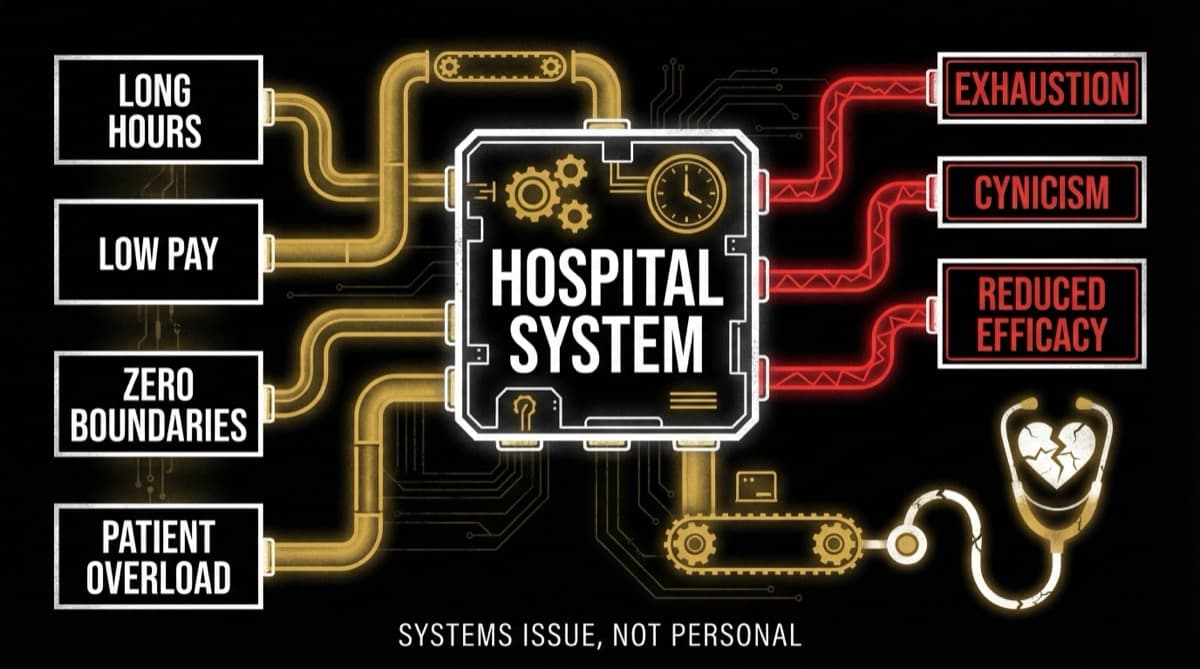
A 2-year career break for motherhood costs a female doctor Rs 15-40L in permanent income loss, not because she's less skilled, but because three systems collapse simultaneously: referral networks stop trusting you, hospitals won't revalidate your credentials quickly, and your patient base assumes you've retired. This isn't pregnancy discrimination — it's structural abandonment.
System 1: Your Referral Network Assumes You've Left Medicine
During a 2-year break: Family doctor (primary referral source) goes from "She'll be back soon" to "She's no longer active." Surgeon shifts referrals to replacement permanently. Hospital OPD admin offers to rehire at junior terms. Pharmacy owner no longer stocks your drugs. Lab technician network forgets your protocols.
Income damage: Before break (Year 5): 100% referral network active, Rs 2.5L/month. 6 months in: 70% active, Rs 1.75L/month potential. 1 year in: 50% active, Rs 1.2L/month potential. 2 years after returning: 35% re-engaged, Rs 0.85L/month initial.
What you've lost: Rs 40-60L in accumulated income over the break + 2-3 years recovery.
Why referral networks don't wait: A family doctor who referred gynecology cases to you needs to send those cases somewhere. Rational choice: refer to another gynecologist. By the time you return, that doctor has established a new referral habit. Switching back costs effort.
Q.What Is System 2: Re-credentialing Barriers and Hospital Rejection?
When you try to return, the hospital process includes: Medical record reactivation (1-2 weeks, 90% approval), credential review for 2-year gap (2-4 weeks, 70% approval), CME requirements check (1-2 weeks, 60% approval), operating room access reactivation (2-8 weeks, 40% approval). Total time to reactivation: 2-3 months. Cumulative approval rate: 40-50%.
Hospital's structural concern: Liability risk ("Did she keep up with guidelines?"), reliability risk ("Will she leave again?"), precedent risk ("If we reinstate quickly, do we endorse career breaks?"), patient expectation risk ("Will patients trust her after gap?").
Hospital's rational response: "Welcome back. We'd like to restart you on probationary terms — 25% reduction in OPD slots for 3 months, then review." This looks like flexibility. It's actually penalty.
Q.What Is System 3: Your Patient Base Doesn't Wait?
At 6 months: "She's on maternity leave, she'll be back." At 12 months: "She might not be doing full-time practice anymore." At 18 months: "I think she left the city." At 24 months: "Who's Dr. X? She's not practicing anymore."
This is social network collapse, not individual rejection. Each patient tells 3-5 others. In 2 years, 50+ patients spread the narrative that you've quit.
Q.What Are the Permanent Income Math?
Female doctor earning Rs 2L/month at year 5 (before break):
Need help with this?
Our team specializes in healthcare branding. Get personalized advice in a free 15-minute call.
Book a free 15-minute callQ.What Is Break years 6-7: Rs 0/month. Loss Rs 24L.?
Reactivation year 8: Rs 1.2L/month (60% of baseline). Recovery year 9: Rs 1.5L/month (75% of baseline). Recovery year 10: Rs 1.8L/month (90% of baseline).
Male counterpart continues: Rs 2.2L+ by year 8 (annual growth).
Gap by year 10: Rs 70K/month (25% permanent pay cut) + Rs 25L+ in lost cumulative earnings.
A career break doesn't just cost the break years — it costs lost growth trajectory, lost seniority perception, lost network compounding, and lost negotiation power (hospitals know you need flexibility, pay you less).
Frequently Asked Questions
Q: Doesn't the doctor get maternity benefit? Doesn't that offset the loss?
A: Maternity benefits in India: Rs 2,000-5,000/month (government hospitals) or none (private practice). For a doctor earning Rs 2L/month, this covers 1-2.5% of lost income.
Q: What if she takes just 6 months instead of 2 years?
A: Income loss drops to Rs 8-12L. Referral network damage: 30-40% decline but slower recovery. Re-credentialing usually avoided. This is why many female doctors return early — they can't afford the 2-year penalty.
Q: Is the penalty worse in clinic practice or hospital employment?
A: Clinic is worse. Hospital breaks mean coming back to same job (but probationary terms). Clinic breaks mean rebuilding entire patient base from zero.
The Structural Reality
The motherhood penalty for doctors isn't discrimination — it's structural abandonment. Referral networks optimize for consistency. Hospitals can't reactivate quickly because of liability concerns. Patients assume permanent exit. Income never fully recovers because you restart at lower level.
What would fix this: Hospitals need re-entry protocols that don't reduce OPD slots. Professional networks need to actively maintain relationships during breaks. Patients need clearer communication about availability. Income should be protected during career resumption (fixed salary for 3-6 months).
Until these exist, every child costs a female doctor Rs 15-40L in permanent career earnings. That's not biology — that's poor system design.
futurise. builds premium healthcare brands in 48 hours. Learn more at futurise.studio