On this page
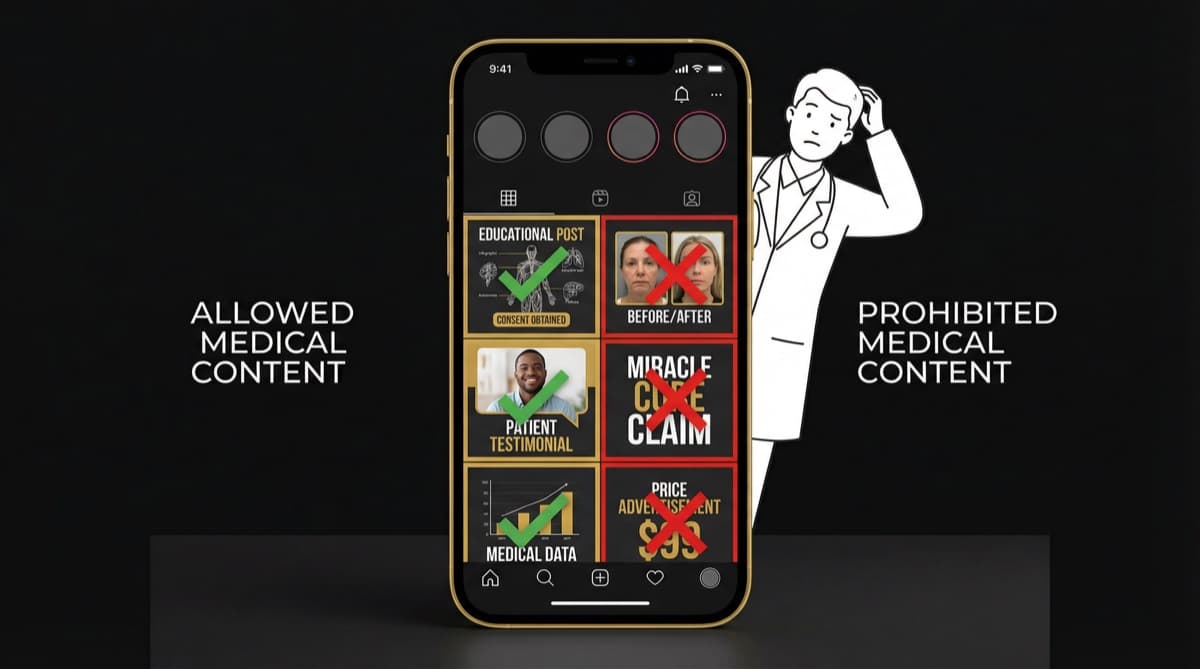
Telemedicine Practice Guidelines (2020) define your legal framework, but "legal" is ambiguous. You can prescribe through teleconsultation, but only follow-up consultations for established patients (not first consultations for diagnosis). You need informed consent, documented patient identity, and maintained records. You can prescribe, but specific classes of drugs (controlled substances) have restrictions. You need referral for procedures. These rules are technically clear; enforcement is not. State Medical Councils interpret loosely. Compliance is recommended but rarely audited. This creates structural ambiguity: you operate legally if audited, but the rules are loose enough that enforcement depends on which Council inspects you.
The Telemedicine Practice Guidelines 2020: Your Legal Framework
The Ministry of Health and Family Welfare issued Telemedicine Practice Guidelines in 2020, updated 2021. These define what you can and cannot do in teleconsultation. The guidelines are recommendations, not law, but state Medical Councils use them as reference for "reasonable practice."
What you CAN do in teleconsultation (legally):
- 1Provide follow-up consultation for established patients
- 2Prescribe drugs for chronic disease management (diabetes, hypertension, thyroid)
- 3Provide health advice and counseling
- 4Arrange investigations and interpret results
- 5Provide second opinion/expert consultation
- 6Conduct mental health consultations (even first consultation is permitted for psychiatry)
What you CANNOT do (legally):
- 1First consultation diagnosis without prior clinical examination (except mental health)
- 2Prescribe controlled drugs (opioids, benzodiazepines) for first time
- 3Perform any procedure requiring physical examination (cannot diagnose acute abdomen through video)
- 4Prescribe Schedule X drugs without in-person examination first
- 5Provide medical certificate without identity verification
This seems clear until you encounter reality: An anxious patient calls you online, has symptoms of panic attack (you cannot examine), you diagnose anxiety disorder, prescribe alprazolam (controlled drug). Have you broken law?
Technically yes (first consultation, controlled drug, no in-person exam). Practically no (psychiatry allows first consultation, you documented informed consent, patient already on this drug before). State Medical Council would need to audit your records and interpret guidelines to determine violation. They rarely do.
| Action | Legal Status (Guidelines) | Enforcement Reality | Your Risk Level |
|---|---|---|---|
| Follow-up consultation for established patient | Permitted | Routinely done | Low |
| First consultation diagnosis (non-psychiatry) | Prohibited | Widely done anyway | Moderate (audit-dependent) |
| Prescription for chronic disease (non-controlled) | Permitted | Standard practice | Low |
| Prescription of benzodiazepines for anxiety (established patient) | Permitted | Done, but gray | Low-Moderate |
| Prescription of benzodiazepines for first-visit anxiety | Prohibited | Done, audit-risky | Moderate-High |
| Prescription of opioids for pain (any scenario) | Prohibited | Rarely done | High |
| Mental health first consultation | Permitted | Standard | Low |
| Medical certificate issuance | Restricted (identity verification only) | Widely done loosely | Moderate |
Q.What Is Informed Consent Structure: What You Must Document?
The guidelines require "informed consent" for teleconsultation. This is simple in theory, complex in practice.
Required elements (guidelines state):
- 1Patient must understand that teleconsultation has limitations vs in-person exam
- 2Patient must understand they have right to in-person examination if needed
- 3Patient must consent to specific medication/treatment being recommended
- 4Patient must consent to data being recorded (if call is recorded)
- 5Patient must verify their identity (you must confirm you're speaking to correct patient)
Practically, this means:
- Before consultation, you should have patient explicitly state: "I understand this is teleconsultation and not a physical exam"
- Document this consent in patient record
- If prescribing, patient should explicitly consent: "Do you accept this medication?"
- If recording, patient should explicitly consent
The enforcement problem: No standard form exists. Some platforms (Practo) have auto-consent checkboxes. But auto-clicking "I agree" is not informed consent legally—patient didn't think about it. You're legally safer if you explicitly discuss limitations verbally (at least creates evidence you explained).
| Consent Component | Guideline Requirement | Enforcement Reality | Documentation You Need |
|---|---|---|---|
| Understanding of limitations | Explicit statement | Auto-checked boxes (loose) | Verbal recording or signed form |
| Right to in-person exam | Mentioned | Rarely discussed | Notes in patient record |
| Medication consent | Explicit | Frequently done loosely | Patient verbal agreement + notes |
| Identity verification | Confirmed | Often skipped | Patient confirms identity in your notes |
| Data recording consent | Explicit | Auto-consent common | Patient checkbox + verbal confirmation safer |
You're safest if you over-document. Make patient state their understanding explicitly (on video, recorded). This creates evidence you obtained true informed consent, not just auto-checked boxes.
Q.What Is Patient Identification Verification: The Legal Requirement?
Guidelines state: "The identity of the patient must be verified before teleconsultation." This means you must confirm the person on video is actually the patient you're consulting.
How to verify (no standard method specified):
- Ask patient to show ID (Aadhar, PAN, driving license)
- Ask security questions only patient would know
- Check photo match on ID with person on video
- Review established medical history that matches patient's knowledge
- Accept referral letter from known doctor as verification
The problem: Guidelines don't specify how strict verification must be. Showing Aadhar? Security questions? Both? The ambiguity means enforcement could be strict or lenient depending on Council interpretation.
Practically: Most doctors skip formal verification and rely on patient history recognition ("This is Sharma, I've treated him for diabetes 5 years"). This is weak verification legally but common practice.
Stronger verification: Ask patient to show ID, ask 2-3 personal medical history questions, document in notes "Identity verified via Aadhar + medical history."
| Verification Method | Strength (Legal) | Ease of Implementation | Enforcement Likelihood | Your Risk |
|---|---|---|---|---|
| Visual ID only (Aadhar photo) | Moderate | Easy | Low (routine not audited) | Low |
| Identity + medical history questions | Strong | Moderate | Moderate (specific audit) | Low |
| Security questions only | Weak | Easy but unreliable | Low | Moderate |
| Relying on recognition (established patient history) | Weak | Very easy | Low (unless disputed) | Moderate-High |
Q.What Is Prescription Restrictions: What You Need to Know?
This is where guidelines create most practical confusion.
Permitted prescriptions in teleconsultation:
- Chronic disease medications (anti-hypertensives, diabetes drugs, thyroid)
- Antibiotics for established conditions (repeat UTI, repeat respiratory infection)
- Mental health medications for established patients
- Over-the-counter and non-prescription drugs
- Preventive/prophylactic medications
Restricted prescriptions:
- Schedule X drugs (opioids, narcotics)—prohibited unless extraordinary circumstances and in-person first
- Benzodiazepines (first prescription only after in-person exam)
- Immunosuppressants—not recommended via tele
- Cancer medications—not recommended via tele
- Drugs requiring baseline investigation (digoxin needs ECG, metformin needs renal function)
The ambiguity: Prescribing amoxicillin for a recurring UTI in a patient you've established has recurrent UTI is permitted (established condition, safe drug). But the patient has never visited you in person, only consults online. Does "established patient" mean "established with you" or "established diagnosis"? Guidelines don't specify.
Most councils interpret "established patient" as "patient you've seen and have medical records for," which includes online-only patients. But strict interpretation could mean "in-person examined patient."
| Drug Class | Teleconsultation Status | First Prescription? | Established Patient? | Your Risk |
|---|---|---|---|---|
| Antibiotics (non-controlled) | Permitted | Yes (established condition) | Yes | Low |
| Anti-hypertensives | Permitted | Yes (established diagnosis) | Yes | Low |
| Anti-diabetics | Permitted | Yes (established diagnosis) | Yes | Low |
| Thyroid medications | Permitted | Yes | Yes | Low |
| Benzodiazepines | Restricted | No (in-person first) | Yes (repeat OK) | Moderate |
| Opioids | Prohibited | Never | No | High |
| Anticoagulants | Restricted | No (requires monitoring) | Yes (repeat OK) | Moderate |
| Topical steroids | Permitted | Yes | Yes | Low |
| Oral steroids | Restricted | No (for established conditions only) | Yes (repeat OK) | Moderate |
Need help with this?
Our team specializes in healthcare branding. Get personalized advice in a free 15-minute call.
Book a free 15-minute callQ.What Is Medical Certificates Through Teleconsultation: The Legal Grey Zone?
Guidelines state medical certificates can be issued through teleconsultation "where identity has been verified and patient examined." This creates a practical problem:
A patient needs a fitness certificate for employment. They consult you on video (first time), you examine their cardiovascular and respiratory systems remotely (pulse, breathing, speech). Can you issue fitness certificate?
Legally: You have not examined the patient physically. Fitness certificate requires physical examination (blood pressure, chest auscultation, reflexes). Remote examination is insufficient.
Practically: Many doctors issue fitness certificates after video consultation. Employers accept them. No enforcement happens unless someone challenges the certificate's validity.
Your risk: High. If employer disputes certificate ("Doctor didn't examine physically"), Council could rule you violated guidelines. Liability falls on you if certificate is later found falsified or inadequate.
Safer approach: Refuse to issue fitness certificates via tele for first-time patients. For established patients where you have recent physical exam data, you can issue update based on video follow-up.
| Certificate Type | Teleconsultation Legality | Physical Exam Necessity | Your Risk |
|---|---|---|---|
| Sick/absent certificate (established patient) | Permitted | Not strictly necessary | Low |
| Fitness certificate (first consultation) | Prohibited | Mandatory | High |
| Fitness certificate (established patient) | Permitted (if recent exam) | Acceptable if based on recent in-person data | Low-Moderate |
| Medical reference/factual letter | Permitted | Not necessary | Low |
| Disability certificate | Restricted | Detailed physical exam needed | High |
Q.What Is Recording Consultations: Legal and Ethical Boundaries?
Telemedicine guidelines don't explicitly address call recording, but Medical Ethics guidelines do. The general principle: Recording is permitted only with explicit consent.
What the law (broadly) requires:
- Patient must consent to recording (state and federal law)
- Consent should be documented
- Recording should be stored securely (data protection requirement under various acts)
- Recording is for medical record only (cannot be shared without patient consent)
Practically:
- Many platforms (Practo, Teladoc) enable recording by default but require patient consent checkbox
- Most doctors don't explicitly ask (checkbox consent treated as sufficient)
- Recordings are stored by platform (you don't control security)
- Some patients have objected later ("I didn't know I was being recorded")
Your risk: If patient later claims they didn't consent to recording, and you have only checkbox evidence (not explicit consent documented), liability is on you. Platform's checkbox alone isn't strong legal protection.
Safer approach: Before consultation starts, ask verbally: "I may record this consultation for medical records. Is that okay with you?" Document their answer in notes. This creates clearer consent evidence.
Q.What Is State-Level Variation: What Medical Councils Interpret Differently?
Despite national guidelines, state Medical Councils interpret them differently:
| State | Tele-first Consultation | Prescription Looseness | Fitness Certificate | Enforcement Intensity |
|---|---|---|---|---|
| Delhi | Permitted (some councils) | Lenient | Permitted | Low-Moderate |
| Maharashtra | Restricted (formal guidance) | Moderate | Restricted | Moderate |
| Karnataka | Restricted | Strict | Restricted | Moderate-High |
| Gujarat | Permitted (unclear guidance) | Lenient | Permitted | Low |
| Tamil Nadu | Permitted | Lenient | Permitted | Low |
| Rajasthan | Unclear (no formal guidance) | Variable | Variable | Very Low |
| Uttar Pradesh | Permitted (no formal opposition) | Lenient | Permitted | Very Low |
| West Bengal | Restricted | Moderate | Restricted | Moderate |
The variation exists because national guidelines are recommendations; states have discretion. You must know your state's specific interpretation.
How to check your state's stance: Contact your state Medical Council directly. Ask: "What is your official policy on: (1) First consultation tele-diagnosis, (2) Prescription rights via tele, (3) Medical certificate issuance via tele?" Get written response. This becomes your official guidance.
Q.What Is Practical Compliance Strategy: You Need to Document Everything?
The safest approach assumes audit risk: Document everything in ways that prove compliance.
Before consultation:
- Get written consent (email, checkbox, form) stating patient understands tele limitations
- Verify patient identity explicitly (ask patient to show ID or confirm details you have on file)
- Note in record: "Patient [Name, ID number] verified by [method]. Consent obtained for tele-consultation."
During consultation:
- Document findings explicitly (not "patient reports fever" but "patient reports fever since 3 days, max temperature 101F, associated cough")
- For any prescription, document: "Patient consulted for [condition], examined via video, appropriate for tele-prescription of [drug], patient consents"
- Document limitations you mentioned ("Patient advised to seek in-person exam if symptoms don't improve")
After consultation:
- Maintain detailed records (notes, prescription, follow-up plan)
- If recording, ensure patient consent is documented explicitly
- Schedule follow-up (if applicable) with clear instructions
This documentation approach transforms tele-practice into audit-safe practice. If Medical Council audits, your detailed records prove you operated within guidelines.
Frequently Asked Questions
Q: Can I do first consultation diagnoses via tele if I document informed consent?
A: Not per guidelines. First consultation requires physical examination (except psychiatry). Documenting consent doesn't change the prohibition; it only shows you informed patient of illegality. Technically still violation. Practically, enforcement is rare unless patient complains.
Q: What happens if I prescribe a controlled drug via tele and Council audits me?
A: Council can issue warning, suspend your registration temporarily, or require remedial training. Rare outcomes are fine or license cancellation (only if part of pattern of violations). Most first violations result in warning + mandatory in-person examination for future controlled drug prescriptions.
Q: Can I issue fitness certificates via tele if I note "based on self-reported examination"?
A: No. Fitness certificates legally require physical examination. Self-reported examination isn't examination. Noting this doesn't change the legal status. You're issuing false certificate technically. Avoid unless you have recent (within 6 months) in-person exam data to base current certificate on.
Q: My state Medical Council has no formal tele-guidelines. Can I do whatever's reasonable?
A: Legally, you fall back on national guidelines. But enforcement is weak if state has no formal position. Practically, "reasonable" interpretation of national guidelines is your safe zone. Be conservative—assume stricter interpretation if audited.
Q: If platform records calls automatically, is patient consent still needed?
A: Yes. Platform's default recording doesn't exempt you from consent requirement. You're responsible for ensuring patient knows they're being recorded and consents. Get explicit patient consent before consultation starts.
Q: Can I prescribe psychiatric medications (benzodiazepines) via first tele-consultation?
A: Psychiatry is exception—first consultation is permitted via tele. So first-time anxiety patient, prescribed alprazolam, is legal if you document proper assessment. Non-psychiatry benzodiazepines (prescribed by general physicians) require in-person first.
Q: How do I handle patients who refuse to show ID or verify identity?
A: You cannot proceed with consultation. Refusal of identity verification is refusal of guideline compliance. You're legally safer declining the consultation than proceeding unverified. Document: "Patient declined identity verification. Consultation not conducted."
futurise. builds premium healthcare brands in 48 hours. Learn more at futurise.studio